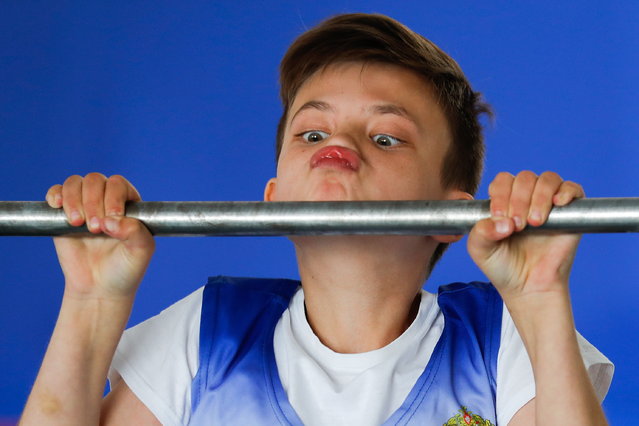
A boy doing chin-ups as he takes entrance exams at the Moscow Suvorov Military School in Moscow, Russia on July 11, 2019. (Photo by Sergei Karpukhin/Russian News Agency TASS via Getty Images)
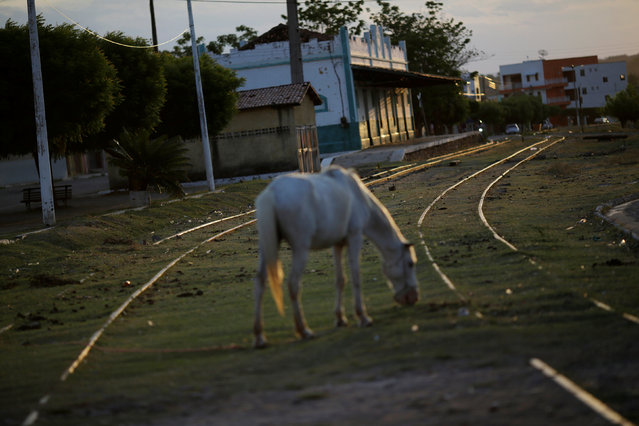
A horse grazes on railway tracks near the old train station on the the Northeast railroad (Ferrovia do Nordeste) in the city of Missao Velha, Ceara state, northeastern Brazil, October 25, 2016. (Photo by Ueslei Marcelino/Reuters)
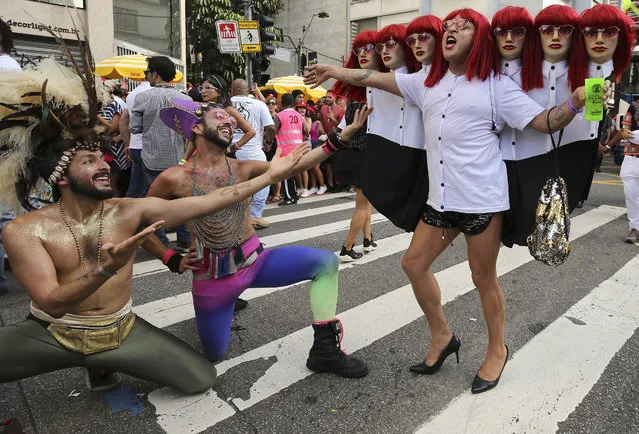
Carnival revelers perform during the Academicos do Baixo Augustaa carnival “bloco” parade in Sao Paulo, Brazil, Sunday, February 24, 2019. (Photo by Andre Penner/AP Photo)
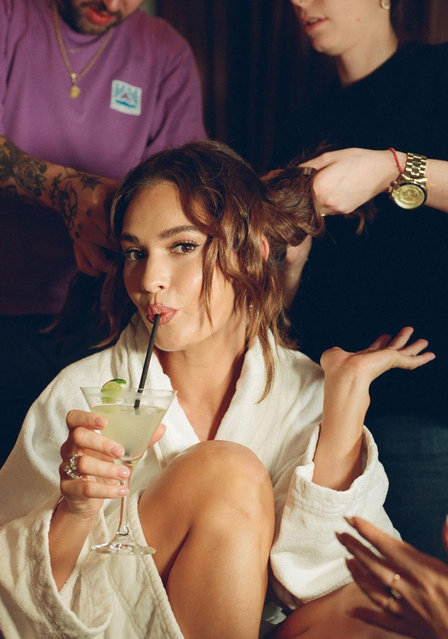
English actress Lily James treats herself to a bougie beverage while getting ready for the London premiere of her new film “What's Love Got to Do With It?” in the second decade of February 2023. (Photo by Instagram)
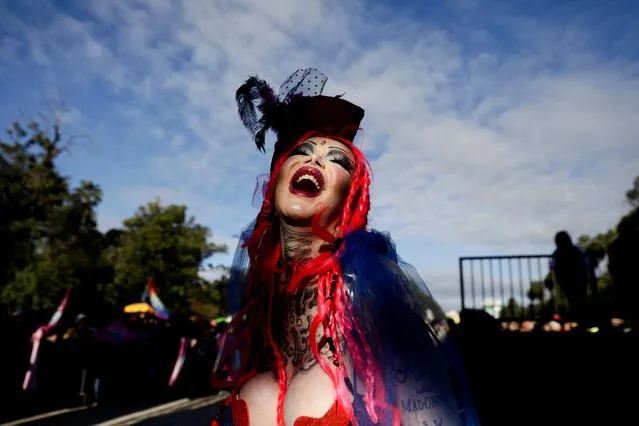
A reveller takes part in the “Free Parade” during LGBTIQ Pride Month in Porto Alegre, state of Rio Grande do Sul, Brazil on June 12, 2022. (Photo by Diego Vara/Reuters)
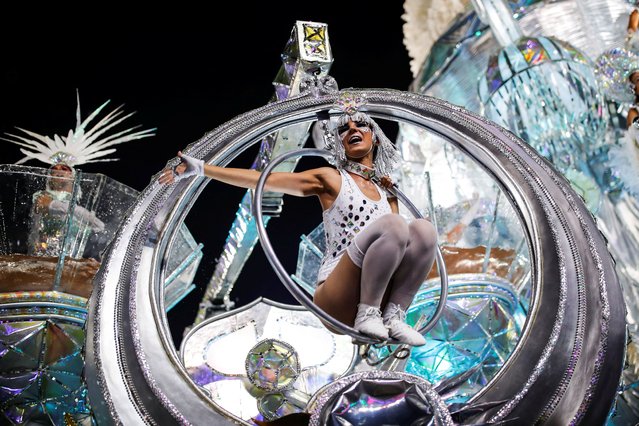
A reveller from Unidos do Viradouro samba school performs during the first night of the Carnival parade at the Sambadrome in Rio de Janeiro, Brazil, April 23, 2022. (Photo by Amanda Perobelli/Reuters)
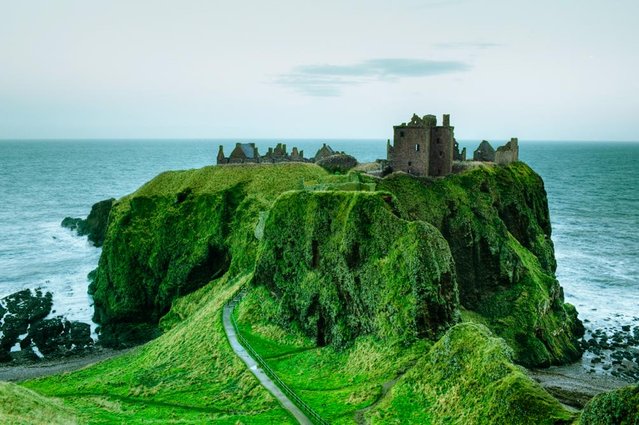
Dunnottar Castleis a ruined medieval fortress located upon a rocky headland on the north-east coast of Scotland, about 3 kilometres (1.9 mi) south of Stonehaven. The surviving buildings are largely of the 15th and 16th centuries, but the site is believed to have been fortified in the Early Middle Ages. Dunnottar has played a prominent role in the history of Scotland through to the 18th-century Jacobite risings because of its strategic location and the strength of its situation. Dunnottar is best known as the place where the Honours of Scotland, the Scottish crown jewels, were hidden from Oliver Cromwell's invading army in the 17th century. The property of the Keiths from the 14th century, and the seat of the Earl Marischal, Dunnottar declined after the last Earl forfeited his titles by taking part in the Jacobite rebellion of 1715. The castle was restored in the 20th century and is now open to the public.
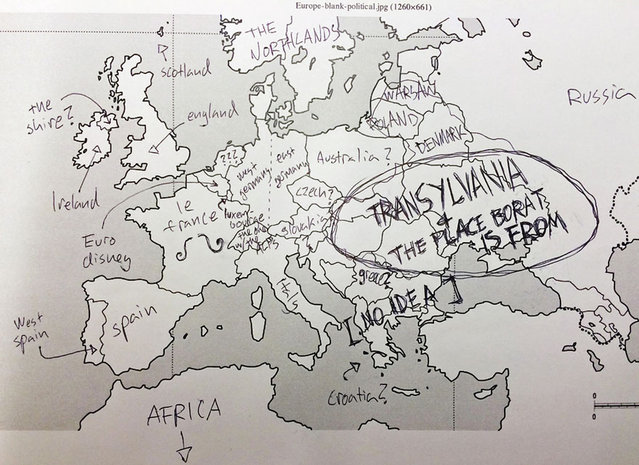
How sure are you of your geographical knowledge? Buzzfeed recently put Americans’ geographical knowledge to the test with a survey in which participants had to write in countries’ names on a blank European political map. Unfortunately, they didn’t fare too well, but some of their responses are hilarious (or hilariously mis-informed). But don’t be so quick to judge Americans – when Buzzfeed posted a similar survey testing Brits’ knowledge of the 50 United States, they also came up short. On the one hand, knowing a country’s states is different from knowing independent countries, but on the other, some U.S. states are larger than some European nations, and some U.S. states have larger economies than some European nations.