Loading...
Done
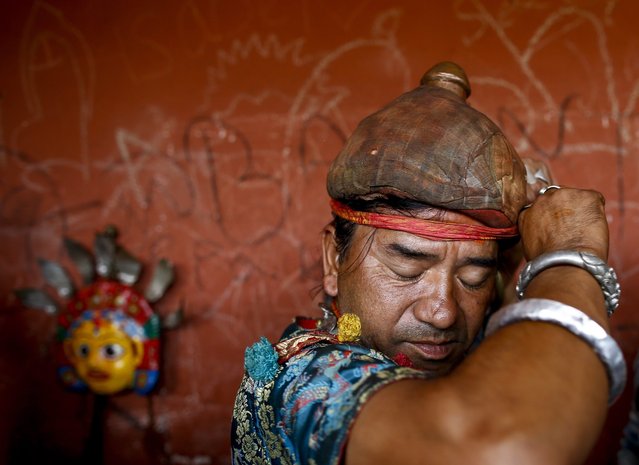
A Nepalese devotee prepares for a religious mask performance during the Seekaali Festival in Khokna village, near Kathmandu, Nepal, 07 October 2016. During the 300-year-old Seekali festival, elderly ethnic Newari devotees wear masks of 14 various goddesses including Lord Ganesha, Lord Shiva, Lord Laxmi, Lord Brahma and Lord Bishnu. The Khokna people celebrate the Seekaali festival as an alternative of the Dashain festival which is biggest festival of Nepalese Hindus that celebrates the victory of the gods over demons. (Photo by Narendra Shrestha/EPA)

A Nepalese devotee prepares for a religious mask performance during the Seekaali Festival in Khokna village, near Kathmandu, Nepal, 07 October 2016. During the 300-year-old Seekali festival, elderly ethnic Newari devotees wear masks of 14 various goddesses including Lord Ganesha, Lord Shiva, Lord Laxmi, Lord Brahma and Lord Bishnu. The Khokna people celebrate the Seekaali festival as an alternative of the Dashain festival which is biggest festival of Nepalese Hindus that celebrates the victory of the gods over demons. (Photo by Narendra Shrestha/EPA)
Details
09 Oct 2016 07:14:00
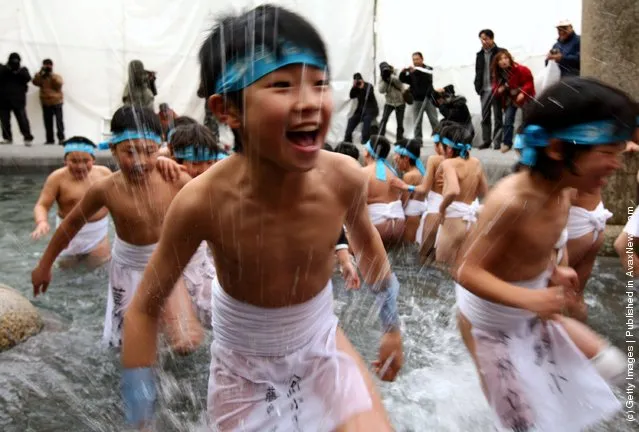
Japanese children wear loincloths as they splash about in freezing cold water during Saidaiji Naked Festival, at Saidaiji Temple

“A Hadaka Matsuri (“Naked Festival”) is a type of Japanese festival, or matsuri, in which participants wear a minimum amount of clothing; usually just a Japanese loincloth (called fundoshi), sometimes with a short happi coat, and rarely completely naked. Whatever the clothing, it is considered to be above vulgar, or everyday, undergarments, and on the level of holy Japanese shrine attire. Naked festivals are held in dozens of places throughout Japan every year, usually in the summer or winter. The most famous festival is held in Okayama, where the festival originated. Every year, over 9,000 men participate in this festival”. – Wikipedia

Photo: Japanese men wear loincloths as they splash about in freezing cold water during Saidaiji Naked Festival, at Saidaiji Temple on February 18, 2012 in Okayama, Japan. (Photo by Buddhika Weerasinghe/Getty Images)
Details
19 Feb 2012 12:18:00
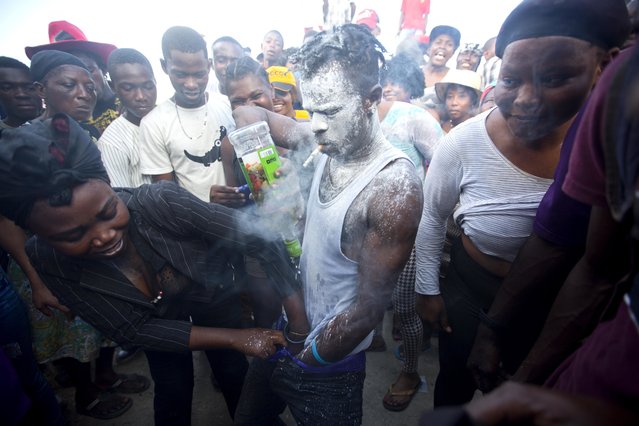
In this November 2, 2018 photo, a voodoo believer who is supposed to be possessed with Gede spirit performs rituals near Baron Samedi's tomb during the annual Voodoo festival Fete Gede at Cite Soleil Cemetery in Port-au-Prince, Haiti. As a proof that they got into trance and their bodies got possessed by Gedes, they drink and wash their faces, their eyes and even their genitals with a mixture of raw rum and hot chili peppers that, according to believers, could burn the skin of any human alive. (Photo by Dieu Nalio Chery/AP Photo)

In this November 2, 2018 photo, a voodoo believer who is supposed to be possessed with Gede spirit performs rituals near Baron Samedi's tomb during the annual Voodoo festival Fete Gede at Cite Soleil Cemetery in Port-au-Prince, Haiti. As a proof that they got into trance and their bodies got possessed by Gedes, they drink and wash their faces, their eyes and even their genitals with a mixture of raw rum and hot chili peppers that, according to believers, could burn the skin of any human alive. (Photo by Dieu Nalio Chery/AP Photo)
Details
06 Nov 2018 00:05:00
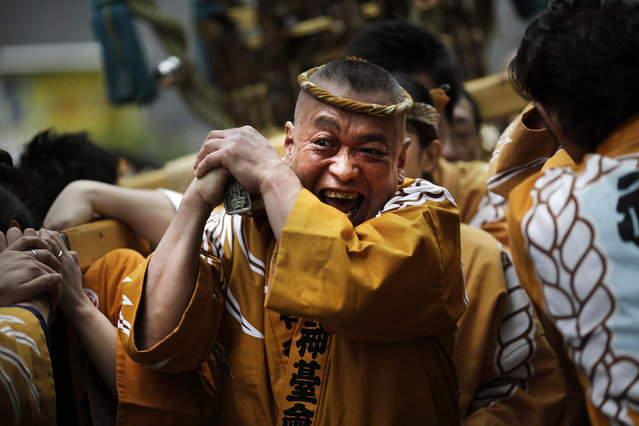
Carrying a portable shrine on their shoulders, participants all clad in traditional happi coats, parade through precincts of the Kanda Myojin shrine during the annual summer festival in Tokyo, Saturday, May 9, 2015. (Photo by Eugene Hoshiko/AP Photo)

Carrying a portable shrine on their shoulders, participants all clad in traditional happi coats, parade through precincts of the Kanda Myojin shrine during the annual summer festival in Tokyo, Saturday, May 9, 2015. (Photo by Eugene Hoshiko/AP Photo)
Details
11 May 2015 11:35:00
A competitor looses control of his pancake while racing during the Shrove Tuesday, or Mardi Gras, tradition at the National Cathedral

A competitor looses control of his pancake while racing during the Shrove Tuesday, or Mardi Gras, tradition at the National Cathedral February 21, 2012 in Washington, DC. (Photo by Chip Somodevilla/Getty Images)
Details
22 Feb 2012 11:43:00
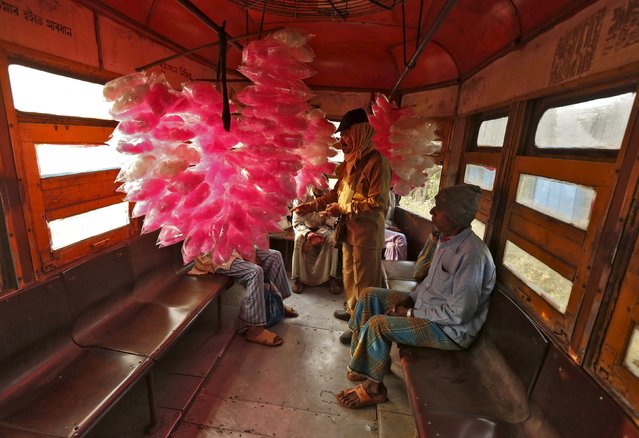
A conductor (C) collects fares from candy floss sellers as they travel in a tram to a marketplace early morning in Kolkata, India, December 23, 2015. (Photo by Rupak De Chowdhuri/Reuters)

A conductor (C) collects fares from candy floss sellers as they travel in a tram to a marketplace early morning in Kolkata, India, December 23, 2015. (Photo by Rupak De Chowdhuri/Reuters)
Details
30 Dec 2015 08:05:00
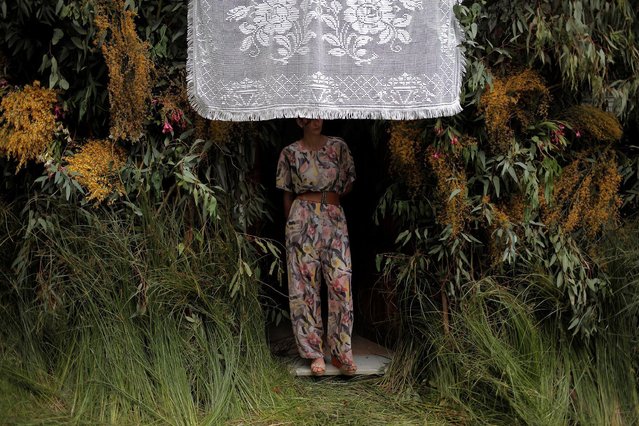
A woman looks out of her house with a decorated doorway during Corpus Christi day in Zahara de la Sierra, southern Spain, May 29, 2016. The village of Zahara de la Sierra celebrated the feast of Corpus Christi (or Body of Christ in Latin) by covering the streets and facades of houses with the branches of trees and grass. (Photo by Jon Nazca/Reuters)

A woman looks out of her house with a decorated doorway during Corpus Christi day in Zahara de la Sierra, southern Spain, May 29, 2016. The village of Zahara de la Sierra celebrated the feast of Corpus Christi (or Body of Christ in Latin) by covering the streets and facades of houses with the branches of trees and grass. (Photo by Jon Nazca/Reuters)
Details
30 May 2016 08:49:00
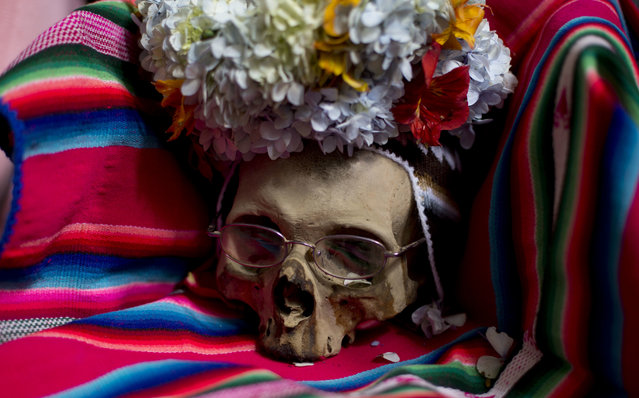
A  decorated human skull or “natitas”, sits on a blanket inside the Cementerio General chapel, during the Natitas Festival celebrations, in La Paz, Bolivia, Tuesday, November 8, 2016. (Photo by Juan Karita/AP Photo)

A decorated human skull or “natitas”, sits on a blanket inside the Cementerio General chapel, during the Natitas Festival celebrations, in La Paz, Bolivia, Tuesday, November 8, 2016. The “natitas” are cared for and decorated by faithful who use them as amulets believing they serve as protection, the tradition marks the end of the Catholic All Saints holiday, but is not recognized by the Catholic church. (Photo by Juan Karita/AP Photo)
Details
09 Nov 2016 06:25:00