Loading...
Done
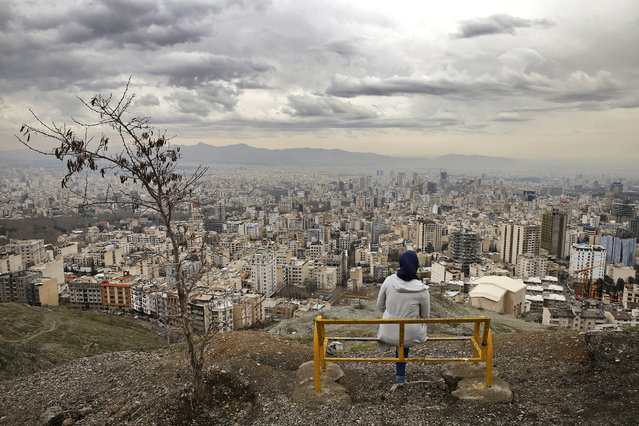
A woman spends her time outdoors to observe the ancient festival of Sizdeh Bedar, an annual public picnic day on the 13th day of the Iranian new year, at the Tochal mountainous area northern Tehran, Iran, Sunday, April, 2, 2017. Sizdeh Bedar, which comes from the Farsi words for “thirteen” and “day out”, is a legacy from Iran's pre-Islamic past that hard-liners in the Islamic Republic never managed to erase from calendars. (Photo by Ebrahim Noroozi/AP Photo)

A woman spends her time outdoors to observe the ancient festival of Sizdeh Bedar, an annual public picnic day on the 13th day of the Iranian new year, at the Tochal mountainous area northern Tehran, Iran, Sunday, April, 2, 2017. Sizdeh Bedar, which comes from the Farsi words for “thirteen” and “day out”, is a legacy from Iran's pre-Islamic past that hard-liners in the Islamic Republic never managed to erase from calendars. (Photo by Ebrahim Noroozi/AP Photo)
Details
21 Apr 2017 07:38:00
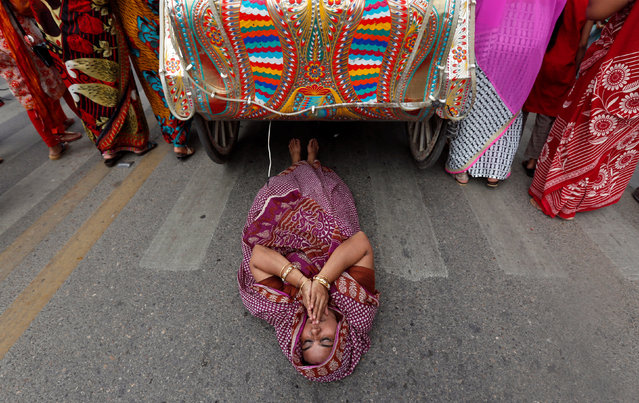
A Hindu devotee lies on a road as the holy “Rath”, or the chariot of lord Jagannath, passed over her during the Rath Yatra, or chariot procession in Karachi, Pakistan, July 17, 2016. Ratha-jatra is derived from two Odia words ratha/rotho meaning “chariot” and jatra meaning “journey”. The festival involves an annual procession (journey) of a deity's idols. Other names for the festival include ratha jatra or chariot festival. (Photo by Akhtar Soomro/Reuters)

A Hindu devotee lies on a road as the holy “Rath”, or the chariot of lord Jagannath, passed over her during the Rath Yatra, or chariot procession in Karachi, Pakistan, July 17, 2016. Ratha-jatra is derived from two Odia words ratha/rotho meaning “chariot” and jatra meaning “journey”. The festival involves an annual procession (journey) of a deity's idols. Other names for the festival include ratha jatra or chariot festival. (Photo by Akhtar Soomro/Reuters)
Details
18 Jul 2016 12:42:00
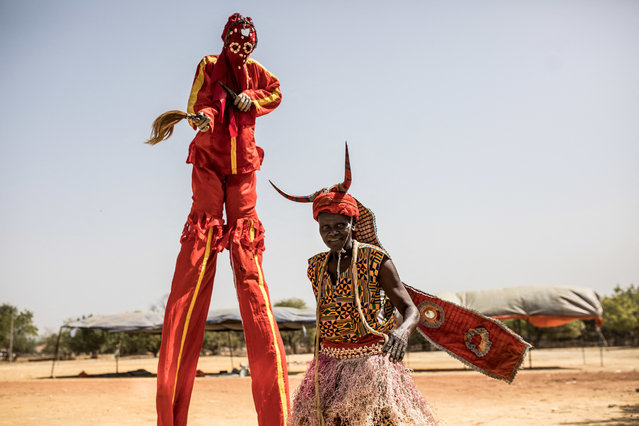
A masquerade dances to drums along the streets during the kankurang Festival in Janjanbureh on January 27, 2024. Listed as a UNESCO World Heritage Site since 2005, Kankurang, a combination of the Mandingo words “kango” and “Kurango”, literally translated as “voice” and “force”, ensures the transmission and teaching of the values and practices that form the basis of Mandingo cultural identity, a West African people whose historical home was the Mali empire. (Photo by Muhamadou Bittaye/AFP Photo)

A masquerade dances to drums along the streets during the kankurang Festival in Janjanbureh on January 27, 2024. Listed as a UNESCO World Heritage Site since 2005, Kankurang, a combination of the Mandingo words “kango” and “Kurango”, literally translated as “voice” and “force”, ensures the transmission and teaching of the values and practices that form the basis of Mandingo cultural identity, a West African people whose historical home was the Mali empire. (Photo by Muhamadou Bittaye/AFP Photo)
Details
13 Mar 2025 01:44:00


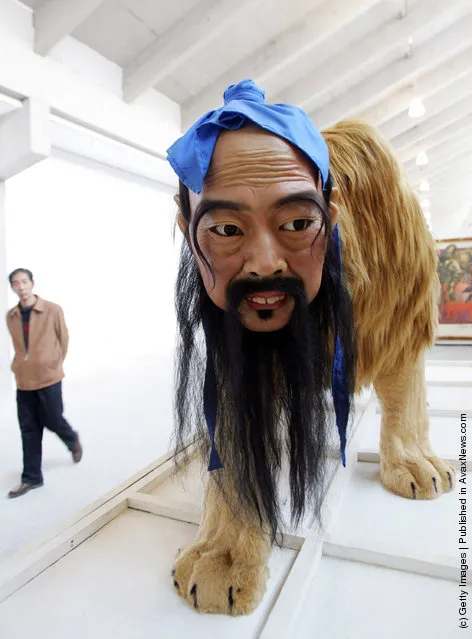
A visitor walks past an installation artwork entitled “Confuciuse” which combines the word “Confucius” and “confuse” in the contemporary art exhibition at “Fun and Art” Festival on December 13, 2008 in Xian of Shaanxi Province, China. (Photo by China Photos/Getty Images)
Details
12 May 2011 08:35:00


Ленинград – Ueban. Necessary explanation: “Ueban” is a very offensive word in Russian. Approximate translation: stupid, inept person. Obviously, humor is in contrast with the handsome man from Bollywood (by the way, the Indians made the clip, and this is noticeable).
Details
14 Jan 2019 11:11:00
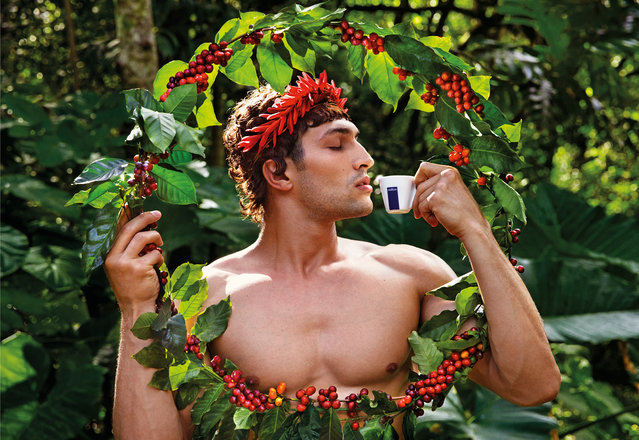
Care – May. (Photo by David LaChapelle/The Guardian)

The photographer best known for his surreal celebrity portraits has teamed up with Lavazza to create their 2020 calendar. Shot in Hawaii, his shoot is a hymn to the relationship between humankind and the natural word. Here: Care – May. (Photo by David LaChapelle/The Guardian)
Details
18 Oct 2019 00:03:00
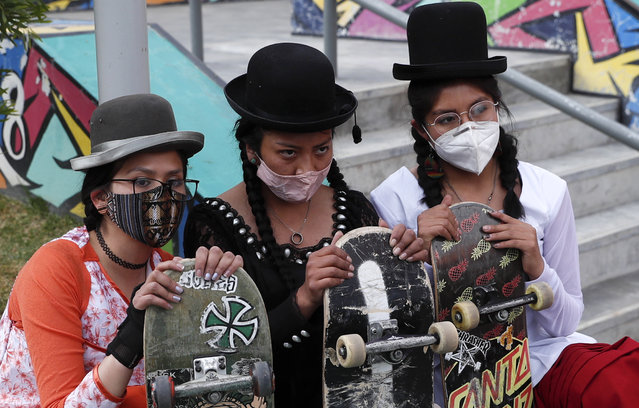
Yanira Villarreal, left, Ayde Choque, center, and Milenda Limachi, wearings masks amid the COVID-19 pandemic and dressed as a “Cholita” pose for a photo with their skateboards during a youth talent show in La Paz, Bolivia, Wednesday, September 30, 2020. Young women called “Skates Imillas”, using the Aymara word for girl Imilla, use traditional Indigenous clothing as a statement of pride of their Indigenous culture while playing riding their skateboards. (Photo by Juan Karita/AP Photo)

Yanira Villarreal, left, Ayde Choque, center, and Milenda Limachi, wearings masks amid the COVID-19 pandemic and dressed as a “Cholita” pose for a photo with their skateboards during a youth talent show in La Paz, Bolivia, Wednesday, September 30, 2020. Young women called “Skates Imillas”, using the Aymara word for girl Imilla, use traditional Indigenous clothing as a statement of pride of their Indigenous culture while playing riding their skateboards. (Photo by Juan Karita/AP Photo)
Details
02 Oct 2020 00:07:00
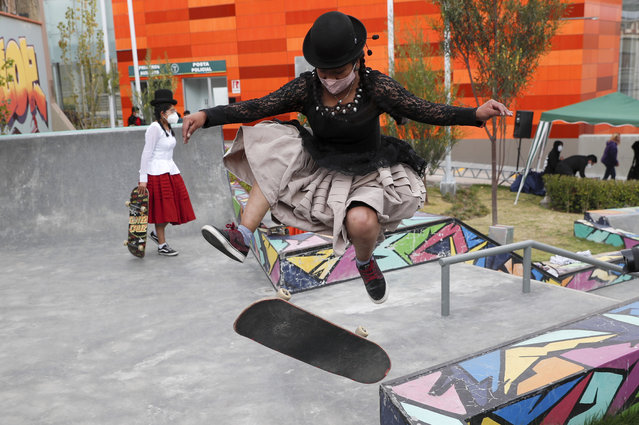
Aide Choque, wearing a mask amid the COVID-19 pandemic, jumps with her skateboard during a youth talent show in La Paz, Bolivia, Wednesday, September 30, 2020. Young women called “Skates Imillas”, using the Aymara word for girl Imilla, use traditional Indigenous clothing as a statement of pride of their Indigenous culture while playing riding their skateboards. (Photo by Juan Karita/AP Photo)

Aide Choque, wearing a mask amid the COVID-19 pandemic, jumps with her skateboard during a youth talent show in La Paz, Bolivia, Wednesday, September 30, 2020. Young women called “Skates Imillas”, using the Aymara word for girl Imilla, use traditional Indigenous clothing as a statement of pride of their Indigenous culture while playing riding their skateboards. (Photo by Juan Karita/AP Photo)
Details
07 Apr 2021 09:51:00