Loading...
Done
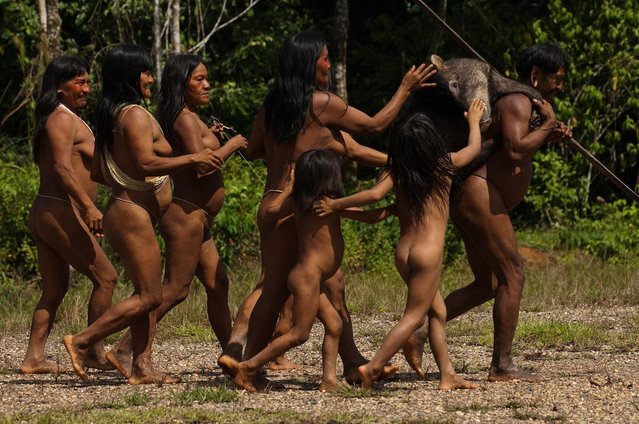
Spectacular images offering insight into the lives of the Huaorani people in the Ecuadorian Amazon have been revealed showing how they use traditional methods to hunt monkeys for food. The stunning pictures were taken by conservation photographer Pete Oxford from Torquay, Devon in the Ecuadorian Amazon. “The Huaorani Indians are a forest people highly in tune with their environment. Many are now totally acculturated since the 1950s by missionaries”, said Pete. “Today they face radical change to their culture to the proximity of oil exploration within their territory and the Yasuni National Park and Biosphere Reserve, they are vastly changed. Some still live very traditionally and for this shoot, through my Huaorani friend, a direct relative of those photographed he wanted to depict them as close to their original culture as possible. They still largely hunt with blow pipes and spears eating a lot of monkeys and peccaries”. The Huaorani are also known as the Waorani, Waodani or the Waos and are native Amerindians. Their lands are located between the Curaray and Napo rivers and speak the Huaorani language. Pete says that during his visit he was welcomed into the group and hopes that ancient cultures can be saved. Here: The tribe were seen celebrating after a hunter returned to camp with a wild pig. (Photo by Pete Oxford/Mediadrumworld.com)

Spectacular images offering insight into the lives of the Huaorani people in the Ecuadorian Amazon have been revealed showing how they use traditional methods to hunt monkeys for food. The stunning pictures were taken by conservation photographer Pete Oxford from Torquay, Devon in the Ecuadorian Amazon. Here: The tribe were seen celebrating after a hunter returned to camp with a wild pig. (Photo by Pete Oxford/Mediadrumworld.com)
Details
20 Jan 2017 07:58:00
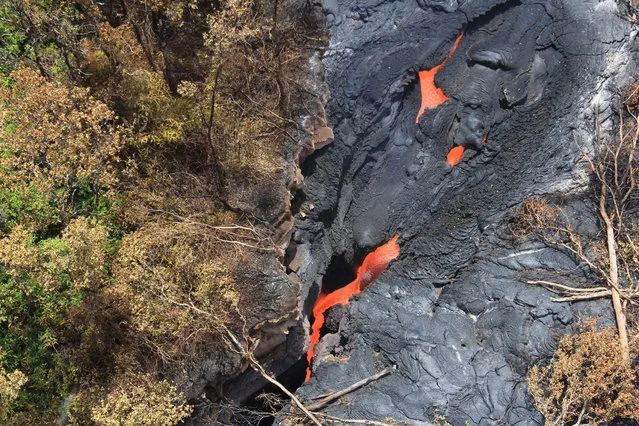
In this September 1, 2014 photo released by the U.S. Geological Survey, fluid lava streams from the June 27 lava flow from the Kilauea volcano in Pahoa, Hawaii. The June 27 lava flow is named for the date it began erupting from a new vent. The Hawaiian Volcano Observatory issued a warning Thursday, September 4, 2014 to a rural community in the path of a lava flow on Hawaii's Big Island, as the molten rock moved to within a mile of homes. (Photo by AP Photo/U.S. Geological Survey)

In this September 1, 2014 photo released by the U.S. Geological Survey, fluid lava streams from the June 27 lava flow from the Kilauea volcano in Pahoa, Hawaii. The June 27 lava flow is named for the date it began erupting from a new vent. The Hawaiian Volcano Observatory issued a warning Thursday, September 4, 2014 to a rural community in the path of a lava flow on Hawaii's Big Island, as the molten rock moved to within a mile of homes. Observatory scientists said lava from the Kilauea volcano could reach the Kaohe Homesteads in five to seven days if it continues advancing through cracks in the earth. (Photo by AP Photo/U.S. Geological Survey)
Details
07 Sep 2014 12:47:00
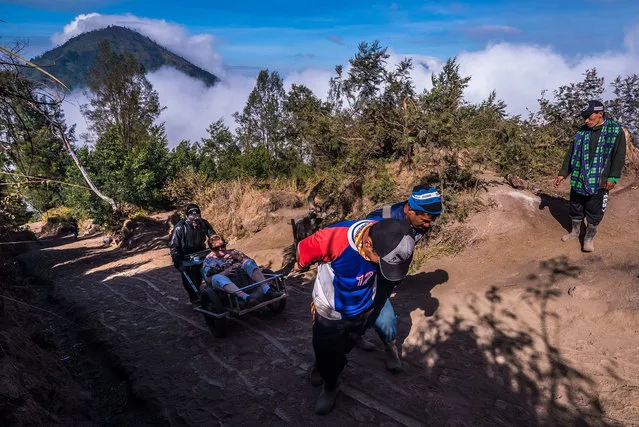
Miners pulling up lazy tourists to the rim of Kawah Ijen (Ijen Volcano), East Java, Indonesia on September 21, 2017. They will earn as much as they would bring down a load of sulfur. Nomadic Explorer, Cultural Lifestyle Photographer Claudio Sieber captured striking images of miners working at Ijen volcanic range in East Java, Indonesia. The sulphur miners risk their lives daily as they climb the active volcano carrying heavy loads, which they sell to sugar refineries. Shortly after midnight curious tourists are flocking in hundreds through the gate of Ijen's foothills to be right on time, driven by the images others took before them. Kawah Ijen is the one of the world's largest acidic volcanic crater lake; famous for its turquoise color as well as the unreal atmosphere it offers during darkness. A dusty path zigzags 3 kilometers up to the crater rim. This doesn't mean anything challenging; in particular, special sights have to be deserved anyway. The irritating smell of sulfur announces the near of the crater's existence. Arriving on the crater's rim the reward for the torture becomes visible. Blue fire darts its tongues through the fumes of sulfur dioxide. Somehow, the spectacle isn't as romantic as expected, since it is also the rough working space of approx. 150 sulfur miners who start their shift at 1 am. Lately, harvesting the abundance of devil's gold received international attention. This did obviously not really improve a miner's lifestyle; neither did it contribute to a better wage. (Photo by Claudio Sieber/Barcroft Images)

Miners pulling up lazy tourists to the rim of Kawah Ijen (Ijen Volcano), East Java, Indonesia on September 21, 2017. They will earn as much as they would bring down a load of sulfur. Nomadic Explorer, Cultural Lifestyle Photographer Claudio Sieber captured striking images of miners working at Ijen volcanic range in East Java, Indonesia. The sulphur miners risk their lives daily as they climb the active volcano carrying heavy loads, which they sell to sugar refineries. (Photo by Claudio Sieber/Barcroft Images)
Details
02 Oct 2017 08:31:00
A woman holds her dogs during a snow flurry as temperatures dropped below freezing during the third coronavirus lockdown in London, Tuesday, February 9, 2021. (Photo by Kirsty Wigglesworth/AP Photo)

A woman holds her dogs during a snow flurry as temperatures dropped below freezing during the third coronavirus lockdown in London, Tuesday, February 9, 2021. (Photo by Kirsty Wigglesworth/AP Photo)
Details
10 Feb 2021 11:15:00
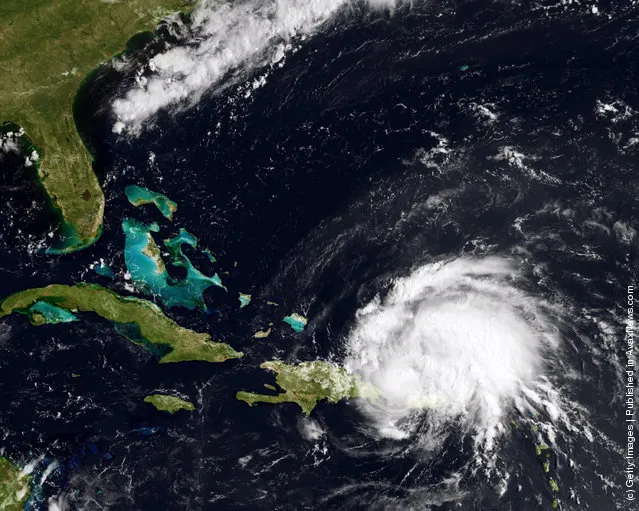
Hurricane Irene

In this handout GOES satellite image provided by the National Oceanic and Atmospheric Administration (NOAA), Irene reaches hurricane strength as it moves across Puerto Rico towards Hispaniola August 22, 2011 in the Caribbean Sea. Irene, the first hurricane of the Atlantic storm season, brought torrential rains and winds to Puerto Rico, downing trees and powerlines and flooding streets. The expected path will bring Irene through the Bahamas and is likely to hit Florida and up the east coast of the U.S. (Photo by NOAA via Getty Images)
Details
23 Aug 2011 12:47:00
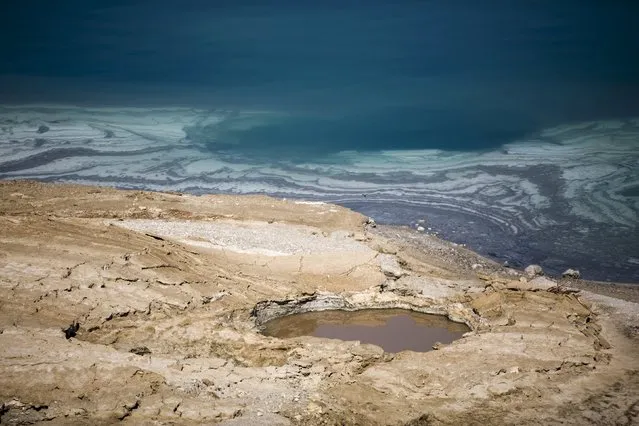
A sinkhole is seen on the shore of the Dead Sea near Kibbutz Ein Gedi, Israel July 27, 2015. The Dead Sea is shrinking, and as its waters vanish at a rate of more than one meter a year, hundreds of sinkholes, some the size of a basketball court, some two storeys deep, are devouring land where the shoreline once stood. (Photo by Amir Cohen/Reuters)

A sinkhole is seen on the shore of the Dead Sea near Kibbutz Ein Gedi, Israel July 27, 2015. The Dead Sea is shrinking, and as its waters vanish at a rate of more than one meter a year, hundreds of sinkholes, some the size of a basketball court, some two storeys deep, are devouring land where the shoreline once stood. (Photo by Amir Cohen/Reuters)
Details
30 Jul 2015 12:06:00
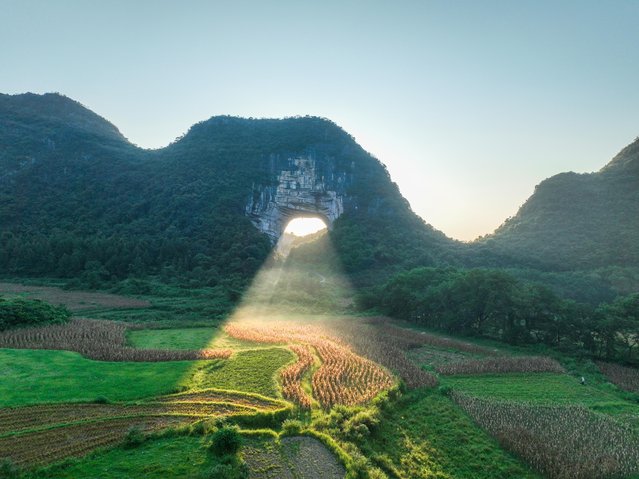
Aerial view of sunbeam shining through mountain cave at Yueyan National Forest Park on August 27, 2024 in Yongzhou, Hunan Province of China. (Photo by Jiang Keqing/VCG via Getty Images)

Aerial view of sunbeam shining through mountain cave at Yueyan National Forest Park on August 27, 2024 in Yongzhou, Hunan Province of China. (Photo by Jiang Keqing/VCG via Getty Images)
Details
07 Sep 2024 03:50:00
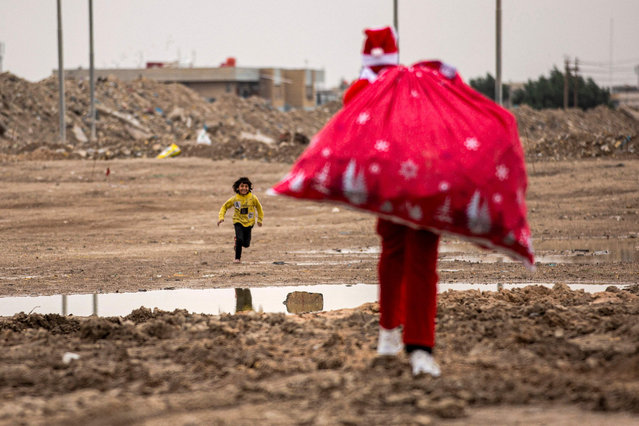
A child runs towards Mohamed Maarouf, 28, as he walks with a sack of gifts while dressed in Saint Nicholas (Santa Claus) costume in a slum near the centre of Iraq's southern city of Basra on December 24, 2021. (Photo by Hussein Faleh/AFP Photo)

A child runs towards Mohamed Maarouf, 28, as he walks with a sack of gifts while dressed in Saint Nicholas (Santa Claus) costume in a slum near the centre of Iraq's southern city of Basra on December 24, 2021. (Photo by Hussein Faleh/AFP Photo)
Details
30 Dec 2021 07:01:00