Loading...
Done
A worker cleans the statue of Yuri Gagarin, the first person who flew to space, ahead of Cosmonautics Day celebrated on April 12, in Moscow, Russia, Wednesday April 10, 2019. Cosmonautics Day marks when Soviet cosmonaut Yuri Gagarin became the first man to fly in space, in 1961, orbiting the earth once before making a safe landing. (Photo by Maxim Marmur/AP Photo)

A worker cleans the statue of Yuri Gagarin, the first person who flew to space, ahead of Cosmonautics Day celebrated on April 12, in Moscow, Russia, Wednesday April 10, 2019. Cosmonautics Day marks when Soviet cosmonaut Yuri Gagarin became the first man to fly in space, in 1961, orbiting the earth once before making a safe landing. (Photo by Maxim Marmur/AP Photo)
Details
12 Apr 2019 00:07:00
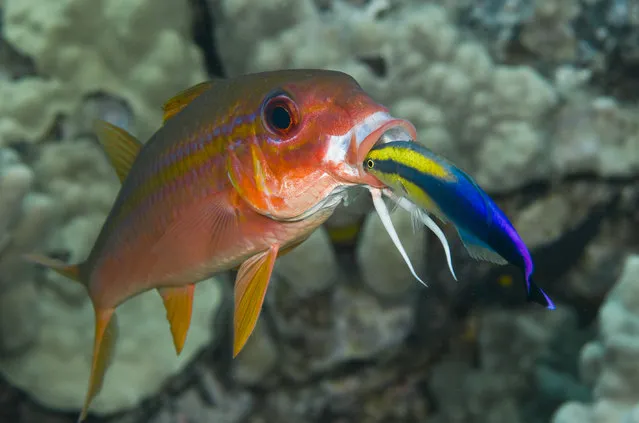
A Hawaiian cleaner wrasse provides its cleaning services to a yellowfin goatfish in a reef community off the Big Island in Hawaii. Cleaner species help rid their hosts of ectoparasites, dead tissue, bacteria and fungi. Studies have shown cleaning to play a vital role in keeping many reef ecosystems healthy. (Photo by Marty Snyderman/Caters News Agency)

A Hawaiian cleaner wrasse provides its cleaning services to a yellowfin goatfish in a reef community off the Big Island in Hawaii. Cleaner species help rid their hosts of ectoparasites, dead tissue, bacteria and fungi. Studies have shown cleaning to play a vital role in keeping many reef ecosystems healthy. (Photo by Marty Snyderman/Caters News Agency)
Details
21 Mar 2018 00:05:00
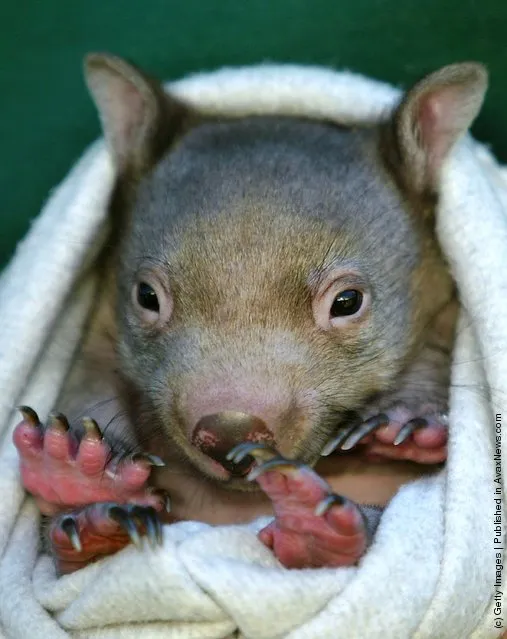
A baby Common Wombat

“Wombats are Australian marsupials; they are short-legged, muscular quadrupeds, approximately 1 metre (39 in) in length with a short, stubby tail. They are adaptable in their habitat tolerances, and are found in forested, mountainous, and heathland areas of south-eastern Australia, including Tasmania, as well as an isolated patch of about 300 ha in Epping Forest National Park in central Queensland”. – Wikipedia

Photo: “Abdul”, a baby Common Wombat, is one of the marsupials on show during the spring baby boom at Taronga Zoo September 1, 2005 in Sydney, Australia. “Abdul” was orphaned when his mother was killed by a car. (Photo by Mark Nolan/Getty Images)
Details
20 Aug 2011 11:23:00
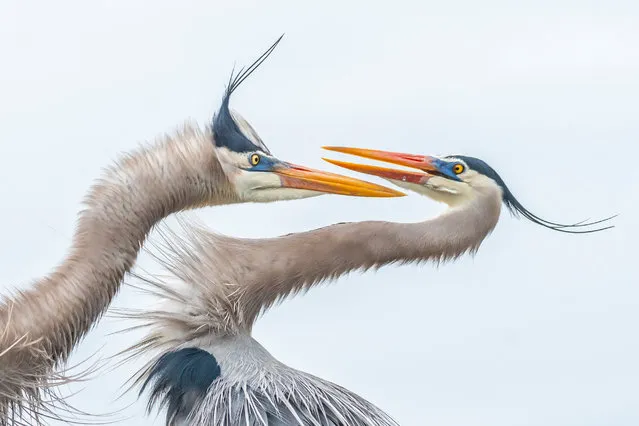
Melissa Rowell, amateur honourable mention. Wakodahatchee wetlands, Delray Beach, Florida, US. Equipped with sinewy necks and spear-like bills, great blue herons can lunge with fearsome speed to strike their aquatic prey. Adults will also employ rapid stabbing motions as one aspect of their complex courtship displays; they’re seemingly dangerous moves, but fitting to the intensity of mating season. (Photo by Melissa Rowell/Audubon photography awards)

Wakodahatchee wetlands, Delray Beach, Florida, US. Equipped with sinewy necks and spear-like bills, great blue herons can lunge with fearsome speed to strike their aquatic prey. Adults will also employ rapid stabbing motions as one aspect of their complex courtship displays; they’re seemingly dangerous moves, but fitting to the intensity of mating season. (Photo by Melissa Rowell/Audubon Photography Awards)
Details
17 Jul 2019 00:03:00
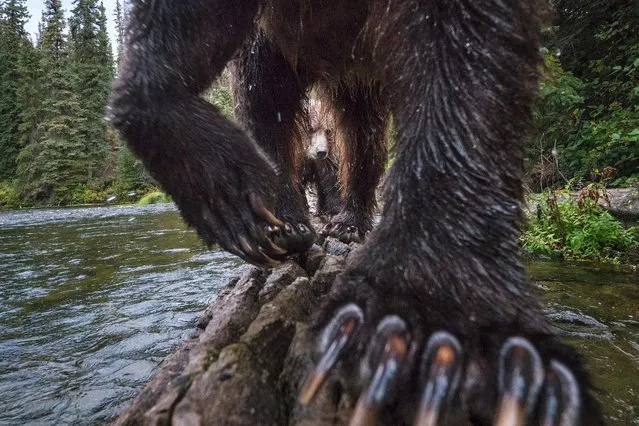
“The Salmon Catchers”. Terrestrial Wildlife. To capture this view of a mother grizzly bear and her cub, photographer Peter Mather set up a camera trap on a log that he knew the bears tended to traverse while fishing for salmon, in the Yukon River watershed in Canada. (Photo by Peter Mather/BigPicture Natural World Photography Competition 2017)

The fourth annual BigPicture Natural World Photography Competition aims to celebrate the diversity of life on Earth, and encourages people to protect and conserve it. Here: “The Salmon Catchers”. Terrestrial Wildlife. To capture this view of a mother grizzly bear and her cub, photographer Peter Mather set up a camera trap on a log that he knew the bears tended to traverse while fishing for salmon, in the Yukon River watershed in Canada. (Photo by Peter Mather/BigPicture Natural World Photography Competition 2017)
Details
02 Jul 2017 07:25:00
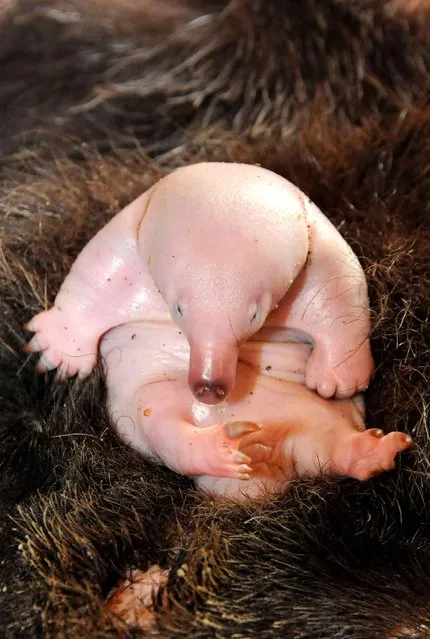
It's a 30-day-old Echidna baby, known as a “puggle” – one of only 24 ever bred in captivity. The proud parents are Tippy and Pickle of Australia Zoo. The tiny baby, whose s*x has not yet been identified, hatched from a soft egg and will continue to develop and nurse inside Tippy's warm pouch. (Photo by Australia Zoo/Rex/Sipa Press)

It's a 30-day-old Echidna baby, known as a “puggle” – one of only 24 ever bred in captivity. The proud parents are Tippy and Pickle of Australia Zoo. The tiny baby, whose s*x has not yet been identified, hatched from a soft egg and will continue to develop and nurse inside Tippy's warm pouch. (Photo by Australia Zoo/Rex/Sipa Press)
Details
21 Sep 2013 10:30:00
People celebrate the start of the New Year as fireworks illuminate Copacabana Beach in Rio de Janeiro, Brazil, early Monday, January 1, 2024. (Photo by Bruna Prado/AP Photo)

People celebrate the start of the New Year as fireworks illuminate Copacabana Beach in Rio de Janeiro, Brazil, early Monday, January 1, 2024. (Photo by Bruna Prado/AP Photo)
Details
12 Feb 2024 13:47:00
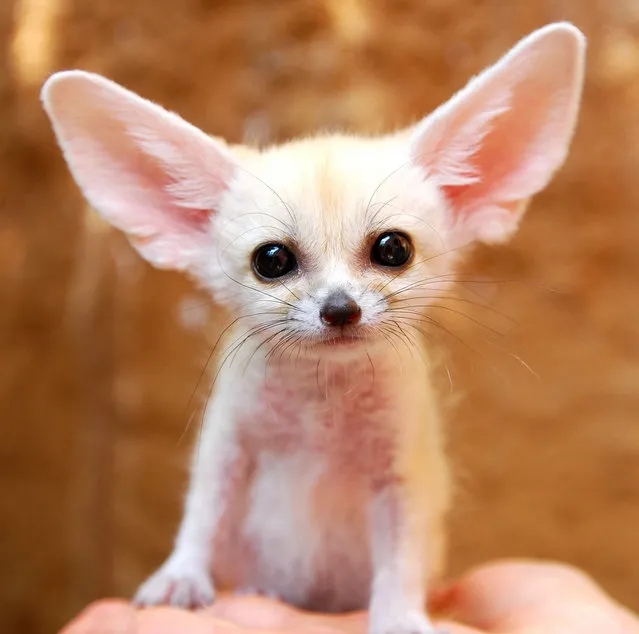
Baby Fennec Fox

“The fennec fox or fennec (Vulpes zerda) is a small nocturnal fox found in the Sahara of North Africa. Its most distinctive feature is its unusually large ears, which serve to dissipate heat”. – Wikipedia. (Photo by In Cherl Kim)
Details
14 Sep 2012 12:15:00