Loading...
Done
Members of the general public enjoy the “BEACH” at the National Building Museum August 25, 2015 in Washington, DC. The “BEACH” is an interactive architectural installation, with an “ocean” of nearly one million recyclable translucent plastic balls, that brings the experience of going to the beach indoor. (Photo by Alex Wong/Getty Images)

Members of the general public enjoy the “BEACH” at the National Building Museum August 25, 2015 in Washington, DC. The “BEACH” is an interactive architectural installation, with an “ocean” of nearly one million recyclable translucent plastic balls, that brings the experience of going to the beach indoor. (Photo by Alex Wong/Getty Images)
Details
27 Aug 2015 11:31:00
An enterprising Chinese man pulls a bicycle cart packed high with bags of recyclable plastic containers in Shanghai July 25, 2002. The man sells each kilogram (2.2 pounds) of plastic for 0.08 yuan ($.01) to a nearby depot. (Photo by Claro Cortes IV/Reuters)

An enterprising Chinese man pulls a bicycle cart packed high with bags of recyclable plastic containers in Shanghai July 25, 2002. The man sells each kilogram (2.2 pounds) of plastic for 0.08 yuan ($.01) to a nearby depot. (Photo by Claro Cortes IV/Reuters)
Details
20 Sep 2013 08:59:00
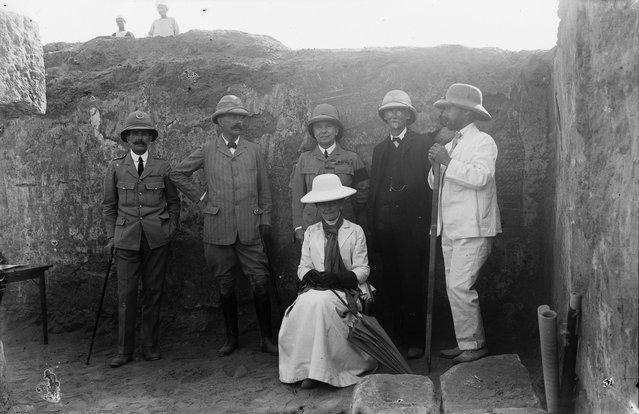
Remarkable discoveries were made, like the decapitated head of a bronze statue of Roman emperor Augustus, sacked from a raid on Roman garrisons further north in Egypt. Here: A group visiting the excavations at Meroë, including (from left) Midwinter Bey, director of Sudan Railways; Lord Kitchener; General Sir Francis Reginald Wingate, Sirdar of the Egyptian Army; Professor Archibald Sayce; John Garstang; and Lady Catherine Wingate, 1911. (Photo by Garstang Museum of Archaeology)

The city of Meroë laid undiscovered for two millennia before British archaeologist John Garstang excavated it in the early 20th century. Garstang took the radical decision to document his discoveries with photography – and immortalised an ancient world. “Meroë: Africa’s Forgotten Empire” is being shown until 14 September at Garstang Museum of Archaeology, Liverpool. Here: A group visiting the excavations at Meroë, including (from left) Midwinter Bey, director of Sudan Railways; Lord Kitchener; General Sir Francis Reginald Wingate, Sirdar of the Egyptian Army; Professor Archibald Sayce; John Garstang; and Lady Catherine Wingate, 1911. (Photo by Garstang Museum of Archaeology)
Details
15 Jun 2016 14:49:00


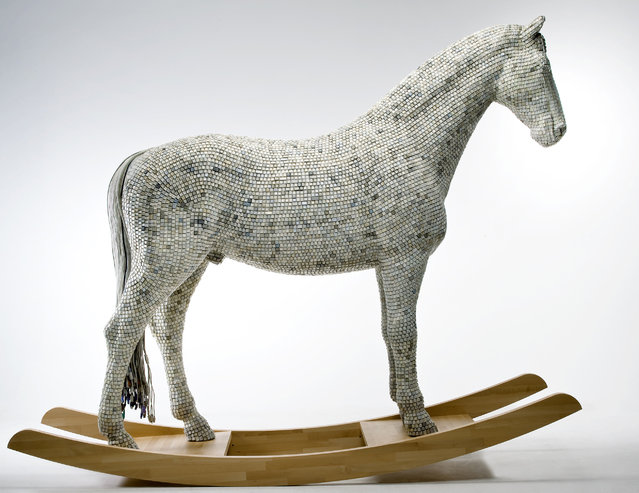
“Hedonism(y) Trojaner” is a sculpture of a horse that is made out of resin and recycled computer keys and cables. The sculpture references the Trojan Horse of myth (and more recently, computing) and was created by Nuremberg, Germany-based artist Babis Pangiotidis.
Details
07 Dec 2012 14:58:00
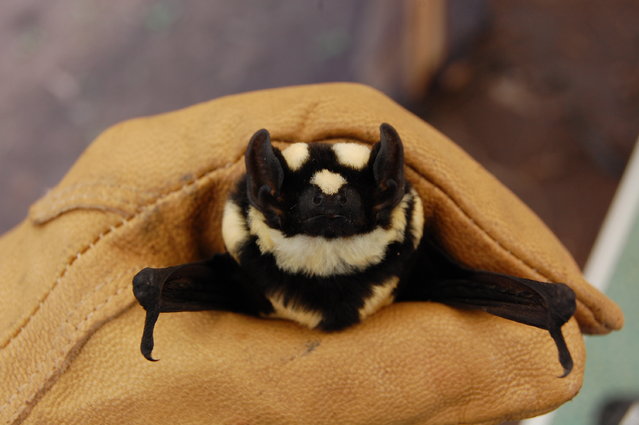
New Genus Of Bat Niumbaha superba

A new genus of bat has been discovered in South Sudan, the world’s newest country. The strikingly striped bat has been placed into the genus Niumbaha, which means “rare” or “unusual” in the Zande language of the region.
Details
17 Apr 2013 12:51:00
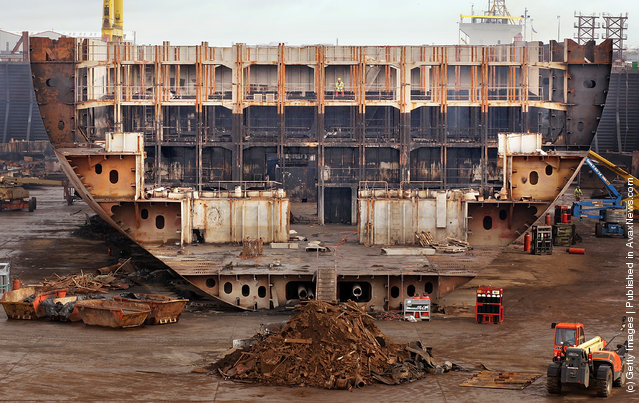
The Ending Of Life Of The Cargo Ship

The MSC Napoli cargo ship lies in a dry dock at Harland and Wolff ship builders as it is dismantled for recycling on April 11, 2008 in Belfast, Northern Ireland. (Photo by Peter Macdiarmid/Getty Images)
Details
23 Oct 2011 14:47:00
Stella McCartney has launched its Summer 2024 campaign, the brand's most sustainable collection to date – crafted from 95% conscious materials. Starring eco-activist, model and actor Cara Delevingne, it is shot at the Veolia recycling plant in South London in March 2024. (Photo by Stella McCartney)

Stella McCartney has launched its Summer 2024 campaign, the brand's most sustainable collection to date – crafted from 95% conscious materials. Starring eco-activist, model and actor Cara Delevingne, it is shot at the Veolia recycling plant in South London in March 2024. (Photo by Stella McCartney)
Details
14 Apr 2024 03:50:00
A rose chafer in Oxfordshire, UK on July 8, 2024. The beetles are often seen on flowers in the garden and are sometimes maligned for munching their way through these plants. However, they are an important detritivore as they feed on dead and decaying matter and recycle its nutrients, which makes a helpful addition to any compost. (Photo by Geoffrey Swaine/Rex Features/Shutterstock)

A rose chafer in Oxfordshire, UK on July 8, 2024. The beetles are often seen on flowers in the garden and are sometimes maligned for munching their way through these plants. However, they are an important detritivore as they feed on dead and decaying matter and recycle its nutrients, which makes a helpful addition to any compost. (Photo by Geoffrey Swaine/Rex Features/Shutterstock)
Details
21 Jul 2024 05:04:00