Loading...
Done
Sushi Cats By Tange & Nakimushi Peanuts

Sushi Cats (originally branded as Neko-Sushi) is a series of photographs created by the Japan-based company Tange & Nakimushi Peanuts. In this series the creators have dressed up a number of cats and placed them on top of oversized balls of sushi rice. The kitties don’t look too happy with what is going on, though they do look adorable in their little outfits. Tange & Nakimushi Peanuts didn’t think that making a set of photos was enough, so they’ve also created an Android and iPhone apps featuring Sushi Cats. Moreover, people living in Japan can visit their website, if they wish to order photo prints, postcards, and other items. (Photo by Tange & Nakimushi Peanuts)
Details
08 Jan 2015 14:14:00
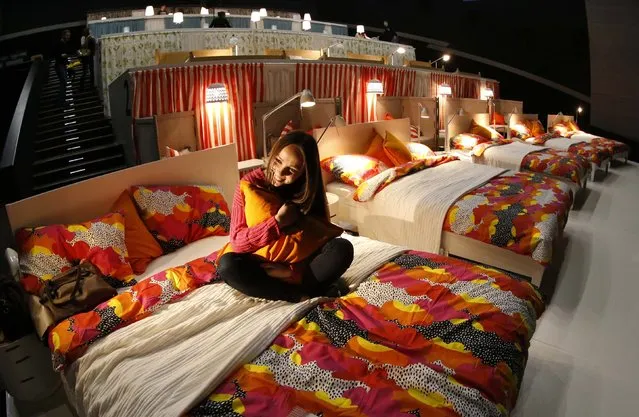
Spectators await the start of a cinema screening at a Kinostar De Lux Multiplex in the Moscow suburb of Khimki, December 7, 2014. (Photo by Sergei Karpukhin/Reuters)

Spectators await the start of a cinema screening at a Kinostar De Lux Multiplex in the Moscow suburb of Khimki, December 7, 2014. Furniture retailer IKEA has converted one of the cinema halls, completely replacing standard seats with their furniture, according to local media. There are 17 double beds fitted in the hall, which was renamed to “It wakes love”. (Photo by Sergei Karpukhin/Reuters)
Details
08 Dec 2014 12:06:00
Road Wallah by Photographer Dougie Wallace

“Bombay’s once ubiquitous Premier Padmini taxis were introduced in the 60s and are dwindling at an alarming rate. This follows a decree banning vehicles over 25 years old from the streets to be replaced with “modern alternatives”. In a few years these iconic workhorses will be gone from Bombay’s streets altogether. It is important to capture this before it disappears and I see the road wallah's cabs as the time capsules that allow me to do this”. – Dougie Wallace, Bombay India, March, 2013. (Photo by Dougie Wallace)
Details
27 May 2013 12:01:00
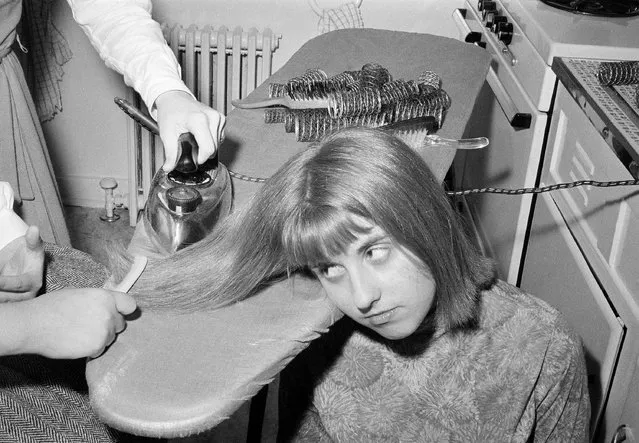
Teenage girls are all steamed up these days about straight hair. The steam iron is replacing the huge rollers on which countless teens slept every night to achieve the height and curls fashionable until. The same girls endure having their hair stretched to absolute straightness on the ironing board, and then ironed to keep it that way. Unlike the roller setting, this takes teamwork. Gay Stilley, 14, goes through an ironing session with a couple of her friends at the Stilley Home in Glen Oaks, Queens, New York City on December 23, 1964. With a wary eye, Gay tries to watch the straightening process as one friend stretches her hair with a comb and another does the ironing, in the Stilley kitchen. (Photo by Marty Zimmerman/AP Photo)

Teenage girls are all steamed up these days about straight hair. The steam iron is replacing the huge rollers on which countless teens slept every night to achieve the height and curls fashionable until. The same girls endure having their hair stretched to absolute straightness on the ironing board, and then ironed to keep it that way. Unlike the roller setting, this takes teamwork. Gay Stilley, 14, goes through an ironing session with a couple of her friends at the Stilley Home in Glen Oaks, Queens, New York City on December 23, 1964. With a wary eye, Gay tries to watch the straightening process as one friend stretches her hair with a comb and another does the ironing, in the Stilley kitchen. (Photo by Marty Zimmerman/AP Photo)
Details
05 Jan 2018 07:00:00
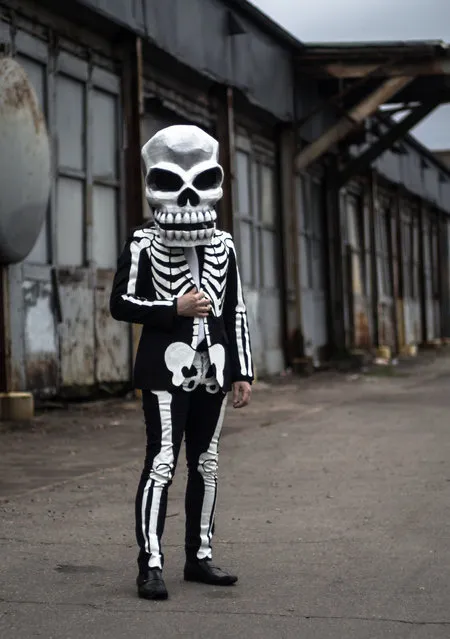
“The Skeleton Krewe 2013 – Manning”. (Kevin O'Mara)

“The Skeleton Krewe was founded in 1999 by Christopher Kirsch. Inspired by the early days of Carnival before tractors and floats replaced walking processions, the Krewe has become one of New Orleans' premier marching clubs. The Krewe began actively marching as a small group of friends, but has grown to 40 active members”. – The Skeleton Krewe. Photo: “The Skeleton Krewe 2013 – Manning”. (Photo by Kevin O'Mara)
Details
29 Oct 2013 11:56:00
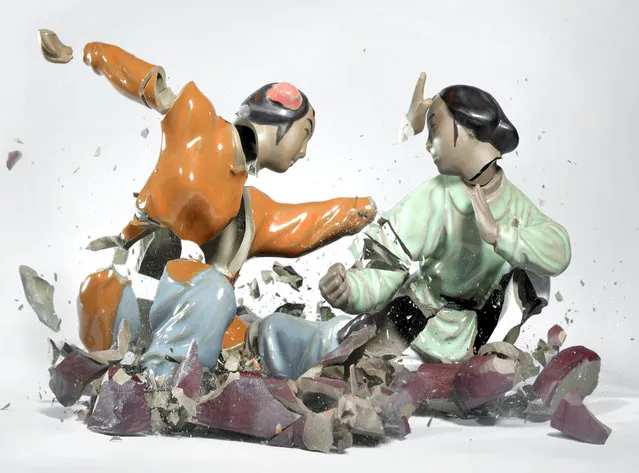
Porcelain Figurines By Martin Klimas

From a height of three meters, porcelain figurines are dropped on the ground, and the sound they make when they hit trips the shutter release. The result: razor-sharp images of disturbing beauty—temporary sculptures made visible to the human eye by high-speed photography technology. The porcelain statuette bursting into pieces isn't what really captures the attention; the fascination lies in the genesis of a dynamic figure that replaces the static pose. In contrast to the inertness of the intact kitsch figurines Klimas started out with, the photographs of their destruction possess a powerfully narrative character.
Details
21 Apr 2014 12:59:00
Australian photographer Brendan Fitzpatrick’s X-ray photographs expose the inner workings of toys. Fitzpatrick’s photographs are both whimsical and mechanical, evoking the curiosity of childhood and the desire to discover how things look and work from other perspectives. (Photo by Brendan Fitzpatrick)

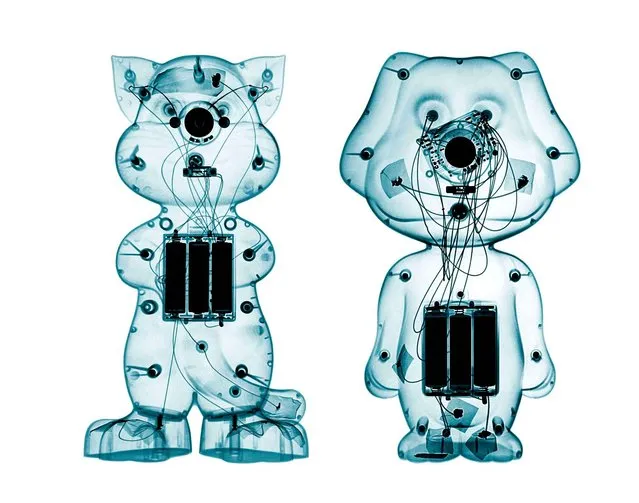
Australian photographer Brendan Fitzpatrick’s X-ray photographs expose the inner workings of toys. Fitzpatrick’s photographs are both whimsical and mechanical, evoking the curiosity of childhood and the desire to discover how things look and work from other perspectives. The strategic placement of wires, batteries, and screws are revealed, the complexity of the inside contrasting with the seemingly simplistic design of the outside. Fitzpatrick uses chest X-ray and mammogram machines to photograph flowers, toys, and creatures, then enhances the color in the images in order to more effectively distinguish the various parts that have been exposed. This photographs are part of series he calls “Invisible Light”. (Photo by Brendan Fitzpatrick)
Details
08 Aug 2014 10:59:00
Two boys in the Gorbals area of Glasgow, UK on January 31, 1948. The Gorbals tenements were built quickly and cheaply in the 1840s, providing housing for Glasgow's burgeoning population of industrial workers. Conditions were appalling; overcrowding was standard and sewage and water facilities inadequate. The tenements housed about 40,000 people with up to eight family members sharing a single room, 30 residents sharing a toilet and 40 sharing a tap. By the time this photograph was taken 850 tenements had been demolished since 1920. Redevelopment of the area began in the late 1950s and the tenements were replaced with a modern tower block complex in the sixties. (Photo by Bert Hardy/Getty Images)

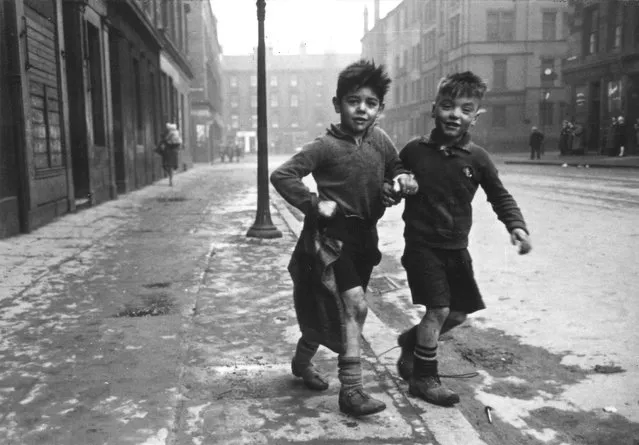
Two boys in the Gorbals area of Glasgow, UK on January 31, 1948. The Gorbals tenements were built quickly and cheaply in the 1840s, providing housing for Glasgow's burgeoning population of industrial workers. Conditions were appalling; overcrowding was standard and sewage and water facilities inadequate. The tenements housed about 40,000 people with up to eight family members sharing a single room, 30 residents sharing a toilet and 40 sharing a tap. By the time this photograph was taken 850 tenements had been demolished since 1920. Redevelopment of the area began in the late 1950s and the tenements were replaced with a modern tower block complex in the sixties. (Photo by Bert Hardy/Getty Images)
Details
09 Mar 2017 00:03:00