Loading...
Done
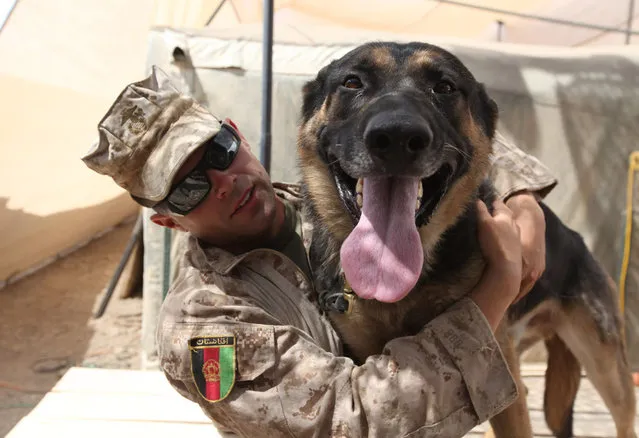
Afghanistan: Dogs of War Part 1

Throughout the course of the long war in Afghanistan, Coalition troops have relied on thousands of military working dogs to help keep them safe, and make their jobs easier. The dogs are trained to detect explosives, to find illegal drugs, to search for missing comrades, or target enemy combatants. Not only are they active on the front lines, but behind the lines they serve as therapy dogs, service dogs, and loyal companions. They also share the same risks as the ground troops, suffering injuries and sometimes death on the battlefields. Gathered here are images of these dogs and their handlers in Afghanistan and back home, from over the past several years, part of the ongoing series here on Afghanistan.
Details
03 Jun 2014 21:02:00


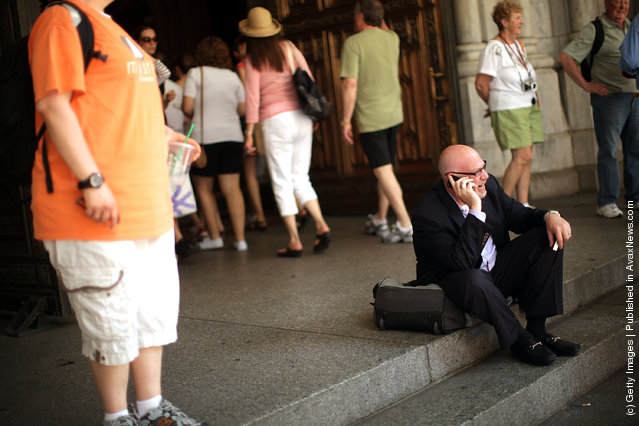
A man speaks on his mobile phone on May 31, 2011 in New York City. In a new report by 31 scientists meeting at the World Health Organization's International Agency for Research on Cancer (WHO/IARC) it was found that using a mobile phone may increase your risk for certain kinds of brain cancers. While further scientific work will be conducted, the group of scientists from 14 countries classified cell phones in the carcinogenic category 2B, which is similar to the pesticide DDT and gasoline engine exhaust. (Photo by Spencer Platt/Getty Images)
Details
01 Jun 2011 06:40:00
This photo taken on May 17, 2019 shows rough rubies displayed at the gems market in Mogok town, north of Mandalay. (Photo by Ye Aung Thu/AFP Photo)

This photo taken on May 17, 2019 shows rough rubies displayed at the gems market in Mogok town, north of Mandalay. Burrowing deep underground, thousands of informal miners risk their lives to find gleaming red gems as a law change spurs opportunity in Myanmar's “land of rubies”. (Photo by Ye Aung Thu/AFP Photo)
Details
29 May 2019 00:01:00
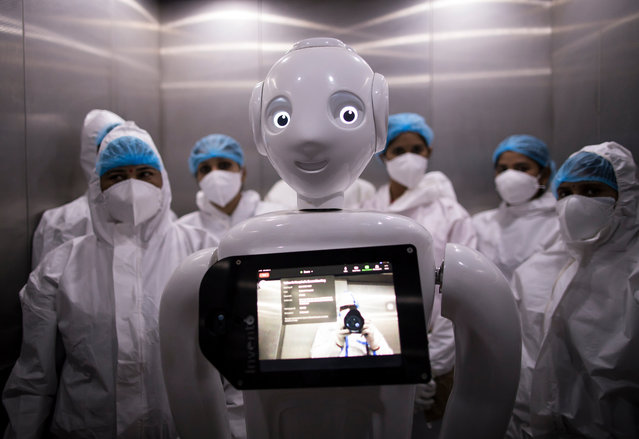
A robot used to assist Covid-19 patients is seen in an elevator on December 5, 2020 in New Delhi, India. The “Mitra” robot can connect patients with their loved ones, and can assist healthcare workers on the frontlines of the pandemic by minimisng the risk of infections caused by close contact. The Yatharth Hospital, which is treating Covid-19 patients in Noida, on the outskirts of New Delhi, is one of a handful of hospitals in India that has started to use robots. (Photo by Anindito Mukherjee/Getty Images)

A robot used to assist Covid-19 patients is seen in an elevator on December 5, 2020 in New Delhi, India. The “Mitra” robot can connect patients with their loved ones, and can assist healthcare workers on the frontlines of the pandemic by minimisng the risk of infections caused by close contact. The Yatharth Hospital, which is treating Covid-19 patients in Noida, on the outskirts of New Delhi, is one of a handful of hospitals in India that has started to use robots. (Photo by Anindito Mukherjee/Getty Images)
Details
21 Dec 2020 00:05:00
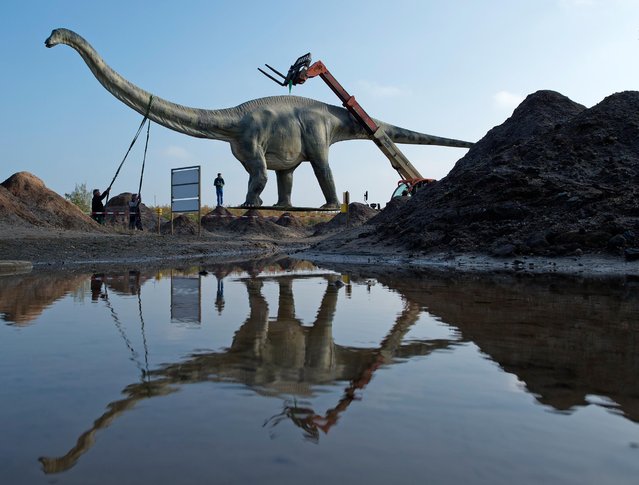
Workers transport a model of a dinosaur  at the exhibition “World of Dinosaurs” at a former lignite surface mining area  in Grosspoesna near Leipzig, central Germany, Wednesday, October 29, 2014. A 100-foot long statue of a dinosaur had to be moved Wednesday because German authorities had deemed it a safety risk. (Photo by Jens Meyer/AP Photo)

Workers transport a model of a dinosaur at the exhibition “World of Dinosaurs” at a former lignite surface mining area in Grosspoesna near Leipzig, central Germany, Wednesday, October 29, 2014. A 100-foot long statue of a dinosaur had to be moved Wednesday because German authorities had deemed it a safety risk. Officials feared the sculpture could cause traffic accidents by distracting drivers on a nearby highway. The reptile, one of 50 species on show in the World of Dinosaurs exhibit near Leipzig, was moved to a less conspicuous position further from the road. (Photo by Jens Meyer/AP Photo)
Details
31 Oct 2014 12:08:00
A member of the public wears a pandemic face mask ahead of the prime minister announcing the government's Covid-19 winter strategy on September 13, 2021 in Manchester, England. Tomorrow, British Prime Minister Boris Johnson will set out his plan to manage Covid-19 through the winter, including what actions would need to be taken if the NHS hospital system were at risk of being overwhelmed. (Photo by Christopher Furlong/Getty Images)

A member of the public wears a pandemic face mask ahead of the prime minister announcing the government's Covid-19 winter strategy on September 13, 2021 in Manchester, England. Tomorrow, British Prime Minister Boris Johnson will set out his plan to manage Covid-19 through the winter, including what actions would need to be taken if the NHS hospital system were at risk of being overwhelmed. (Photo by Christopher Furlong/Getty Images)
Details
22 Oct 2021 09:56:00
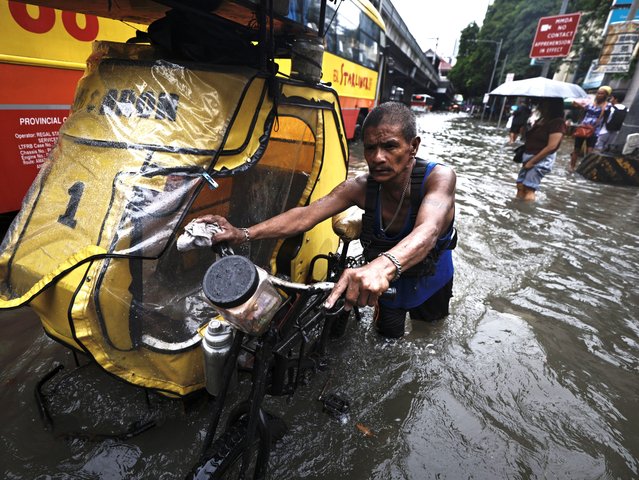
Filipinos wade through floodwaters along a road in Manila, Philippines, 22 August 2025. The National Disaster Risk Reduction and Management Council (NDRRMC) on 22 August raised its alert level and warned residents of flooding in low-lying areas and landslides in mountainous communities brought by a storm. The government weather bureau said a Tropical Cyclone Wind Signal Number 01 is raised over 17 areas due to Tropical Depression “Isang”, which made landfall over the Aurora province. (Photo by Francis R. Malasig/EPA)

Filipinos wade through floodwaters along a road in Manila, Philippines, 22 August 2025. The National Disaster Risk Reduction and Management Council (NDRRMC) on 22 August raised its alert level and warned residents of flooding in low-lying areas and landslides in mountainous communities brought by a storm. The government weather bureau said a Tropical Cyclone Wind Signal Number 01 is raised over 17 areas due to Tropical Depression “Isang”, which made landfall over the Aurora province. (Photo by Francis R. Malasig/EPA)
Details
20 Sep 2025 03:43:00
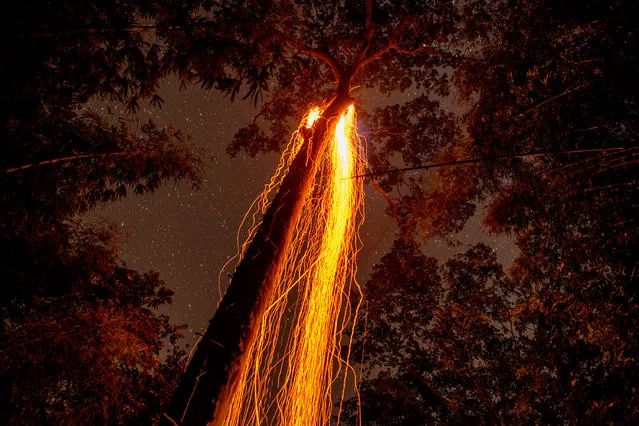
Bees are sensitive to light, which makes them follow the glowing embers down to the ground. (Photo by Hasnoor Hussain/The Guardian)

During the spring harvest season, a group of traditional Malaysian honey hunters travel to the rainforest near the Thai border to collect honeycombs from giant bees – and risk their lives climbing 200ft trees. Here: Bees are sensitive to light, which makes them follow the glowing embers down to the ground. (Photo by Hasnoor Hussain/The Guardian)
Details
22 Oct 2016 10:26:00