Loading...
Done
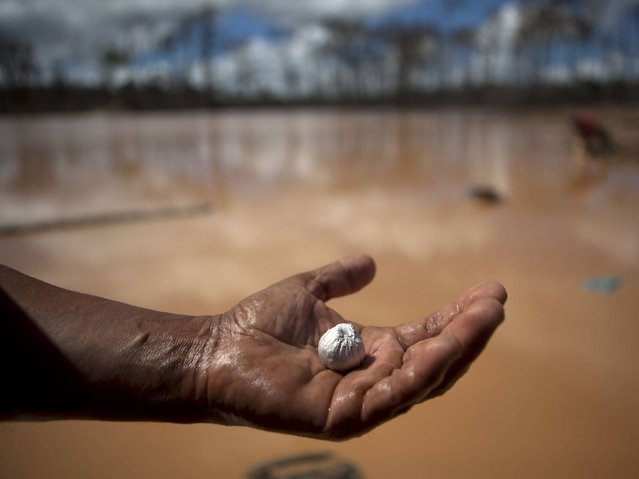
A miner holds an amalgam of mercury and gold he mined after working a 28-hour shift at an illegal gold mining process in La Pampa, in Peru's Madre de Dios region. (Photo by Rodrigo Abd/AP Photo)

In this May 4, 2014 photo, a miner holds an amalgam of mercury and gold he mined after working a 28-hour shift at an illegal gold mining process, in La Pampa, in Peru's Madre de Dios region. Thousands of artisanal gold miners sweat through the long shifts and endure, for a few grams of gold, the perils of collapsing earth, limb-crushing machinery and the toxic mercury used to bind gold flecks. (Photo by Rodrigo Abd/AP Photo)
Details
14 May 2014 10:05:00
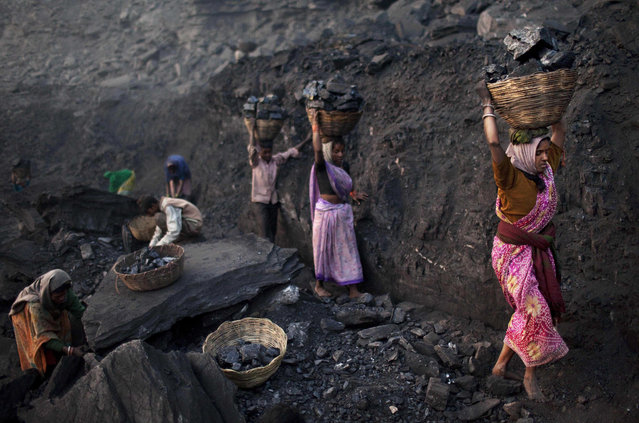
In this Friday, January 7, 2011 photo, people carry baskets of coal scavenged illegally at an open-cast mine in the village of Bokapahari in the eastern Indian state of Jharkhand where a community of coal scavengers live and work. The world's biggest coal users – China, the United States and India – have boosted coal mining in 2017, in an abrupt departure from last year's record global decline for the heavily polluting fuel and a setback to efforts to rein in climate change emissions. (Photo by Kevin Frayer/AP Photo)

In this Friday, January 7, 2011 photo, people carry baskets of coal scavenged illegally at an open-cast mine in the village of Bokapahari in the eastern Indian state of Jharkhand where a community of coal scavengers live and work. The world's biggest coal users – China, the United States and India – have boosted coal mining in 2017, in an abrupt departure from last year's record global decline for the heavily polluting fuel and a setback to efforts to rein in climate change emissions. (Photo by Kevin Frayer/AP Photo)
Details
28 Jun 2017 08:08:00
An aerial view shows a sinkhole 3.5 km (2 miles) to the east of Solikamsk-2 mine in Perm region, November 20, 2014. Shares in Russia's Uralkali, the world's top potash producer, fell sharply for a second day on Wednesday after a mine accident that could reduce global supplies and push up prices of the crop nutrient worldwide. (Photo by Reuters/Press service of Uralkali company)

An aerial view shows a sinkhole 3.5 km (2 miles) to the east of Solikamsk-2 mine in Perm region, November 20, 2014. Shares in Russia's Uralkali, the world's top potash producer, fell sharply for a second day on Wednesday after a mine accident that could reduce global supplies and push up prices of the crop nutrient worldwide. Uralkali shares have fallen 28 percent since Tuesday when it suspended work at its Solikamsk-2 mine, which accounts for a fifth of the company's output and 3.5 percent of global capacity, following an inflow of water. A sinkhole, stretching 30 by 40 metres (yards), found at an abandoned mine 3.5 km (2 miles) to the east, increased concern about the future of the mine because an inflow of water and the resulting sinkhole in 2006 forced another Uralkali operation to shut permanently. (Photo by Reuters/Press service of Uralkali company)
Details
22 Nov 2014 13:51:00
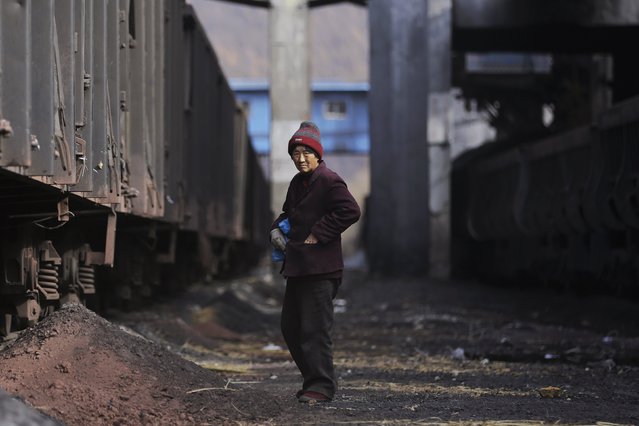
A rag-and-bone woman stands next to carriages of a coal train outside a coal mine of the state-owned Longmay Group on the outskirts of Jixi, in Heilongjiang province, China, October 22, 2015. (Photo by Jason Lee/Reuters)

A rag-and-bone woman stands next to carriages of a coal train outside a coal mine of the state-owned Longmay Group on the outskirts of Jixi, in Heilongjiang province, China, October 22, 2015. (Photo by Jason Lee/Reuters)
Details
07 Nov 2015 08:00:00
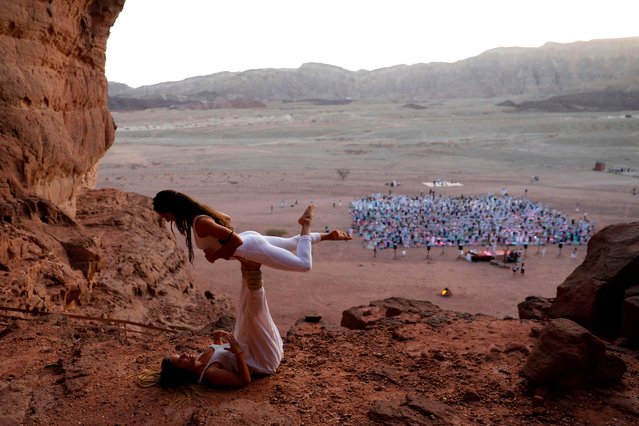
Yogis, Israeli and foreigners, participate in the Arava Yoga Annual festival at the ancient copper mines area of the Timna Valley, in the southern Arava region of Israel, north of Eilat on November 2, 2018. (Photo by Menahem Kahana/AFP Photo)

Yogis, Israeli and foreigners, participate in the Arava Yoga Annual festival at the ancient copper mines area of the Timna Valley, in the southern Arava region of Israel, north of Eilat on November 2, 2018. (Photo by Menahem Kahana/AFP Photo)
Details
05 Nov 2018 10:38:00
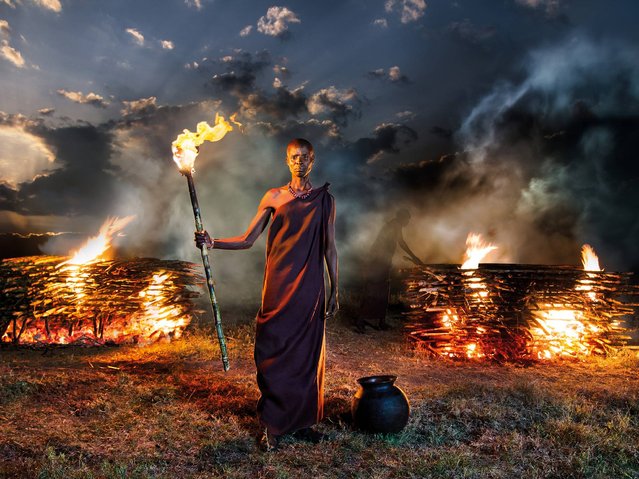
“The Salt of the Presidium”. Andrew Wanyonyi Sikanga is a salt producer in Nabuyole, western Kenya, who produces salt from an aquatic plant. (Photo by Steve McCurry/2015 Lavazza Calendar)

Extraordinary tales of everyday heroism have been illustrated beautifully by renowned US photographer Steve McCurry in the new 2015 Lavazza Calendar. The calendar which has been created in collaboration with the Slow Food movement, features twelve breathtaking pictures, capturing the spirit, strength and humanity of the Earth Defenders – women and men who protect their land and projects in Africa with passion and bravery. The proceeds from sales of the calendar and all donations will be contributed entirely to create 10,000 food gardens in African schools and villages by the end of 2016. (Photo by Steve McCurry/2015 Lavazza Calendar)
Details
27 Oct 2014 12:08:00
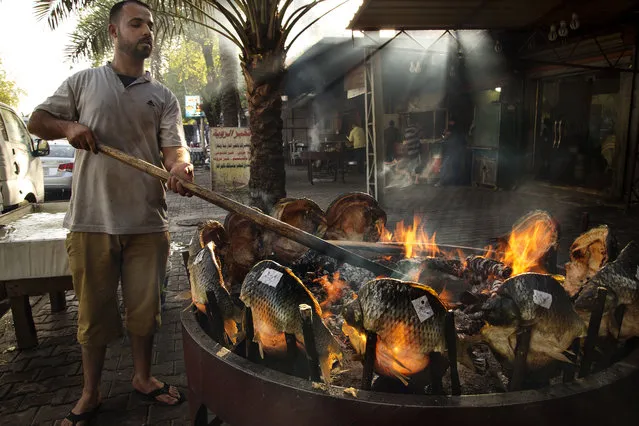
An Iraqi man cooks traditional Masgouf fish on a barbecue for sale in the Karada market July 02, 2014.  Masgouf, one of the national dishes of Iraq is a grilled carp seasoned with olive oil, rock salt, tamarind and ground turmeric. (Photo by Scott Nelson for the Washington Post)

An Iraqi man cooks traditional Masgouf fish on a barbecue for sale in the Karada market July 02, 2014. Masgouf, one of the national dishes of Iraq is a grilled carp seasoned with olive oil, rock salt, tamarind and ground turmeric. (Photo by Scott Nelson for the Washington Post)
Details
04 Aug 2014 13:43:00
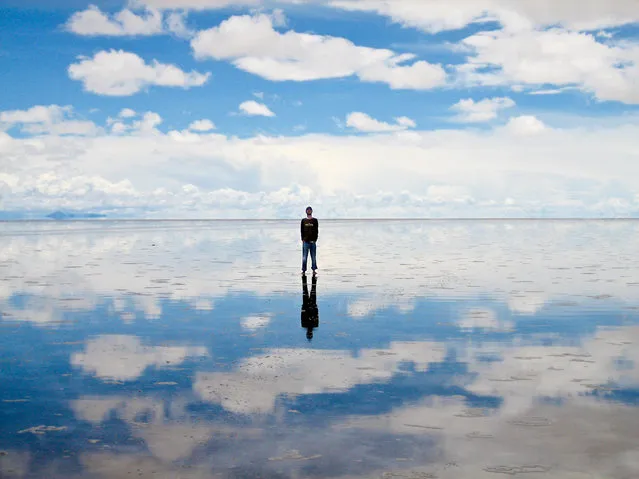
Salar de Uyuni

Salar de Uyuni (or Salar de Tunupa) is the world's largest salt flat at 10,582 square kilometers (4,086 sq mi). It is located in the Potosí and Oruro departments in southwest Bolivia, near the crest of the Andes, and is elevated 3,656 meters (11,995 ft) above mean sea level. The Salar was formed as a result of transformations between several prehistoric lakes. It is covered by a few meters of salt crust, which has an extraordinary flatness with the average altitude variations within one meter over the entire area of the Salar.
Details
04 Aug 2012 08:42:00