Loading...
Done


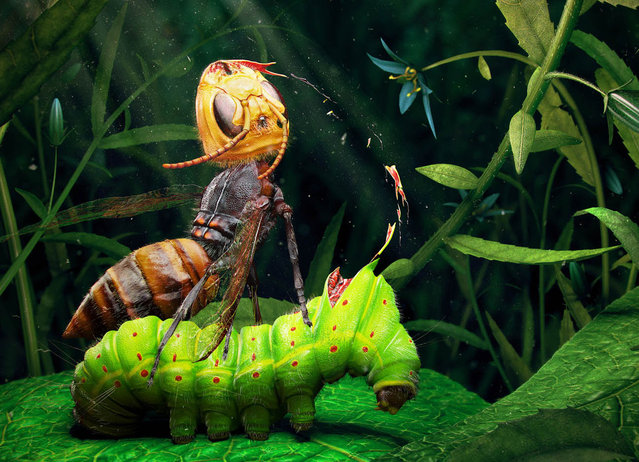
Orange Caramel (오렌지 캬라멜) – 까탈레나 (Catallena) – Korean. Is it worth eating live beings? This is a philosophical question: the history of our species and the ontology of being are saying that it's more likely yes, and on the other hand your mind and empathy are more likely to be against this idea. Or at least like in this Korean clip – eat, but with tears in your eyes.
Details
12 Sep 2017 09:18:00
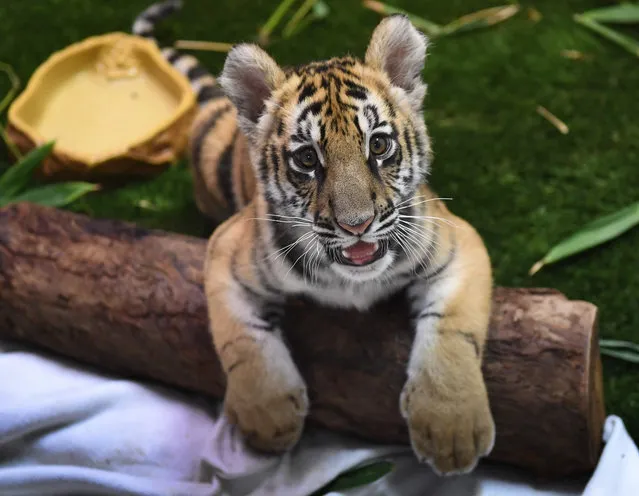
A young Bengal tiger cub smuggled into the US and seized at the Mexico border is displayed for the media during Operation Jungle Book at the US Fish and Wildlife Service in Torrance, California on October 20, 2017. Operation Jungle Book, a law enforcement initiative led by the US Fish and Wildlife Service that targeted wildlife smuggling, resulting in federal criminal charges against defendants who allegedly participated in the illegal importation and/ or transportation of numerous animal species – including a tiger, monitor lizards, cobras, Asian “lucky” fish, exotic songbirds and several coral species. (Photo by Mark Ralston/AFP Photo)

A young Bengal tiger cub smuggled into the US and seized at the Mexico border is displayed for the media during Operation Jungle Book at the US Fish and Wildlife Service in Torrance, California on October 20, 2017. Operation Jungle Book, a law enforcement initiative led by the US Fish and Wildlife Service that targeted wildlife smuggling, resulting in federal criminal charges against defendants who allegedly participated in the illegal importation and/ or transportation of numerous animal species – including a tiger, monitor lizards, cobras, Asian “lucky” fish, exotic songbirds and several coral species. (Photo by Mark Ralston/AFP Photo)
Details
29 Oct 2017 08:30:00
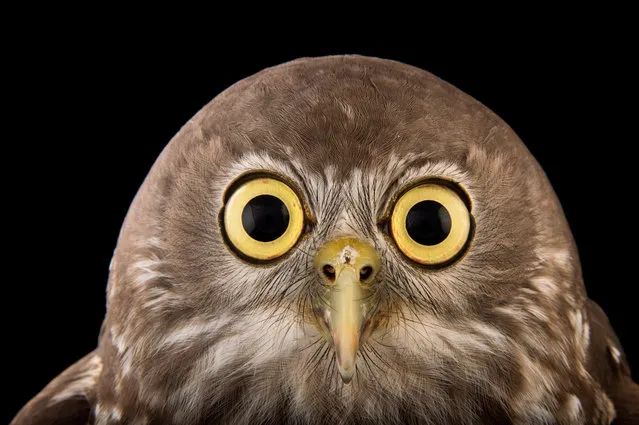
The National Geographic Photo Ark is a travelling exhibition of photographer Joel Sartore’s quest to create a photo archive of biodiversity around the world. So far, Sartore has captured studio portraits of more than 6,000 species – a number that he hopes to double. On 1 July, the ark will open at Melbourne zoo – the first time it has been exhibited in the southern hemisphere. More than 50 portraits will be on display, including many of Australian endangered animals being protected by programs at the zoo itself. These captions have been edited from text supplied by Melbourne zoo. Here: Barking owl. So-named because its call sounds like a barking dog, these birds are native to Australia, Indonesia and Papua New Guinea. In Victoria they are listed as an endangered species, and in 2003 there were estimated to be fewer than 50 breeding pairs. The main threat to the species in Victoria is loss of habitat, especially large trees with hollows in which they can nest and on which many of their prey depend. Apart from a bark, they may utter a chilling scream when they feel threatened. (Photo by Joel Sartore/National Geographic Photo Ark/The Guardian)

The National Geographic Photo Ark is a travelling exhibition of photographer Joel Sartore’s quest to create a photo archive of biodiversity around the world. So far, Sartore has captured studio portraits of more than 6,000 species – a number that he hopes to double. On 1 July, the ark will open at Melbourne zoo – the first time it has been exhibited in the southern hemisphere. More than 50 portraits will be on display, including many of Australian endangered animals being protected by programs at the zoo itself. These captions have been edited from text supplied by Melbourne zoo. Here: Barking owl. (Photo by Joel Sartore/National Geographic Photo Ark/The Guardian)
Details
01 Jul 2017 07:45:00
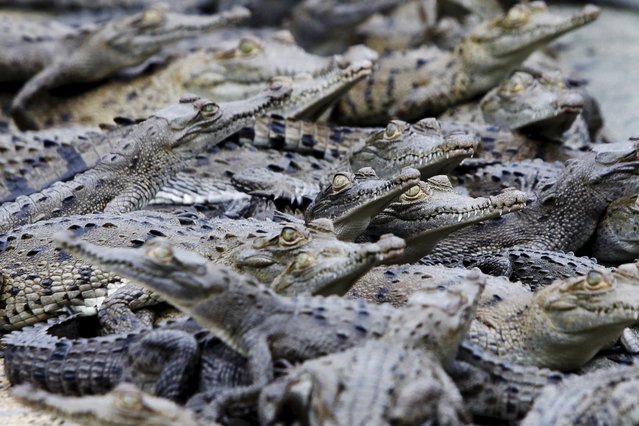
Young acutus crocodile are pictured at Panagator, a sustainable crocodile farm, on the outskirts of Panama City September 11, 2015. Gladys Vallarino, owner of the farm and of a specialty boutique shop selling items made from crocodiles, says the farm looks after more than 19,000 Acutus and Fuscus species of crocodiles and donates five percent of its crocodiles annually to the Panamanian authorities to be put into the wild. (Photo by Carlos Jasso/Reuters)

Young acutus crocodile are pictured at Panagator, a sustainable crocodile farm, on the outskirts of Panama City September 11, 2015. Gladys Vallarino, owner of the farm and of a specialty boutique shop selling items made from crocodiles, says the farm looks after more than 19,000 Acutus and Fuscus species of crocodiles and donates five percent of its crocodiles annually to the Panamanian authorities to be put into the wild, in accordance with the regulations of the CITES (Convention of International Trade in Endangered Species). The handmade fashion items sell for $200 to $3,000. (Photo by Carlos Jasso/Reuters)
Details
13 Sep 2015 13:00:00


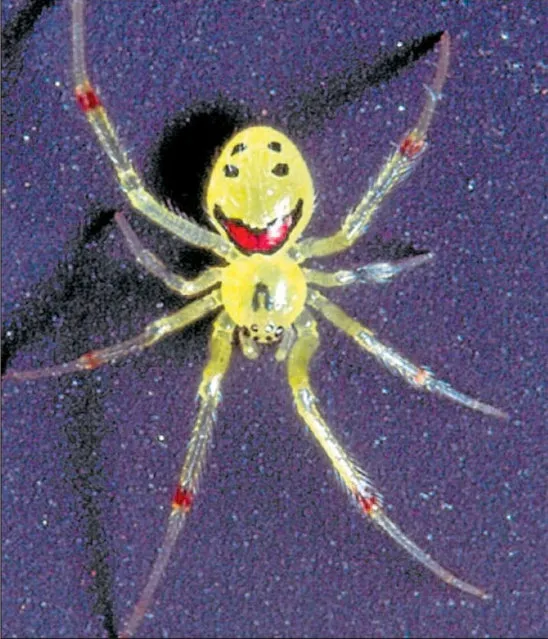
Theridion grallator, also known as the "happy face spider", is a spider in the family Theridiidae. Its Hawaiian name is nananana makakiʻi (face-patterned spider). The specific epithet grallator is Latin for "stilt walker", a reference to the species' long, spindly legs.
Details
16 Mar 2013 16:08:00
Deadly Insects Hornet

Hornets are insects that are the largest eusocial wasps. Some species can reach up to 5.5 cm (2.2 in) in length. The true hornets make up the genus Vespa and are distinguished from other vespines by the width of the vertex (part of the head behind the eyes), which is proportionally larger in Vespa and by the anteriorly rounded gasters (the section of the abdomen behind the wasp waist). The best known species is the European hornet (Vespa crabro), about 2–3.5 cm in length, widely distributed throughout Europe, Russia, North America and Northeast Asia.
Details
13 Oct 2014 10:17:00
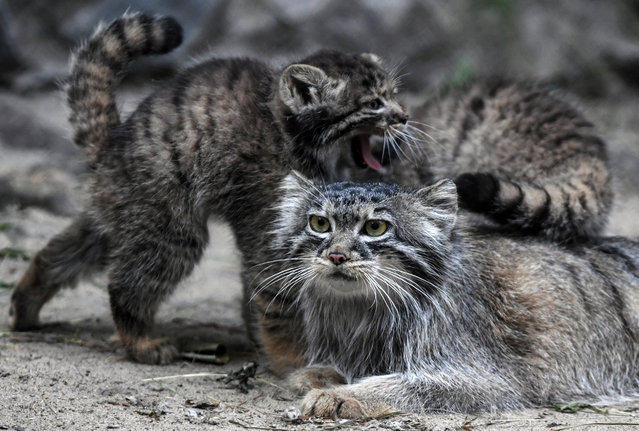
Pallas' s cat kittens with theit mother in an enclosure at the Novosibirsk Zoo, Novosibirsk, Russia on July 11, 2018. Pallas' s cat, also known as manul, is a small wild cat native to montane steppes of the Central Asia and listed as an endangered species. (Photo by Kirill Kukhmar/TASS)

Pallas' s cat kittens with theit mother in an enclosure at the Novosibirsk Zoo, Novosibirsk, Russia on July 11, 2018. Pallas' s cat, also known as manul, is a small wild cat native to montane steppes of the Central Asia and listed as an endangered species. (Photo by Kirill Kukhmar/TASS)
Details
15 Jul 2018 00:03:00
Of all the species affected by river regulation in Australia, the ibis is one of the few that has changed its behaviour and moved to coastal cities. (Photo by Rick Stevens/The Guardian)

Tip turkey, dumpster chook, rubbish raptor – the Australian white ibis goes by many unflattering names. But it is a true urban success story, scavenging to survive in cities across Australia as wetlands have been lost. Wildlife photographer Rick Stevens captured them in Sydney. Here: Of all the species affected by river regulation in Australia, the ibis is one of the few that has changed its behaviour and moved to coastal cities. (Photo by Rick Stevens/The Guardian)
Details
11 Apr 2018 00:03:00