Loading...
Done
Greyhounds resume racing behind closed doors on June 01, 2020 in Perry Barr, England. Greyhound racing across England is returning as restrictions on sporting events are relaxed during the coronavirus pandemic. (Photo by Clive Mason/Getty Images)

Greyhounds resume racing behind closed doors on June 01, 2020 in Perry Barr, England. Greyhound racing across England is returning as restrictions on sporting events are relaxed during the coronavirus pandemic. (Photo by Clive Mason/Getty Images)
Details
07 Jun 2020 00:05:00
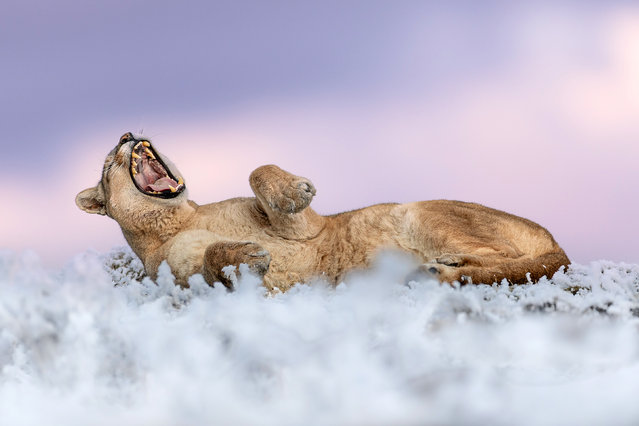
A puma rolls and yawns on frost-covered ground in Laguna Amarga, Torres del Paine, Chile in the first decade of December 2025, pausing briefly after several hours of rest before continuing on her way. (Photo by Sara Jenner/Solent News & Photo Agency)

A puma rolls and yawns on frost-covered ground in Laguna Amarga, Torres del Paine, Chile in the first decade of December 2025, pausing briefly after several hours of rest before continuing on her way. (Photo by Sara Jenner/Solent News & Photo Agency)
Details
21 Dec 2025 10:02:00
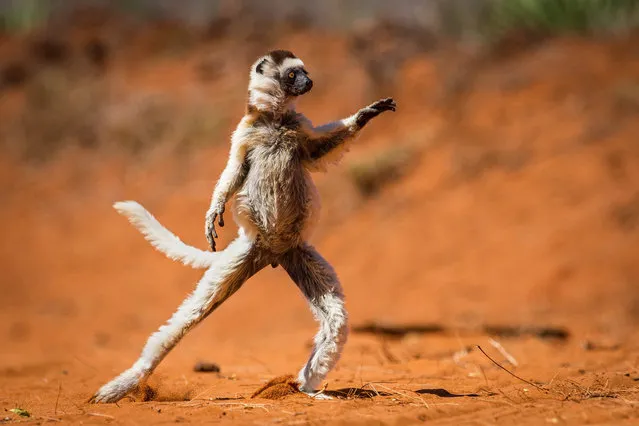
'Dancing sifaka'. (Photo by Alison Buttigieg/Comedy Wildlife Photography Awards/Mercury Press)

More than 1,500 snappers submitted their most hilarious pictures of all creatures great and small, and now 45 have made the cut. From drunken-eyed owls to embarrassed chipmunks and laughing goats – the finalists in the Comedy Wildlife Photography Awards are guaranteed to raise a smile. Here: 'Dancing sifaka'. (Photo by Alison Buttigieg/Comedy Wildlife Photography Awards/Mercury Press)
Details
12 Oct 2015 08:06:00
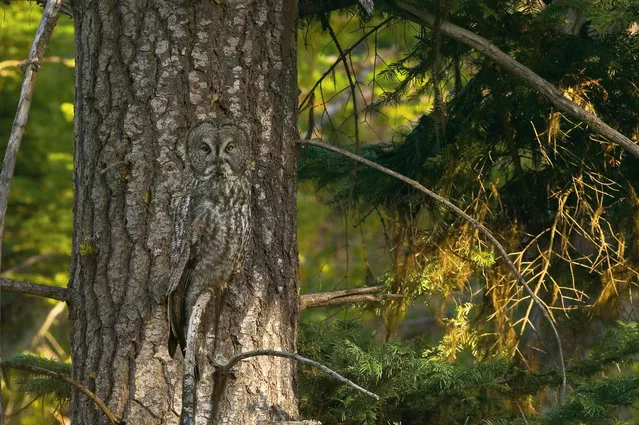
Vanishing Act By Art Wolfe

An amazing series by Art Wolfe that were taken as part of his “Vanishing Act” in which the Seattle-based photographer shows the talent of animals in disguising themselves from predators. “This collection has been a long time in the making. Finding and filming animals on location is an exhilarating and painstaking process. I’m still adding to the project even now”. Have fun spotting the hidden animals.
Details
22 Oct 2013 09:44:00


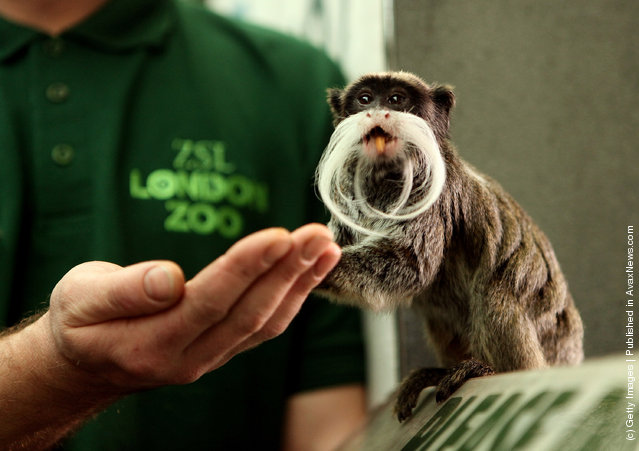
An Emperor Tamarin monkey, native to the Amazon rainforest, experiences its new home in the living rainforest enclosure at ZSL London Zoo on March 25, 2010 in London, England. Entitled “Rainforest Life” the large temperature and humidity controlled bio-dome is home to free-roaming monkeys, sloths, tree anteaters and tropical birds. The exhibit, which is opening in the International Year of Biodiversity, will be open to the public from March 27, 2010. (Photo by Oli Scarff/Getty Images)
Details
19 Apr 2011 11:48:00
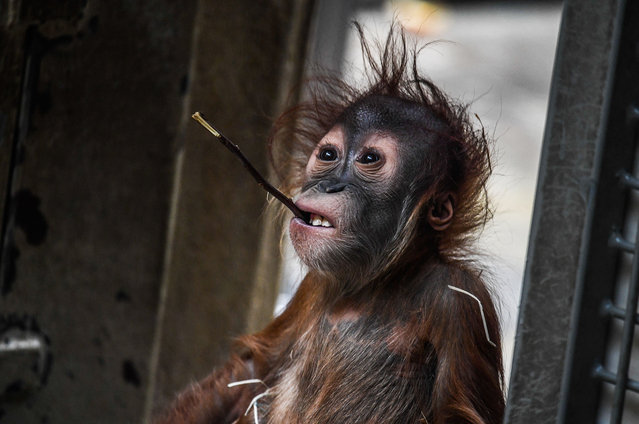
Almost two years old male baby orang-utan Dalai looks on in the zoo in Dresden, Germany, 30 March 2017. Dalai was born to mother Daisy in June 2016. (Photo by Filip Singer/EPA)

Almost two years old male baby orang-utan Dalai looks on in the zoo in Dresden, Germany, 30 March 2017. Dalai was born to mother Daisy in June 2016. (Photo by Filip Singer/EPA)
Details
01 Apr 2017 10:23:00
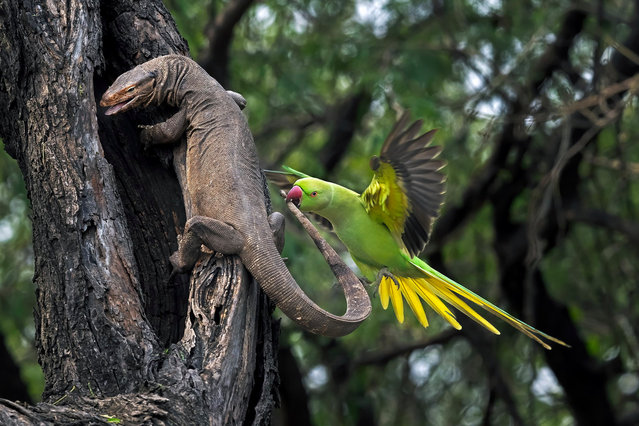
Hira Punjabi, from Maharashtra, India, took this stunning photo of a parakeet attacking a tree-climbing lizard, which has won the SINWP Bird Photographer of the Year 2024, in aid of RSPB. She had to wait by the same tree for four days to get the perfect action shot. (Photo by Hira Punjabi/SINWP via SWNS)

Hira Punjabi, from Maharashtra, India, took this stunning photo of a parakeet attacking a tree-climbing lizard, which has won the SINWP Bird Photographer of the Year 2024, in aid of RSPB. She had to wait by the same tree for four days to get the perfect action shot. (Photo by Hira Punjabi/SINWP via SWNS)
Details
22 Dec 2024 04:25:00
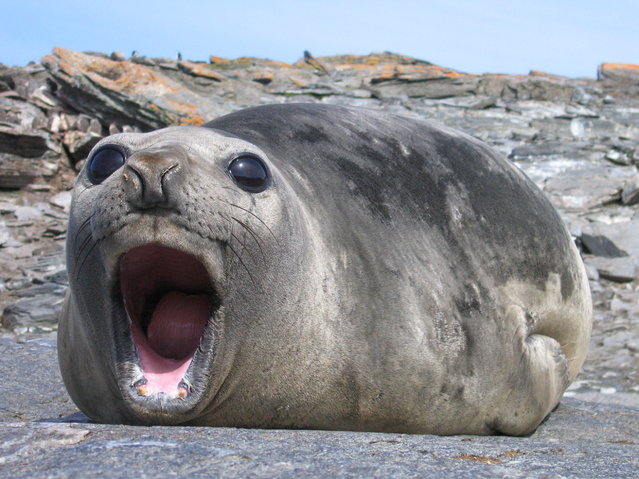
Weddell seal numbers in 2025 have declined sharply on Signy Island, part of the South Orkney Islands in the Southern Ocean, where British Antarctic Survey researchers have tracked seal populations for nearly 50 years to understand the impact of melting sea ice. (Photo by Michael Dunn/The Times)

Weddell seal numbers in 2025 have declined sharply on Signy Island, part of the South Orkney Islands in the Southern Ocean, where British Antarctic Survey researchers have tracked seal populations for nearly 50 years to understand the impact of melting sea ice. (Photo by Michael Dunn/The Times)
Details
06 Jul 2025 03:34:00