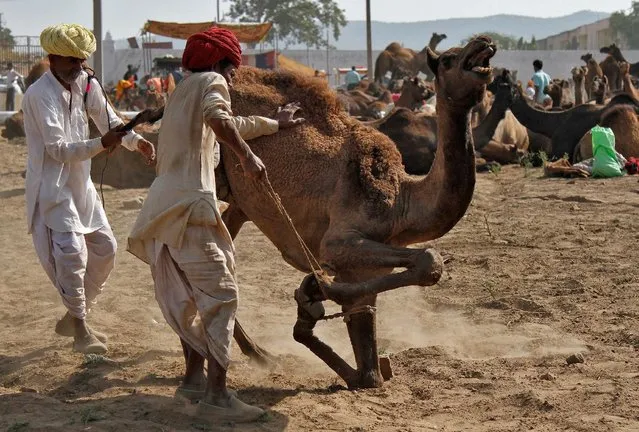
Traders try to control a camel at Pushkar Fair where animals, mainly camels, are brought to be sold and traded in the desert Indian state of Rajasthan November 6, 2016. (Photo by Himanshu Sharma/Reuters)
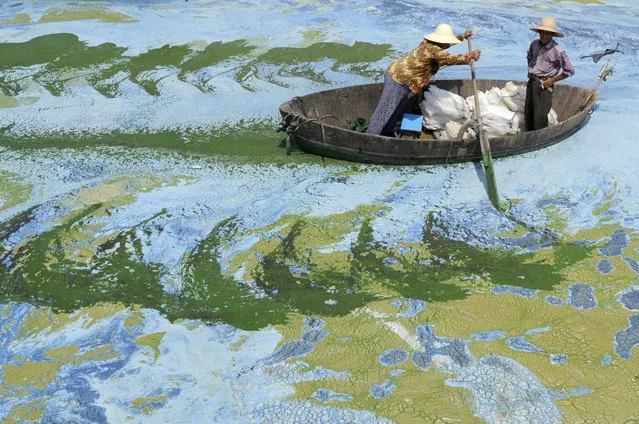
Growing cities, overuse of fertilizers and factory wastewater have degraded China's water supplies to the extent that half the nation's rivers and lakes are severely polluted. China aims to spend $850 billion to improve filthy water supplies over the next decade, but even such huge outlays may do little to reverse damage caused by decades of pollution and overuse in Beijing's push for rapid economic growth. Photo: Fishermen row a boat in the algae-filled Chaohu Lake in Hefei, Anhui province, June 19, 2009. (Photo by Jianan Yu/Reuters)
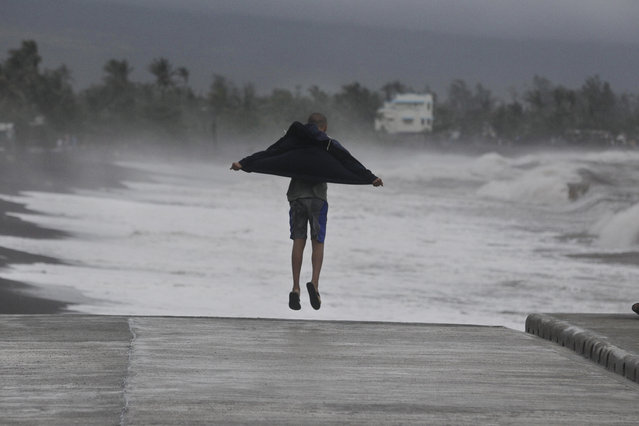
A resident jumps as he watches strong waves crash into shore as an effect of Typhoon Hagupit in Legazpi, Albay province, eastern Philippines on Sunday, December 7, 2014. Typhoon Hagupit knocked out power in entire coastal provinces, mowed down trees and sent more than 650,000 people into shelters before it weakened Sunday, sparing the central Philippines a repetition of unprecedented devastation by last year's storm. (Photo by Aaron Favila/AP Photo)
This aerial picture taken on the night of November 12, 2018 shows traffic on an elevated intersection in downtown Shanghai, China. (Photo by Johannes Eisele/AFP Photo)
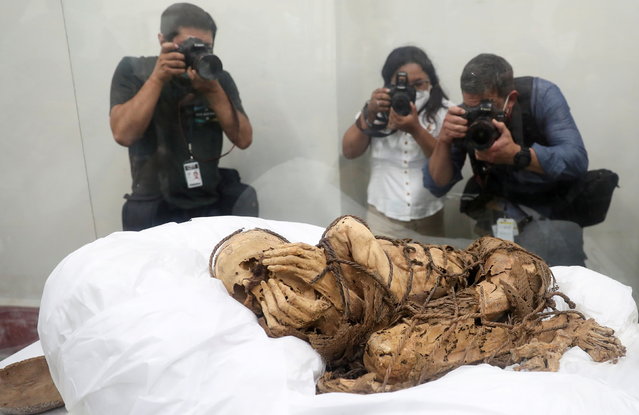
Members of the media take pictures of the pre-Inca “Mummy of Cajamarquilla”, which is presumed to be between 800 and 1200 years old, in Lima, Peru December 7, 2021. The “Mummy of Cajamarquilla” found by archaeologists from San Marcos inside a burial chamber of about three meters long and a depth of 1.40 meters in the Cajamarquilla archaeological site, east of Lima. (Photo by Sebastian Castaneda/Reuters)
Vladimir Mogilnikov, 62, washes his hands in a communal washing room in a dormitory for the workers of Proletarka textile factory in the town of Tver, 200 kilometres north-west from Moscow on August 8, 2020. (Photo by Andrey Borodulin/AFP Photo)