Loading...
Done
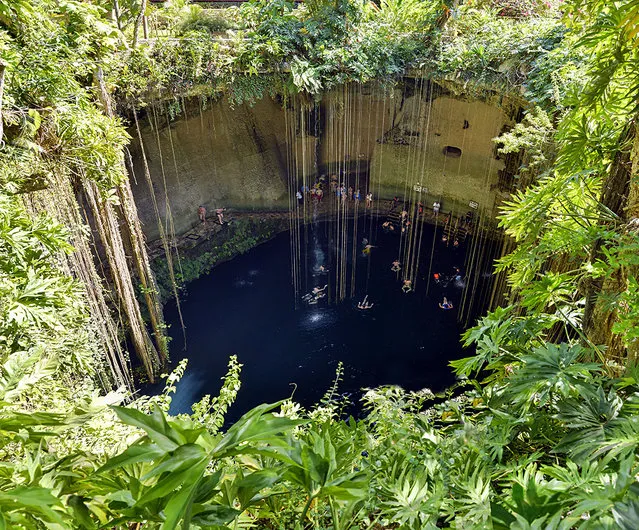
Cenote In Mexico

A cenote is a natural phenomenon, a sinkhole in the Earth’s surface. The Yucatan Peninsula in Mexico has an estimated 7,000 cenotes because it is primarily made up of porous limestone. For millions of years, rainfall slowly ate away at the limestone and a huge system of underground caves and caverns was formed. Many filled with water from rain or from the underground water table. When the roof of a water filled cave collapses, a cenote is born. The water found in a cenote may be fresh water, salt water, or both. Structurally it may be completely open, like a lake, almost completely closed with just a small opening at the top, or somewhere in between.
Details
06 Oct 2013 09:45:00
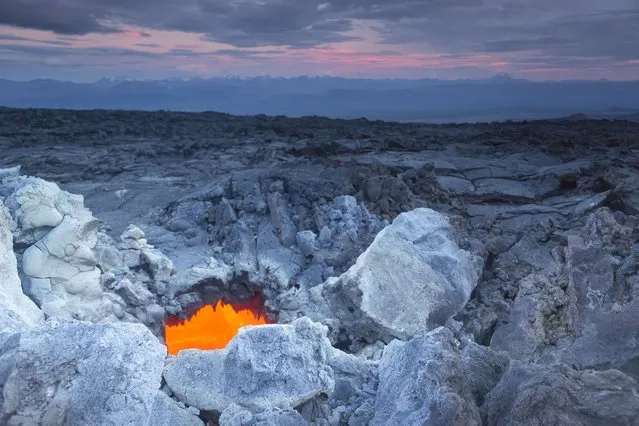
The underground entrance to the volcano resembles a scene from the latest Hobbit movie. (Photo by Denis Budkov/Caters News)

Taken by photographer, Denis Budkov, 33, the Plosky Tolbachik is one of a cluster of volcanoes located in the Kamchatka Peninsula in the far east of Russia. After taking a lucky group of tourists to the crater of the flat volcano, the Russian photographer managed to get less than 300 metres away from the spurting jets of lava. Photo: The underground entrance to the volcano resembles a scene from the latest Hobbit movie. (Photo by Denis Budkov/Caters News)
Details
08 Jan 2014 10:46:00
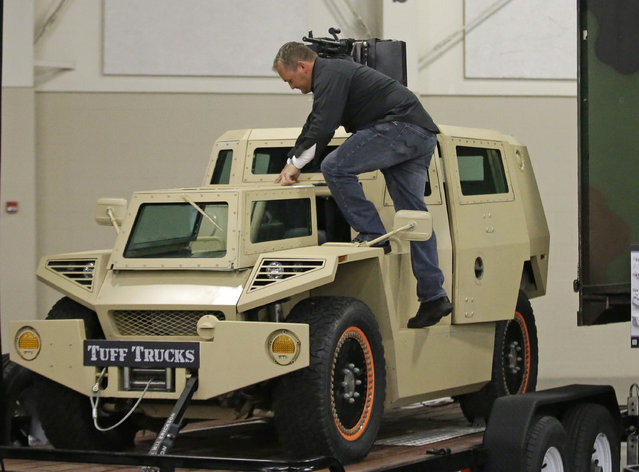
Sam Warren climbs in to a prototype combat vehicle during the PrepperCon expo Friday, April 24, 2015, in Sandy, Utah. Hundreds of survivalists and “preppers” are gathering in the Salt Lake City suburb of Sandy for the first annual PrepperCon, featuring demonstrations of underground bunkers, food storage, and armored vehicles. (Photo by Rick Bowmer/AP Photo)

Sam Warren climbs in to a prototype combat vehicle during the PrepperCon expo Friday, April 24, 2015, in Sandy, Utah. Hundreds of survivalists and “preppers” are gathering in the Salt Lake City suburb of Sandy for the first annual PrepperCon, featuring demonstrations of underground bunkers, food storage, and armored vehicles. (Photo by Rick Bowmer/AP Photo)
Details
26 Apr 2015 09:39:00
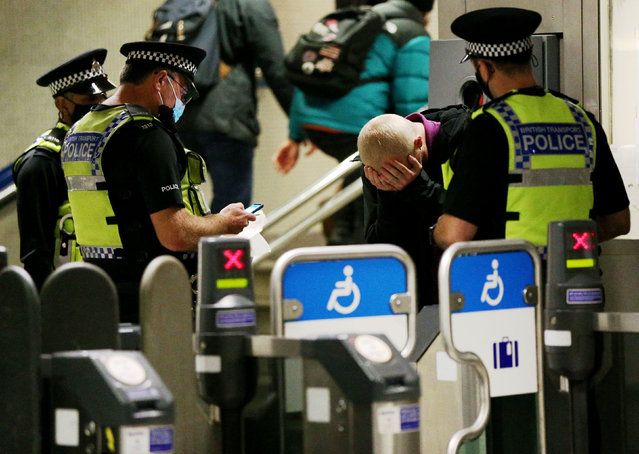
A man reacts to being warned by a British Transport Police officer for not wearing a face mask at King's Cross underground station, London, England on October 8, 2020. (Photo by Jonathan Brady/PA Images via Getty Images)

A man reacts to being warned by a British Transport Police officer for not wearing a face mask at King's Cross underground station, London, England on October 8, 2020. (Photo by Jonathan Brady/PA Images via Getty Images)
Details
10 Oct 2020 00:07:00
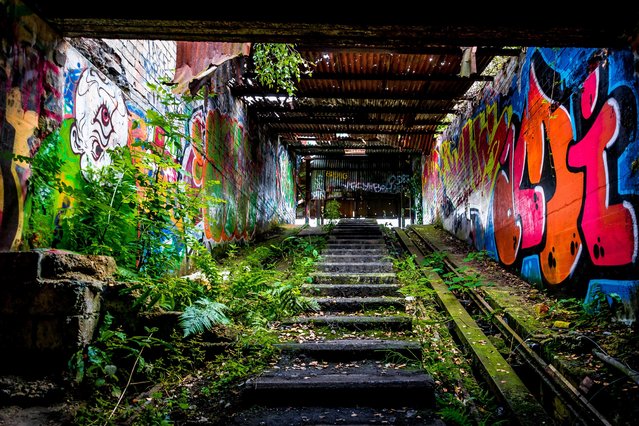
A railway siding in Wiltshire, UK where ammunition was transferred by tunnel to an underground storage facility. (Photo by MediaDrumWorld.com)

The series of shots show the bare steel infrastructure of the Bushfield army training camp near Winchester which was in operation during World War Two and was used to train Royal Green Jackets recruits in the sixties. The spectacular images were taken by an urban explorer who wished to remain anonymous. Here: A railway siding in Wiltshire, UK where ammunition was transferred by tunnel to an underground storage facility. (Photo by MediaDrumWorld.com)
Details
11 Jan 2017 14:18:00


Over 60 minutes of relaxing, piano music to sleep and study!

Details
12 Jun 2015 08:12:00


2 Hours Music For Meditation and Relaxation Part 3.

Details
22 Jun 2015 15:12:00
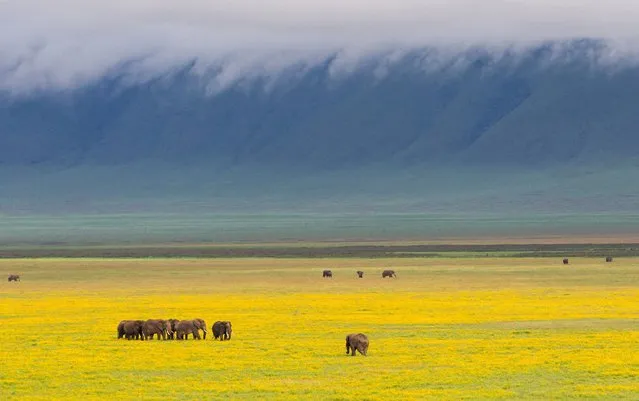
Ngorongoro Crater (Tanzania). At 610m deep and 260 sq km, this is the largest unflooded caldera in the world. A blue-green vision from above it's a haven for engangered wildlife and Maasai livestock. The crater was formed three million years ago when a giant volcano, which could have been as high as Kilimanjaro, exploded and collapsed. The caldera formed the concentric fractures in the crust cracked down to a magma reservoir deep underground. (Photo by John Bryant/Getty Images)

Ngorongoro Crater (Tanzania). At 610m deep and 260 sq km, this is the largest unflooded caldera in the world. A blue-green vision from above it's a haven for engangered wildlife and Maasai livestock. The crater was formed three million years ago when a giant volcano, which could have been as high as Kilimanjaro, exploded and collapsed. The caldera formed the concentric fractures in the crust cracked down to a magma reservoir deep underground. (Photo by John Bryant/Getty Images)
Details
28 Mar 2014 08:08:00