Loading...
Done
Women stage a topless protest in Buenos Aires, Argentina on February 7, 2017. Activists take to streets of downtown after three women had been topless sunbathing on Necochea, near Buenos Aires, when they were approached by officers that told to cover their breasts. The sunbathers and officers argue, with the girls insisting going topless is not illegal, but the police insist they are offending the local culture. This protest is in support of the three women of Necochea. (Photo by Claudio Santisteban/ZUMA Wire/Rex Features/Shutterstock)

Women stage a topless protest in Buenos Aires, Argentina on February 7, 2017. Activists take to streets of downtown after three women had been topless sunbathing on Necochea, near Buenos Aires, when they were approached by officers that told to cover their breasts. The sunbathers and officers argue, with the girls insisting going topless is not illegal, but the police insist they are offending the local culture. This protest is in support of the three women of Necochea. (Photo by Claudio Santisteban/ZUMA Wire/Rex Features/Shutterstock)
Details
09 Feb 2017 09:53:00
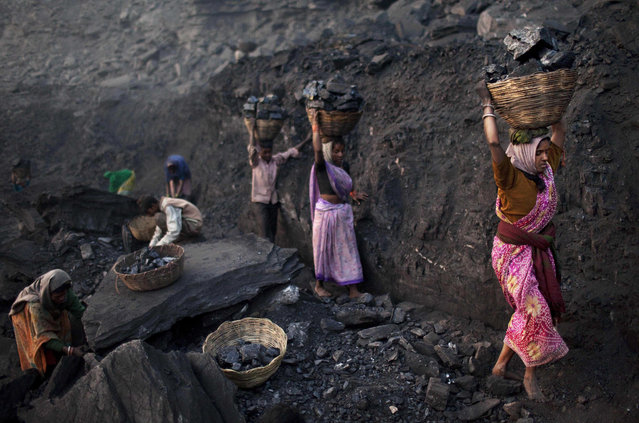
In this Friday, January 7, 2011 photo, people carry baskets of coal scavenged illegally at an open-cast mine in the village of Bokapahari in the eastern Indian state of Jharkhand where a community of coal scavengers live and work. The world's biggest coal users – China, the United States and India – have boosted coal mining in 2017, in an abrupt departure from last year's record global decline for the heavily polluting fuel and a setback to efforts to rein in climate change emissions. (Photo by Kevin Frayer/AP Photo)

In this Friday, January 7, 2011 photo, people carry baskets of coal scavenged illegally at an open-cast mine in the village of Bokapahari in the eastern Indian state of Jharkhand where a community of coal scavengers live and work. The world's biggest coal users – China, the United States and India – have boosted coal mining in 2017, in an abrupt departure from last year's record global decline for the heavily polluting fuel and a setback to efforts to rein in climate change emissions. (Photo by Kevin Frayer/AP Photo)
Details
28 Jun 2017 08:08:00
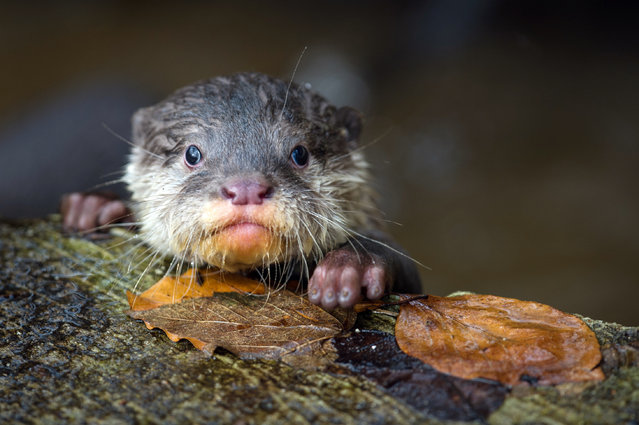
A young oriental small-clawed otter at the zoo in Neumuenster, Germany, March 5, 2014. The six young otters (one male, five female) were born on December 7, 2013. (Photo by Maja Hitij/EPA)

A young oriental small-clawed otter at the zoo in Neumuenster, Germany, March 5, 2014. The six young otters (one male, five female) were born on December 7, 2013. (Photo by Maja Hitij/EPA)
Details
08 Mar 2014 11:28:00
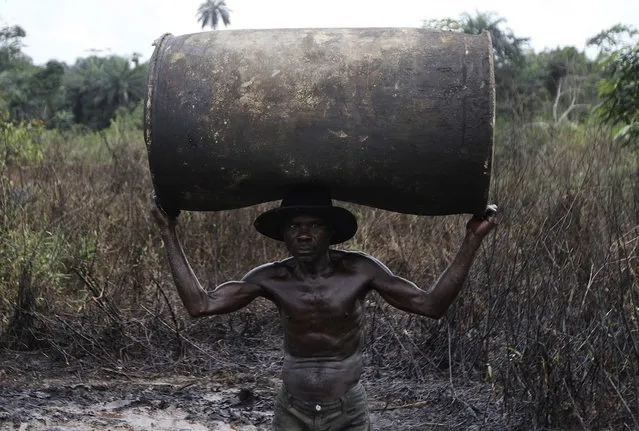
Ebiowei, 48, carries an empty oil container on his head to a place where it would be filled with refined fuel at an illegal refinery site near river Nun in Nigeria's oil state of Bayelsa November 27, 2012. (Photo by Akintunde Akinleye/Reuters)

Ebiowei, 48, carries an empty oil container on his head to a place where it would be filled with refined fuel at an illegal refinery site near river Nun in Nigeria's oil state of Bayelsa November 27, 2012. Locals in the industry say workers can earn $50 to $60 a day. Thousands of people in Nigeria engage in a practice known locally as “oil bunkering” – hacking into pipelines to steal crude then refining it or selling it abroad. The practice, which leaves oil spewing from pipelines for miles around, managed to lift around a fifth of Nigeria's two million barrel a day production last year according to the finance ministry. (Photo by Akintunde Akinleye/Reuters)
Details
18 Jan 2013 14:29:00
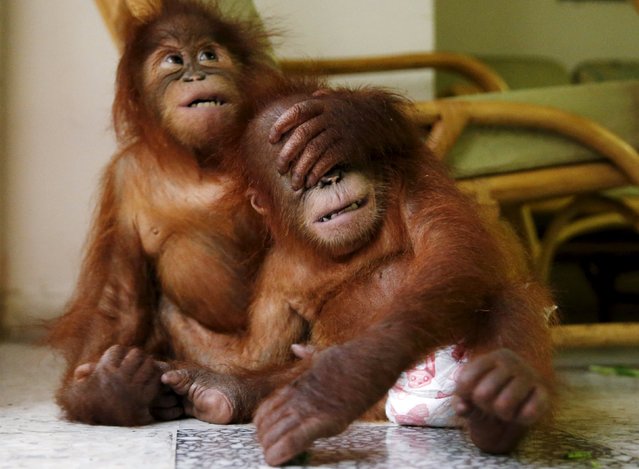
Two baby orangutans play with each other at the wildlife department in Kuala Lumpur, Malayasia, October 19, 2015. The Malaysian wildlife department in July seized two baby Sumatran orangutans, found in duffel bags, from traffickers who were attempting to sell them to buyers in Malaysia. According to local media, the orangutans will be returned to Medan, Indonesia on Tuesday. The illegal wildlife trade is estimated to be $8 billion a year worldwide, according to TRAFFIC, a wildlife trade monitoring network. (Photo by Olivia Harris/Reuters)

Two baby orangutans play with each other at the wildlife department in Kuala Lumpur, Malayasia, October 19, 2015. The Malaysian wildlife department in July seized two baby Sumatran orangutans, found in duffel bags, from traffickers who were attempting to sell them to buyers in Malaysia. According to local media, the orangutans will be returned to Medan, Indonesia on Tuesday. The illegal wildlife trade is estimated to be $8 billion a year worldwide, according to TRAFFIC, a wildlife trade monitoring network. (Photo by Olivia Harris/Reuters)
Details
24 Dec 2015 08:06:00
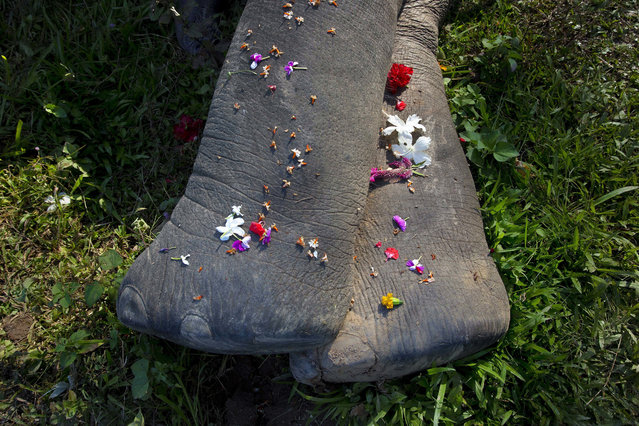
Villagers offer flowers to a wild tusker, laying dead in a field in Panbari villagein Panbari village on the outskirts of Gauhati, India, Thursday, November 2, 2017. According to a veterinarian the tusker died of food poisoning. Scarcity of food and illegal encroachment of forest areas have forced these wild elephant to move to populated areas for food. (Photo by Anupam Nath/AP Photo)

Villagers offer flowers to a wild tusker, laying dead in a field in Panbari villagein Panbari village on the outskirts of Gauhati, India, Thursday, November 2, 2017. According to a veterinarian the tusker died of food poisoning. Scarcity of food and illegal encroachment of forest areas have forced these wild elephant to move to populated areas for food. (Photo by Anupam Nath/AP Photo)
Details
10 Nov 2017 08:43:00
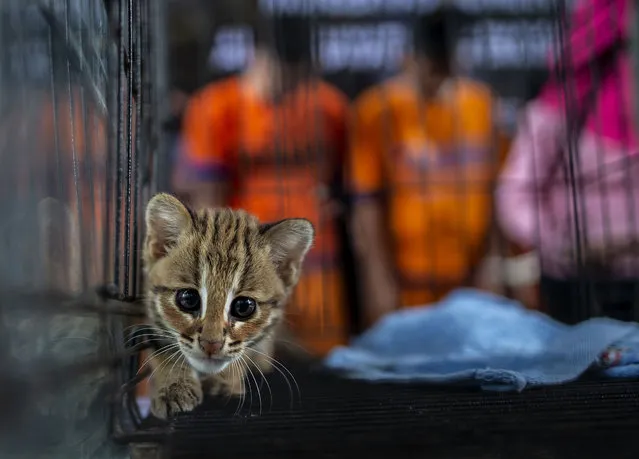
A juvenile leopard cat, seized by authorities during an anti-smuggling operation, is seen past suspected smugglers during a press conference announcing the seizure of trafficked exotic animals in Surabaya on March 27, 2019. Indonesian authorities said March 27 they had seized five komodo dragons and dozens of other animals being sold on Facebook, as the country battles to clamp down on the illegal wildlife trade. (Photo by Juni Kriswanto/AFP Photo)

A juvenile leopard cat, seized by authorities during an anti-smuggling operation, is seen past suspected smugglers during a press conference announcing the seizure of trafficked exotic animals in Surabaya on March 27, 2019. Indonesian authorities said March 27 they had seized five komodo dragons and dozens of other animals being sold on Facebook, as the country battles to clamp down on the illegal wildlife trade. (Photo by Juni Kriswanto/AFP Photo)
Details
31 Mar 2019 00:03:00


Guiyu, China is known as the “Town of E-waste.” Thousands of its residents depend on processing electronic waste for a living. Guiyu receives its e-waste from China and from abroad, including places like Japan, Europe and America. Under Chinese law, most of the e-waste imported from overseas is illegal.
Details
01 Apr 2013 11:45:00