Loading...
Done
Atomic Overlook by Clay Lipsky

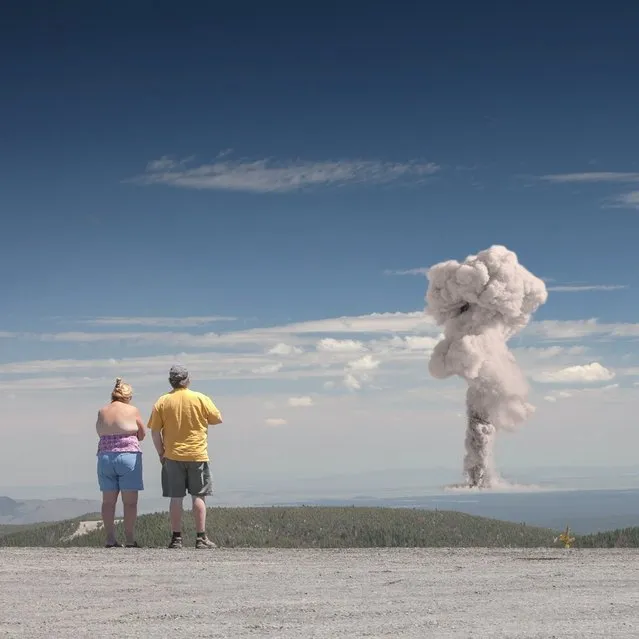
Clay Lipsky has created a great series called Atomic Overlook. The project takes terribly boring scenic shots and combines them with some exciting nuclear testing. “Tourists will line up for anything and I always found humor in vacation destinations that are nothing but a bunch of people looking into a great abyss”, he says. “I understand the allure of a beautiful landscape, but as the world’s population grows so do the lines to view the “nothingness”. Atomic Overlook flips the script on that and gives new purpose to those suntanned masses”. (Photo by Clay Lipsky)
Details
29 Sep 2012 08:27:00
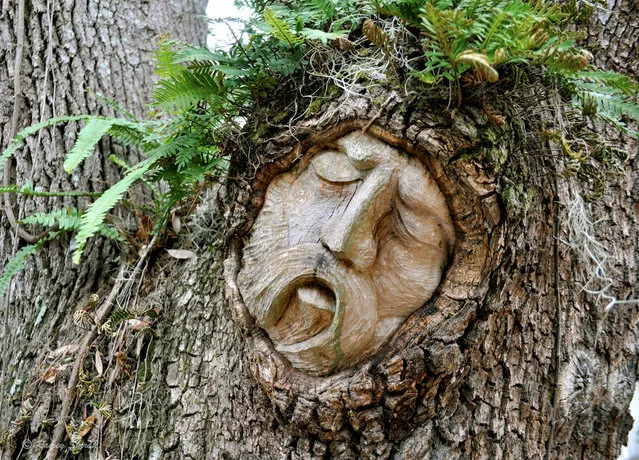
Tree Spirit Carvings by Keith Jennings

Created by artist and unassuming local celebrity, Keith Jennings, the first tree spirit arrived on St. Simons Island in 1982. The old story goes that Keith negotiated his way out of a bar tab, hence, a tree priestess was born behind Murphy’s Tavern, on a blurry Saturday morning. In his own words, however, Keith states that his first tree spirit was created in the back yard of a place called, “The Animal Farm”. Either way, Keith Jennings has been known to cut the rug around here, no matter how you slice it.
Details
20 Aug 2013 10:21:00
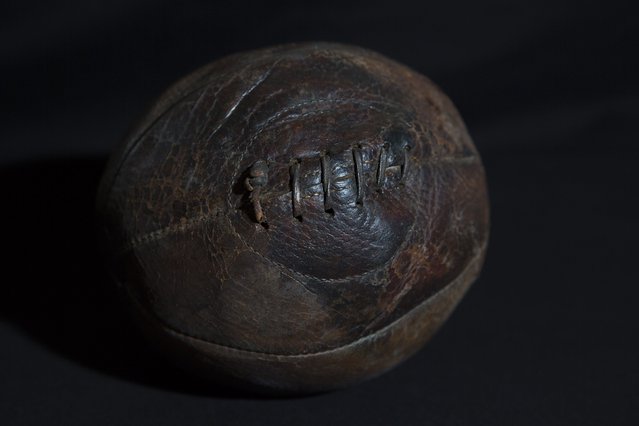
An original 1850 puntabout rugby football is displayed at Rugby School in central England, March 18, 2015. (Photo by Neil Hall/Reuters)

An original 1850 puntabout rugby football is displayed at Rugby School in central England, March 18, 2015. Rugby School is known as the spiritual home of rugby. According to a popular version of the game's origins, it was on the school's playing field that in 1823, in a game that could loosely be described as football but was more like a brawl, a pupil called William Webb Ellis caught the ball and, instead of kicking towards the goal, sprinted with it – breaking the code and laying the way for modern-day rugby. (Photo by Neil Hall/Reuters)
Details
23 Apr 2015 11:57:00
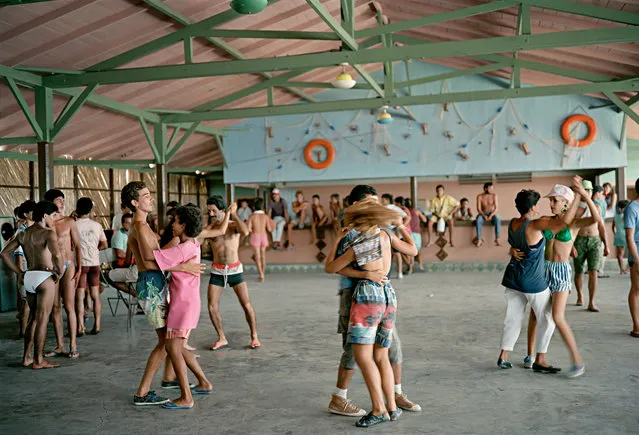
Giovan set out to capture the people’s resilience, during what Fidel Castro, with typical hyperbole, called the “special period”. (Photo by Tria Giovan/The Guardian)

As an American in 1990s Cuba, Tria Giovan risked being branded a traitor. But the photographer continued to visit and, from the dance hall to the hair salon, she captured the resilient spirit of the Cuban people. The 120 images in Tria Giovan’s “The Cuba Archive” are from the period in the 90s when, as an American, travel to Cuba could have seen her branded a traitor, as the country was subject to a US trade embargo. Her trip required lots of planning – and patience. (Photo by Tria Giovan/The Guardian)
Details
21 Sep 2017 09:04:00
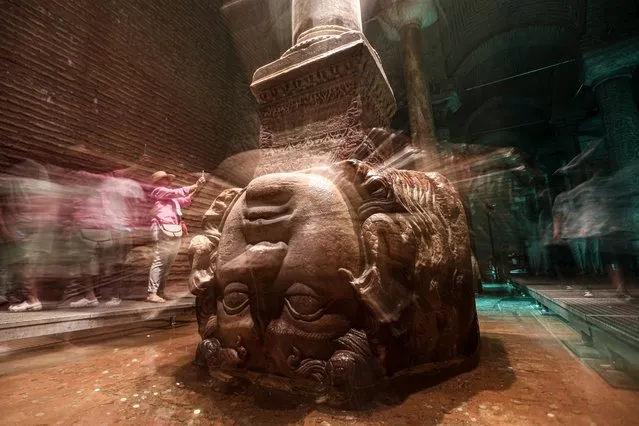
People walk behind the Medusa head in the Basilica Cistern in Istanbul, Turkey, 24 July 2022. (Photo by Sedat Suna/EPA/EFE)

People walk behind the Medusa head in the Basilica Cistern in Istanbul, Turkey, 24 July 2022. The site has been restored by the Istanbul Metropolitan Municipality and is now open for visitors again. The Byzantine structure was commissioned by Emperor Justinian and built in 532. The underground Basilica, also called Underground Cistern, is the largest well preserved cistern in Istanbul, which rests on a total of 336 columns. According to historical texts, more than 7,000 slaves were involved in the construction of the cistern. (Photo by Sedat Suna/EPA/EFE)

Details
07 Aug 2022 05:22:00
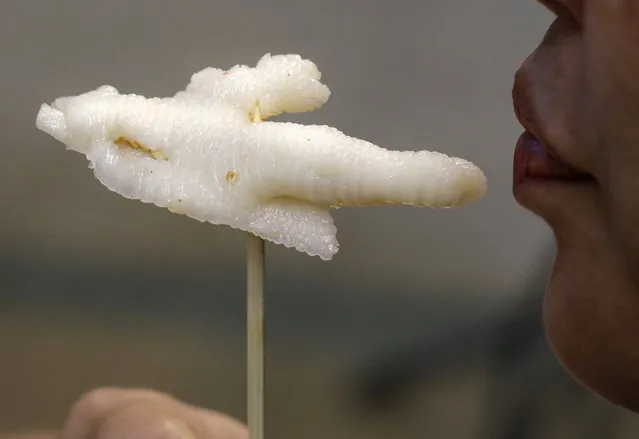
In this Monday, January 23, 2017 photo, chicken feet snacks shop owner Leung Kin-kung testes a chicken feet in Hong Kong. (Photo by Vincent Yu/AP Photo)

In this Monday, January 23, 2017 photo, chicken feet snacks shop owner Leung Kin-kung testes a chicken feet in Hong Kong. Saturday marks the start of the lunar Year of the Rooster and families in China will reunite for festivities, fireworks and food. While tradition calls for feasting on “auspicious” foods, many will also munch on staple snacks like “phoenix claws”, the Chinese name for chicken feet. (Photo by Vincent Yu/AP Photo)
Details
30 Jan 2017 08:08:00
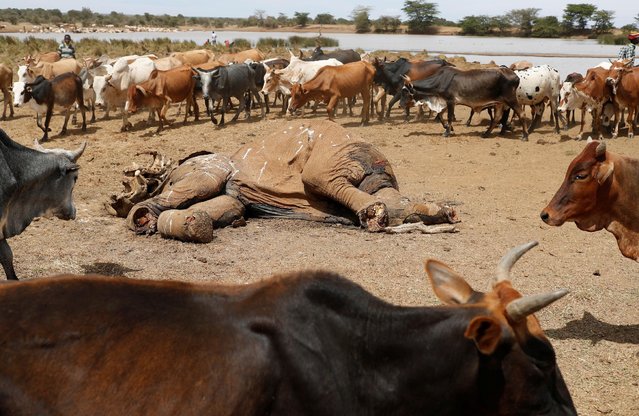
Cows belonging to Samburu tribesmen walk around the carcass of an elephant killed by armed cattle herders in Mugui Conservancy, Kenya February 11, 2017. (Photo by Goran Tomasevic/Reuters)

Cows belonging to Samburu tribesmen walk around the carcass of an elephant killed by armed cattle herders in Mugui Conservancy, Kenya February 11, 2017. Kenya has declared the ongoing drought affecting many parts of the country a national disaster, calling for aid to counter the situation which is posing a major risk to people, livestock and wildlife. (Photo by Goran Tomasevic/Reuters)
Details
14 Feb 2017 00:01:00


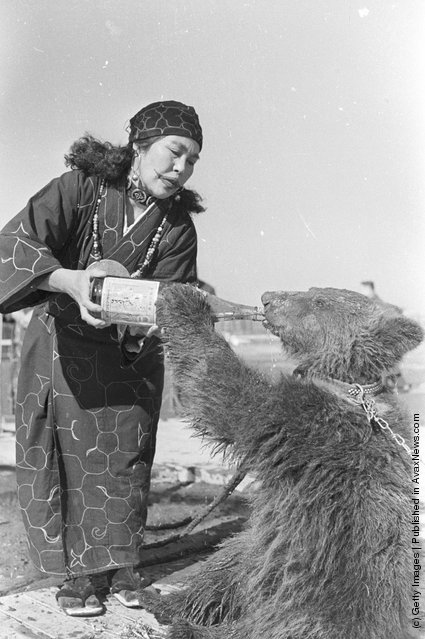
“The Ainu (アイヌ?), also called Aynu, Aino (アイノ), and in historical texts Ezo (蝦夷), are indigenous people or groups in Japan and Russia. Historically they spoke the Ainu language and related varieties and lived in Hokkaidō, the Kuril Islands, and much of Sakhalin. Most of those who identify themselves as Ainu still live in this same region, though the exact number of living Ainu is unknown. This is due to ethnic issues in Japan resulting in those with Ainu backgrounds hiding their identities and confusion over mixed heritages. In Japan, because of intermarriage over many years with Japanese, the concept of a 'pure Ainu' ethnic group is no longer feasible. Official estimates of the population are of around 25,000, while the unofficial number is upwards of 200,000 people”. – Wkipedia

Photo: A captive bear drinking from a large bottle held by an Ainu tribeswoman. (Photo by Evans/Three Lions/Getty Images). Circa 1955
Details
24 Mar 2011 14:01:00