Loading...
Done
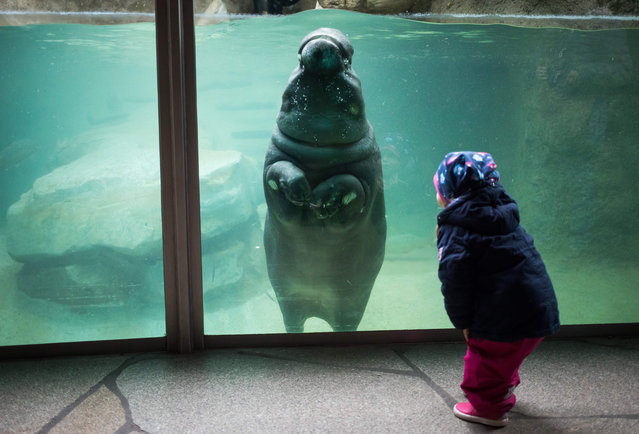
A young visitor interacts with a baby hippopotamus swimming in its enclosure at the Berlin Zoo on January 1, 2018. Tourists and locals flocked to the zoo in the German capital on the unseasonably warm first day of the year. (Photo by Odd Andersen/AFP Photo)

A young visitor interacts with a baby hippopotamus swimming in its enclosure at the Berlin Zoo on January 1, 2018. Tourists and locals flocked to the zoo in the German capital on the unseasonably warm first day of the year. (Photo by Odd Andersen/AFP Photo)
Details
03 Jan 2018 09:51:00
A spectator waits for the start of the Jeremy Scott show during Fashion Week in New York, Thursday, February 8, 2018. (Photo by Andres Kudacki/AP Photo)

A spectator waits for the start of the Jeremy Scott show during Fashion Week in New York, Thursday, February 8, 2018. (Photo by Andres Kudacki/AP Photo)
Details
29 Dec 2018 00:05:00
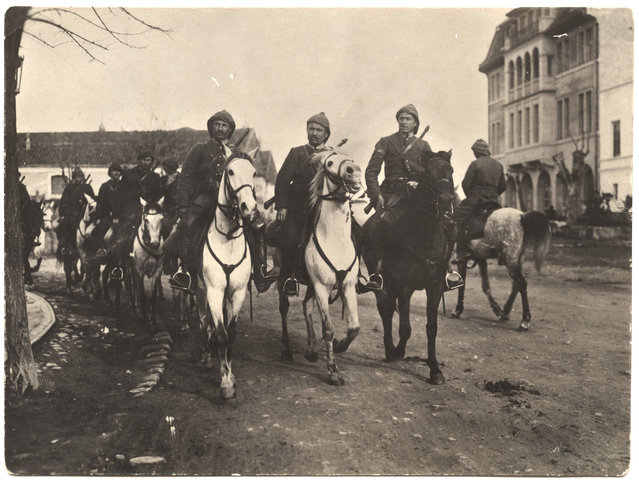
Turkish army, including cavalry, infantry and artillery. (Photo by Dr. P.A. Smithe/National World War I Museum, Kansas City, Mo.)

Dr. P.A. Smithe was sent by the American Red Cross as a doctor and surgeon to work at a hospital in Vienna. He sailed to Europe in December 1915 and returned home in August 1916, according to his daughter, who donated his images to the National World War I Museum. Photo: Turkish army, including cavalry, infantry and artillery. (Photo by Dr. P.A. Smithe/National World War I Museum, Kansas City, Mo.)
Details
29 Jul 2014 11:53:00
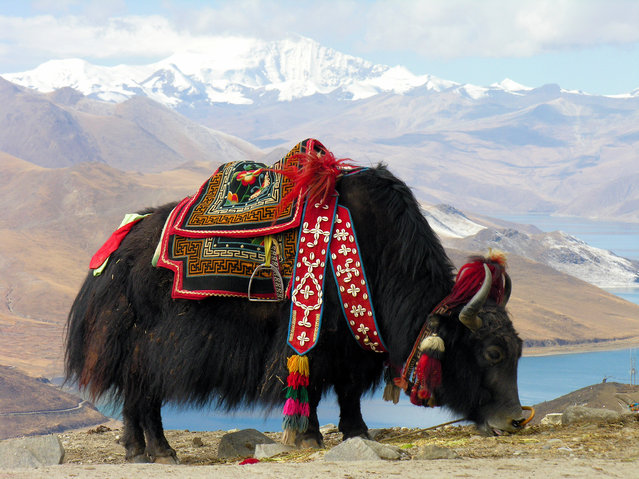
Yak near Yamdrok lake, Tibet. It is a long-haired bovinae found throughout the Himalayan region of south Central Asia, the Tibetan Plateau and as far north as Mongolia and Russia. The Tibetan economy is dominated by subsistence agriculture. Due to limited arable land, the primary occupation of the Tibetan Plateau is raising livestock, such as sheep, cattle, goats, camels, yaks, dzo, and horses. The Tibetan yak is an integral part of Tibetan life. (Photo by Dennis Jarvis)

Yak near Yamdrok lake, Tibet. It is a long-haired bovinae found throughout the Himalayan region of south Central Asia, the Tibetan Plateau and as far north as Mongolia and Russia. The Tibetan economy is dominated by subsistence agriculture. Due to limited arable land, the primary occupation of the Tibetan Plateau is raising livestock, such as sheep, cattle, goats, camels, yaks, dzo, and horses. The Tibetan yak is an integral part of Tibetan life. (Photo by Dennis Jarvis)
Details
10 Jun 2015 10:48:00
Wales’s Cory McKenna dominates Micol DiSegni during their fight at Cage Warriors 97 in Cardiff, 29 September 2018. (Photo by Chris Fairweather/Huw Evans Agency)

The “Assignments” exhibition is an annual chance to see the top images by UK photojournalists, as chosen by the British Press Photographers’ Association. Here: Wales’s Cory McKenna dominates Micol DiSegni during their fight at Cage Warriors 97 in Cardiff, 29 September 2018. (Photo by Chris Fairweather/Huw Evans Agency)
Details
17 May 2019 00:01:00
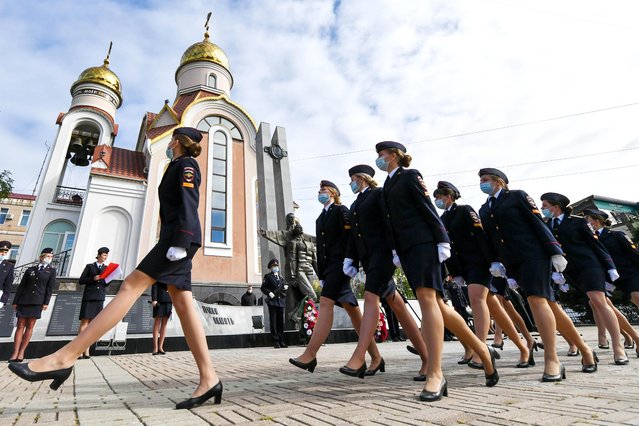
First year cadets of the Vladivostok branch of Russian Internal Affairs Ministry's Far Eastern Law Institute march in formation during a ceremony to take oath of allegiance at a monument to Internal Affairs Ministry officers who lost their lives in line of duty in Vladivostok, Russia on September 24, 2021. 27 cadets took oath of allegiance during the ceremony. (Photo by Yuri Smityuk/TASS)

First year cadets of the Vladivostok branch of Russian Internal Affairs Ministry's Far Eastern Law Institute march in formation during a ceremony to take oath of allegiance at a monument to Internal Affairs Ministry officers who lost their lives in line of duty in Vladivostok, Russia on September 24, 2021. 27 cadets took oath of allegiance during the ceremony. (Photo by Yuri Smityuk/TASS)
Details
14 Oct 2021 09:03:00
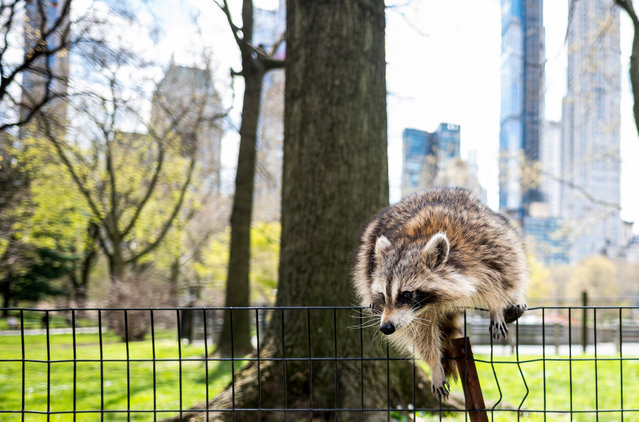
A racoon jumps over a fence in almost deserted Central Park in Manhattan on April 16, 2020 in New York City. Gone are the softball games, horse-drawn carriages and hordes of tourists. In their place, pronounced birdsong, solitary walks and renewed appreciation for Central Park's beauty during New York's coronavirus lockdown. The 843-acre (341-hectare) park – arguably the world's most famous urban green space – normally bustles with human activity as winter turns to spring, but this year due to Covid-19 it's the wildlife that is coming out to play. (Photo by Johannes Eisele/AFP Photo)

A racoon jumps over a fence in almost deserted Central Park in Manhattan on April 16, 2020 in New York City. Gone are the softball games, horse-drawn carriages and hordes of tourists. In their place, pronounced birdsong, solitary walks and renewed appreciation for Central Park's beauty during New York's coronavirus lockdown. The 843-acre (341-hectare) park – arguably the world's most famous urban green space – normally bustles with human activity as winter turns to spring, but this year due to Covid-19 it's the wildlife that is coming out to play. (Photo by Johannes Eisele/AFP Photo)
Details
14 Dec 2025 07:04:00
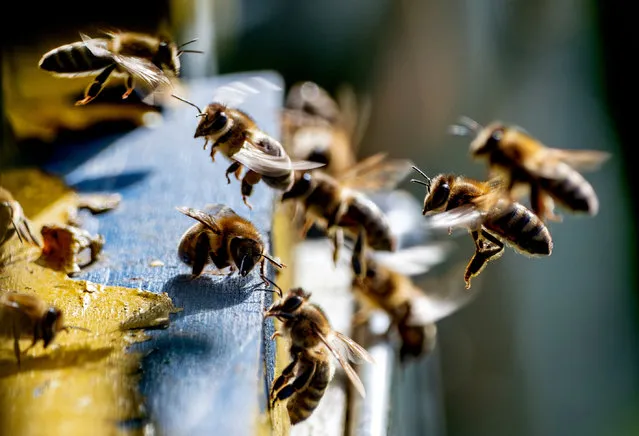
Bees fly in front of a beehive in the outskirts of Frankfurt, Germany, Monday, April 8, 2024. (Photo by Michael Probst/AP Photo)

Bees fly in front of a beehive in the outskirts of Frankfurt, Germany, Monday, April 8, 2024. (Photo by Michael Probst/AP Photo)
Details
22 Apr 2024 04:16:00