Loading...
Done


Festival goers celebrate during the Chupinazo, marking the beginning of the San Fermin festival on July 6, 2011 in Pamplona, Spain. Pamplona's famous Fiesta de San Fermin, which involves the running of the bulls through the historic heart of Pamplona for eight days starting July 7th, was made famous by the 1926 novel of U.S. writer Ernest Hemmingway called “The Sun Also Rises”. (Photo by Denis Doyle/Getty Images)
Details
07 Jul 2011 11:57:00


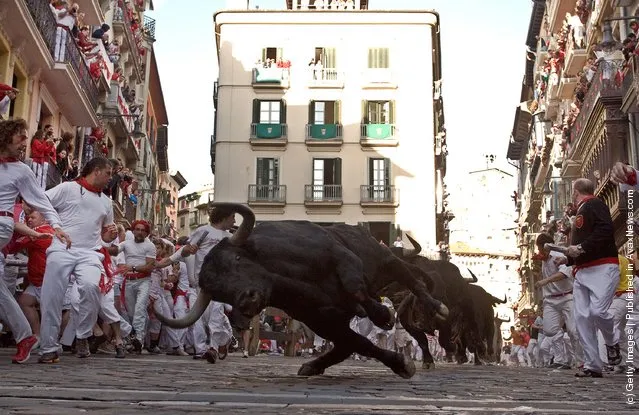
A fighting bull loses its balance during the third day of the San Fermin running-of-the-bulls on July 8, 2011 in Pamplona, Spain. Pamplona's famous Fiesta de San Fermin, which involves the running of the bulls through the historic heart of Pamplona for eight days starting July 7th, was made famous by the 1926 novel of U.S. writer Ernest Hemmingway called “The Sun Also Rises”. (Photo by Denis Doyle/Getty Images)
Details
08 Jul 2011 10:45:00
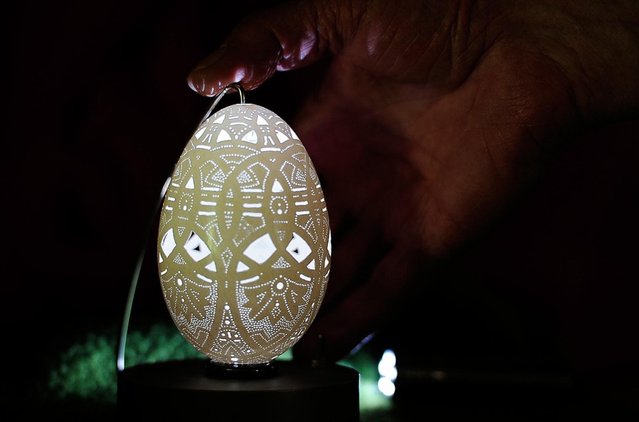
Egg Sculptures By Franc Grom

Slovenian artist Franc Grom, aged 72, makes unbelievably intricate egg sculptures using just a tiny electric drill and enormous patience. According to National Geographic, when finished, each egg contains approximately 2,500 to 3,500 holes. While Slovene artisans usually paint their eggs using a technique called drsanka by lightly scratching intricate patterns into the surfaces of colored eggs, carving them was solely Grom’s idea.
Details
24 Nov 2016 08:00:00
A woman smokes marijuana during a Global March for Marijuana in Medellin, Colombia, May 5, 2018. (Photo by Fredy Builes/Reuters)

A woman smokes marijuana during a Global March for Marijuana in Medellin, Colombia, May 5, 2018. The annual Global Marijuana March is taking place in over 100 cities across the world in an effort to raise awareness of the benefits of medical cannabis and to call for the legalization of marijuana. (Photo by Fredy Builes/Reuters)
Details
07 May 2018 08:28:00
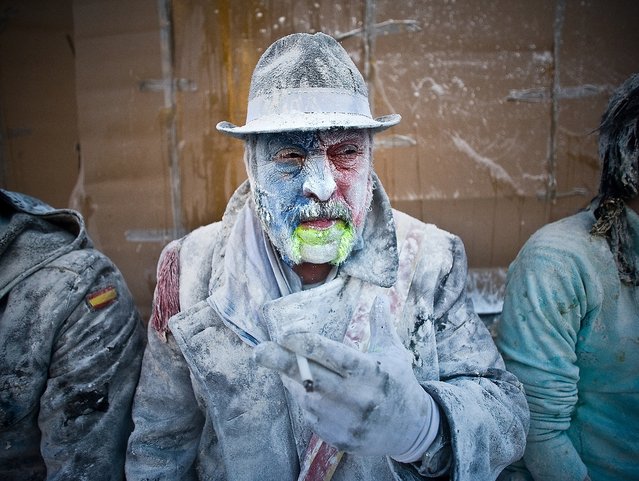
A Reveller smokes during the battle of “Enfarinats”, a flour fight in celebration of the Els Enfarinats festival. (Photo by David Ramos)

It’s a classic tale of dictatorship gone wrong and the fight for freedom. Like in any good battle, there’s fire, albeit from firecrackers, but the ammunition in this one is – flour. It takes place in a Hemingway-esque Spanish village. The battle of “Enfarinats” in celebration of the Els Enfarinats festival, rages on on December 28, 2012 in Ibi, Spain. Citizens of Ibi annually celebrate the festival with a fight using flour, eggs and firecrackers. The battle takes place between two groups, a group of married men called “Els Enfarinats” who take the control of the village for one day pronouncing a number of ridiculous laws and fining the citizens that infringe them and a group called “La Oposicio” who try to restore order. At the end of the day the money collected from the fines is donated to charitable causes in the village. The festival has been celebrated since 1981 after the town of Ibi recovered the tradition but the origins remain unknown.

Photo: A Reveller smokes during the battle of “Enfarinats”, a flour fight in celebration of the Els Enfarinats festival. (Photo by David Ramos)
Details
30 Dec 2012 10:28:00


“Itasha (痛車), literally “painmobile”, is a Japanese term for an otaku fad of individuals decorating the bodies of their cars with fictional characters of anime, manga, or video games (especially bishōjo game or eroge). These characters are predominately “cute” female. The decorations usually involve paint schemes and stickers. Automobiles are called Itasha, while similar motorcycles and bicycles are called itansha (痛単車) and itachari (痛チャリ), respectively”. – Wikipedia


Photo: A visitor takes pictures of an anime-decorated «Itasha» car displayed during the “Moe Fes in Washimiya” at Washimiya Town Hall on July 18, 2009 in Washimiya, Saitama, Japan. Itasha, a word derived from “itai” (painful) and “sha” (car), are vehicles decorated with mostly female characters from Japanese manga, anime and video games. (Photo by Kiyoshi Ota/Getty Images)
Details
02 May 2011 08:38:00
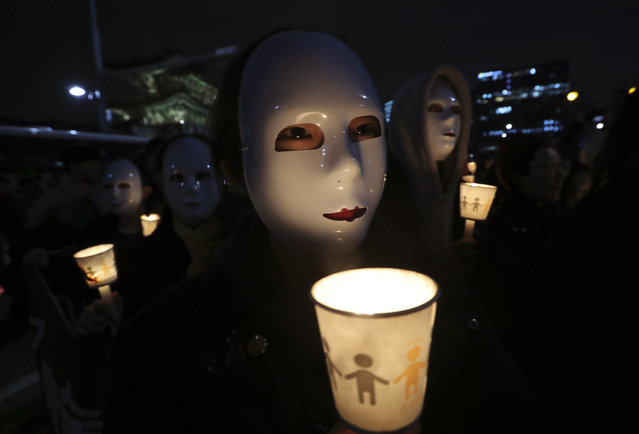
South Korean college students wearing masks hold up candles as they march after a rally calling for South Korean President Park Geun-hye to step down in Seoul, South Korea, Saturday, November 12, 2016. Hundreds of thousands of people flooded Seoul's streets on Saturday demanding the resignation of Park amid an explosive political scandal, in what may be South Korea's largest protest since it shook off dictatorship three decades ago. (Photo by Lee Jin-man/AP Photo)

South Korean college students wearing masks hold up candles as they march after a rally calling for South Korean President Park Geun-hye to step down in Seoul, South Korea, Saturday, November 12, 2016. Hundreds of thousands of people flooded Seoul's streets on Saturday demanding the resignation of Park amid an explosive political scandal, in what may be South Korea's largest protest since it shook off dictatorship three decades ago. (Photo by Lee Jin-man/AP Photo)
Details
13 Nov 2016 09:17:00
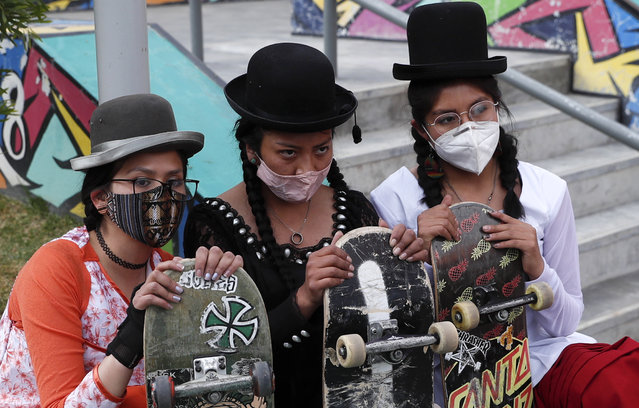
Yanira Villarreal, left, Ayde Choque, center, and Milenda Limachi, wearings masks amid the COVID-19 pandemic and dressed as a “Cholita” pose for a photo with their skateboards during a youth talent show in La Paz, Bolivia, Wednesday, September 30, 2020. Young women called “Skates Imillas”, using the Aymara word for girl Imilla, use traditional Indigenous clothing as a statement of pride of their Indigenous culture while playing riding their skateboards. (Photo by Juan Karita/AP Photo)

Yanira Villarreal, left, Ayde Choque, center, and Milenda Limachi, wearings masks amid the COVID-19 pandemic and dressed as a “Cholita” pose for a photo with their skateboards during a youth talent show in La Paz, Bolivia, Wednesday, September 30, 2020. Young women called “Skates Imillas”, using the Aymara word for girl Imilla, use traditional Indigenous clothing as a statement of pride of their Indigenous culture while playing riding their skateboards. (Photo by Juan Karita/AP Photo)
Details
02 Oct 2020 00:07:00