Loading...
Done
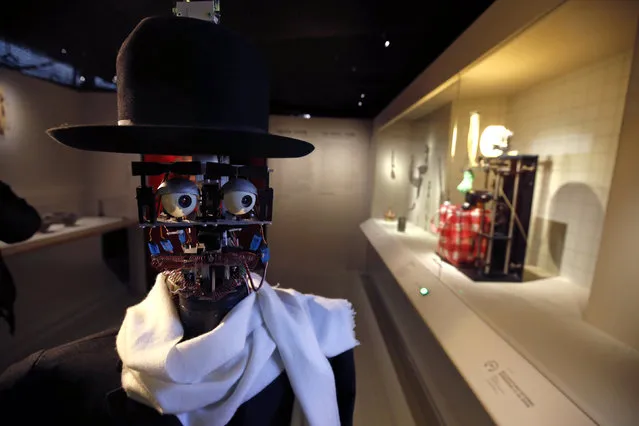
The Berenson robot strolls among visitors during the exhibition “Persona : Oddly Human” at the Quai Branly museum in Paris, France, February 23, 2016. The Berenson robot, developed in France in 2011, is the brainchild of anthropologist Denis Vidal and robotics engineer Philippe Gaussier. Its programming allows it to record reactions of museum visitors to certain pieces of art and then use the data to develop its own unique taste, which allows “Berenson” to judge whether or not it likes a certain work of art within an exhibition. (Photo by Philippe Wojazer/Reuters)

The Berenson robot strolls among visitors during the exhibition “Persona : Oddly Human” at the Quai Branly museum in Paris, France, February 23, 2016. The Berenson robot, developed in France in 2011, is the brainchild of anthropologist Denis Vidal and robotics engineer Philippe Gaussier. Its programming allows it to record reactions of museum visitors to certain pieces of art and then use the data to develop its own unique taste, which allows “Berenson” to judge whether or not it likes a certain work of art within an exhibition. (Photo by Philippe Wojazer/Reuters)
Details
25 Feb 2016 12:26:00
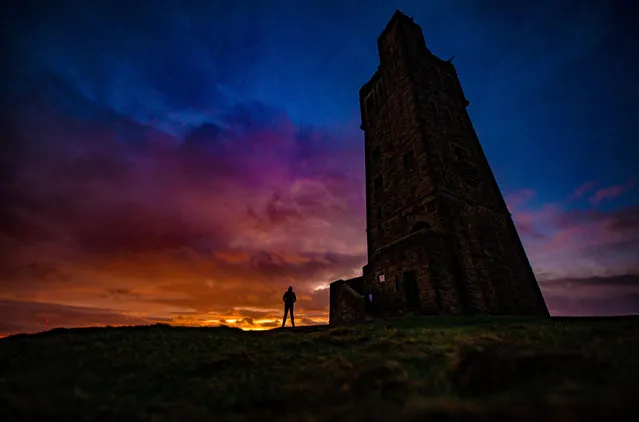
A colourful morning sunrise on Christmas Eve at Victoria Tower on Castle Hill, West Yorkshire, England on December 24, 2017. The history of human activity on the Castle Hill goes back over 4000 years. The site was developed as an iron age hill fort, surrounded by defensive ditches and ramparts. In the Middle Ages there was a castle on the hill, of which the well remains. The present tower was built to commemorate Queen Victoria's Diamond Jubilee of 1897. (Photo by Charlotte Graham/ZUMA Wire/Rex Features/Shutterstock)

A colourful morning sunrise on Christmas Eve at Victoria Tower on Castle Hill, West Yorkshire, England on December 24, 2017. The history of human activity on the Castle Hill goes back over 4000 years. The site was developed as an iron age hill fort, surrounded by defensive ditches and ramparts. In the Middle Ages there was a castle on the hill, of which the well remains. The present tower was built to commemorate Queen Victoria's Diamond Jubilee of 1897. (Photo by Charlotte Graham/ZUMA Wire/Rex Features/Shutterstock)
Details
31 Mar 2018 00:03:00
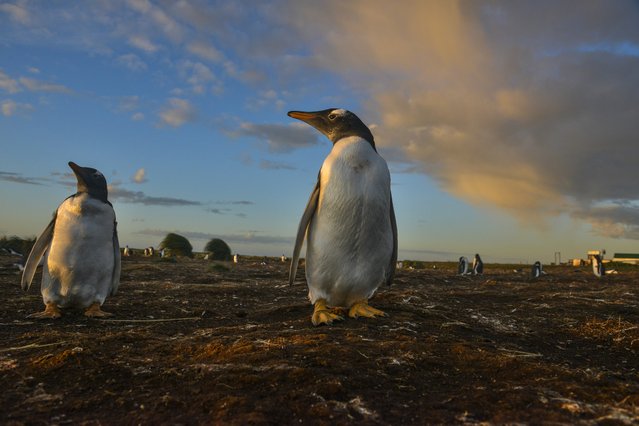
As the sun rises, Gentoo penguins start their day on Wednesday, February 17, 2016, on Sea Lion Island, Falkland Islands. Sea Lion Island, which lies about 10 miles to the south of mainland East Falkland, is the southern most human-inhabited island of the more than 750 islands and islets of the Falkland Islands. (Photo by Jahi Chikwendiu/The Washington Post)

As the sun rises, Gentoo penguins start their day on Wednesday, February 17, 2016, on Sea Lion Island, Falkland Islands. Sea Lion Island, which lies about 10 miles to the south of mainland East Falkland, is the southern most human-inhabited island of the more than 750 islands and islets of the Falkland Islands. (Photo by Jahi Chikwendiu/The Washington Post)
Details
02 Sep 2016 13:05:00
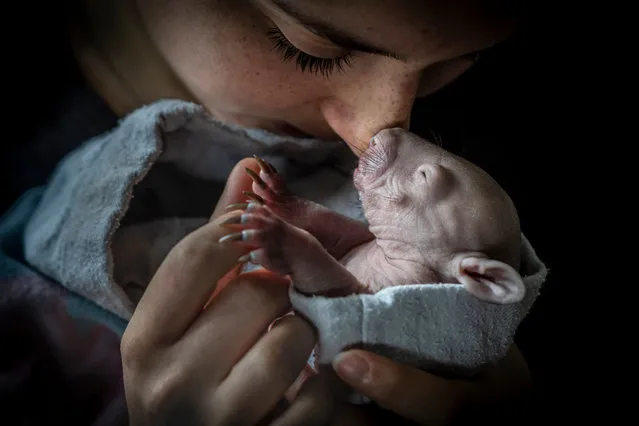
Nose to Nose; Human/Nature winner. “Doug Gimesy was documenting work at the Joey and Bat Sanctuary near Melbourne when he met a wombat (Vombatus ursinus) whose mother had been killed by a car. Gimesy watched as a young veterinary student bottle-fed the orphaned joey, then touched her nose to the joey’s in a tender moment of interspecies bonding”. (Photo by Doug Gimesy/BigPicture)

Nose to Nose; Human/Nature winner. “Doug Gimesy was documenting work at the Joey and Bat Sanctuary near Melbourne when he met a wombat (Vombatus ursinus) whose mother had been killed by a car. Gimesy watched as a young veterinary student bottle-fed the orphaned joey, then touched her nose to the joey’s in a tender moment of interspecies bonding”. (Photo by Doug Gimesy/BigPicture)
Details
25 Jun 2023 05:33:00
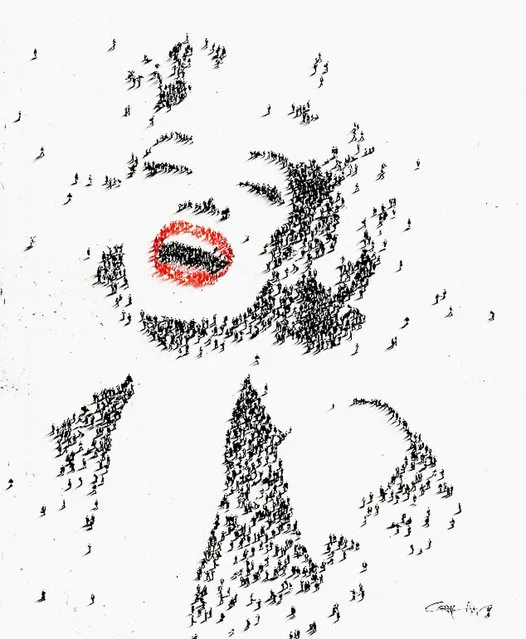
Craig Alan  By Famous Faces In A Crowd

Craig Alan was born in 1971 in San Bernardino, California and has always been attracted to the artistic side of life. Craig Alan’s earliest experimentation was street portraiture, helping him perfect his flair for replicating the human figure and afforded the budding artist a sense of economic autonomy.
Details
16 Jan 2013 15:48:00
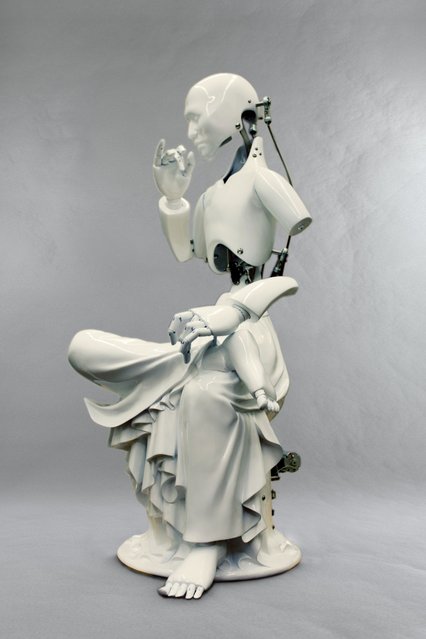
Wang Zi Won’s Mechanical Buddhas

South Korean artist Wang Zi Won creates enlightened robots, including the Buddha and an idealized mechanical doll based upon himself, as a guidepost for a future in which technology lead to self-actualization.
Humans will evolve and adapt themselves to enhanced science and technology just as men and animals in the past evolved to adapt themselves to their natural circumstances. The artist sees this as our destiny, not as a negative, gloomy dystopia.
Details
22 Mar 2013 12:02:00
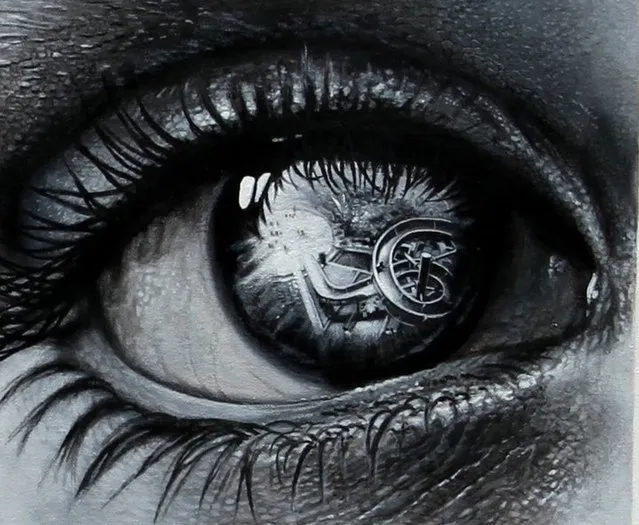
Photorealistic Paintings Of Eyes By Veri Apriyatno

Though it is often said that the human eye can be revealing about a person, Jakarta-based Indonesian artist Veri Apriyatno's series titled The Witnesses reveals a lot more about a person's surroundings through the reflection of their eyes. Each hyperrealistic mixed media creation in the series (made with charcoal, pencil, and acrylics on canvas) presents an entire world within the gaze of a glistening eye.
Details
13 Jun 2015 10:47:00


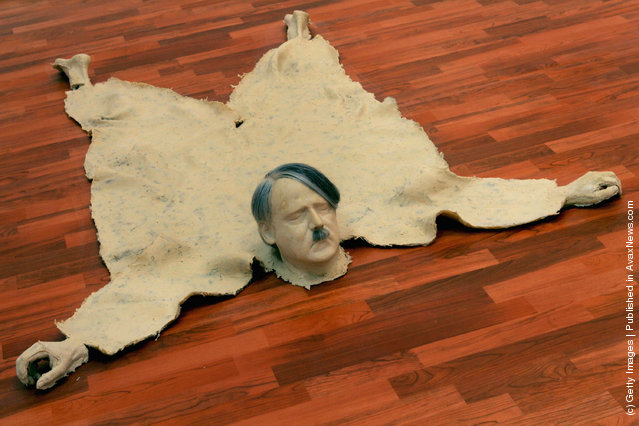
A silicon rug in the form of Adolph Hitler on display during an exhibition by Israeli artist Boaz Arad, at the Center for Contemporary Art February 22, 2007 in Tel Aviv, Israel. Arad is an Israeli artist who is dealing with the Holocaust in a provocative way. He uses the Holocaust to discuss human evil and contemporary Israel, which he says is torn and crumbling. (Photo by David Silverman/Getty Images)
Details
29 Mar 2011 11:51:00