Loading...
Done
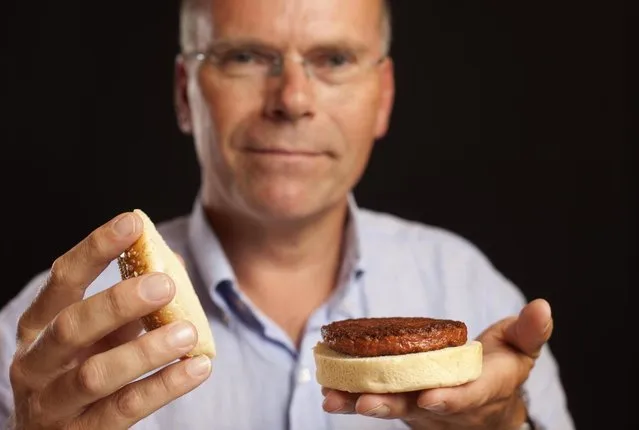
In this handout image provided by Ogilvy, a burger made from cultured beef, which has been developed by Professor Mark Post of Maastricht University in the Netherlands (pictured) is shown to the media during a press conference on August 5, 2013 in London, England. Cultured Beef could help solve the coming food crisis and combat climate change with commercial production of Cultured Beef beginning within ten to twenty years. (Photo by David Parry via Getty Images)

In this handout image provided by Ogilvy, a burger made from cultured beef, which has been developed by Professor Mark Post of Maastricht University in the Netherlands (pictured) is shown to the media during a press conference on August 5, 2013 in London, England. The in-vitro burger, cultured from cattle stem cells, the first example of what its creator says could provide an answer to global food shortages and help combat climate change, was fried in a pan and tasted by two volunteers. The burger is the result of years of research by Dutch scientist Mark Post, a vascular biologist at the University of Maastricht, who is working to show how meat grown in petri dishes might one day be a true alternative to meat from livestock.The meat in the burger has been made by knitting together around 20,000 strands of protein that has been cultured from cattle stem cells in Post's lab. (Photo by David Parry)
Details
06 Aug 2013 08:48:00
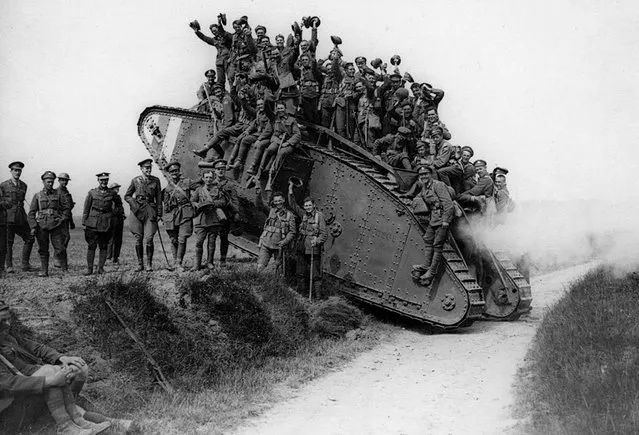
These black-and-white photos are taken from the new book “Armoured Warfare in the First World War 1916 – 1918” by Anthony Tucker-Jones and published by Pen & Sword Military. “Interestingly the British, French and Germans took completely different approaches with varying results”. The British military produced “Little Willie” in Autumn 1915 weighing 18 tonnes, which had a crew of two plus four gunners. “Inspired by a tracked artillery tractor “Little Willie” was referred to as a water tank – hence the name tank – to ensure secrecy”, said Anthony. “This led to the strange looking Mark I with its peculiar rhomboid shape, designed to cross trenches with guns in sponsons on either side. The Germans saw the tank as unchivalrous and were slow to grasp its utility. They favoured the Stormtrooper (specialist soldiers used to infiltrate enemy trenches) and artillery, not the tank”, said Anthony. “However, they didn’t hesitate to make use of captured British tanks. Although the tank helped secure victory and German soldiers dubbed it “Germany’s Downfall” the country was ultimately brought to its knees by the Allies blockade”. Here: British troops hitch a ride on a Mark IV after the massed tank fleet spearheading attack at Cambrai on November 20, 1917. (Photo by Anthony Tucker-Jones/Mediadrumworld.com)

These black-and-white photos are taken from the new book “Armoured Warfare in the First World War 1916 – 1918” by Anthony Tucker-Jones and published by Pen & Sword Military. Here: British troops hitch a ride on a Mark IV after the massed tank fleet spearheading attack at Cambrai on November 20, 1917. (Photo by Anthony Tucker-Jones/Mediadrumworld.com)
Details
23 Feb 2017 00:02:00
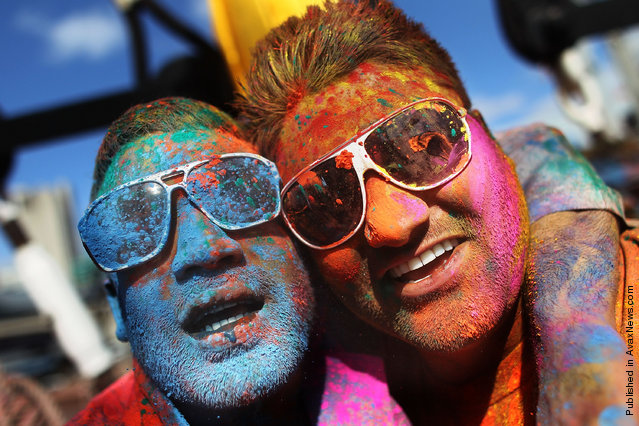
Indian Festival Of Holi Celebrated In Manhattan

Revelers celebrate the Indian festival of Holi on the deck of the ship Peking at South Street Seaport in Manhattan March 19, 2011 in New York City. The Hindu festival of Holi , also known as the Festival of Colors, marks the arrival of spring where participants throw colored powder and water on one another. Many of the New York participants are Indian-American.
Details
20 Mar 2011 13:16:00
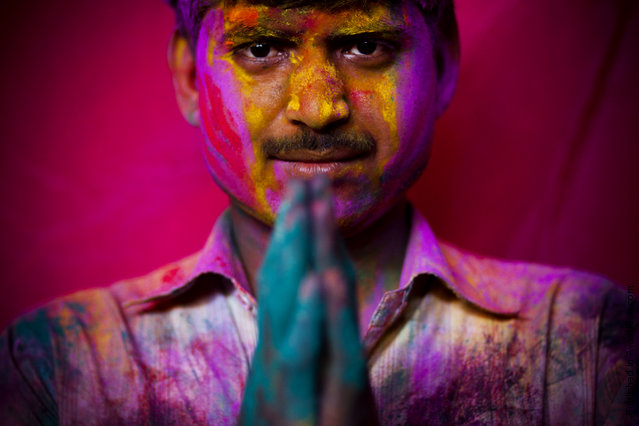
Hindu Devotees Celebrate Holi Festival In India

Hindu devotees play with coloured powders during Holi celebrations at the Bankey Bihari Temple on March 21, 2011 in Vrindavan, India. Holi, the spring festival of colours, is celebrated by Hindus around the world in an explosion of colour to mark the end of the winter. (Photo by Majid Saeedi/Getty Images)
Details
21 Mar 2011 19:49:00


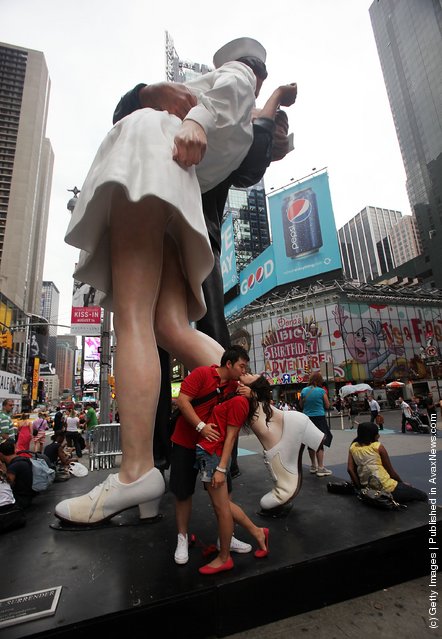
Dove Jo (L) and HJ Kim kiss beneath a 26-foot statue inspired by the iconic kiss between a nurse and a sailor in Times Square August 12, 2010 in New York City. Alfred Eisenstaedt took the famous photograph on V-J Day marking the end of World War II. (Photo by Mario Tama/Getty Images)
Details
24 May 2011 09:12:00


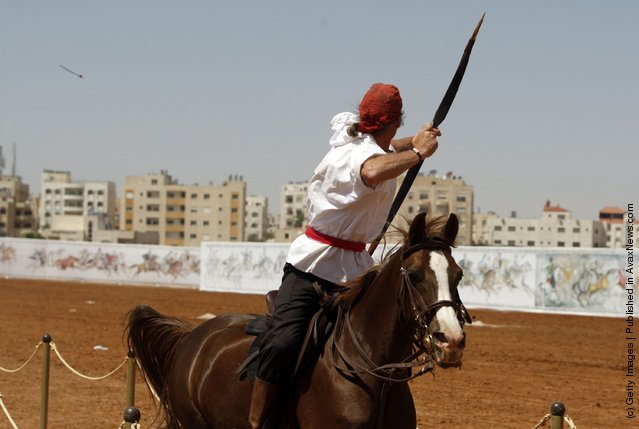
A Participant attends the opening of the first Jordanian International Horseback Archery competition, also known as the Al Faris competition and organized by the Public Security, to mark the country's 65th Independence Day June 9, 2011 in Amman, Jordan. The Al Faris competition involves showcasing different archery styles and competitors from more than fifteen countries. (Photo by Salah Malkawi/ Getty Images)
Details
10 Jun 2011 09:30:00
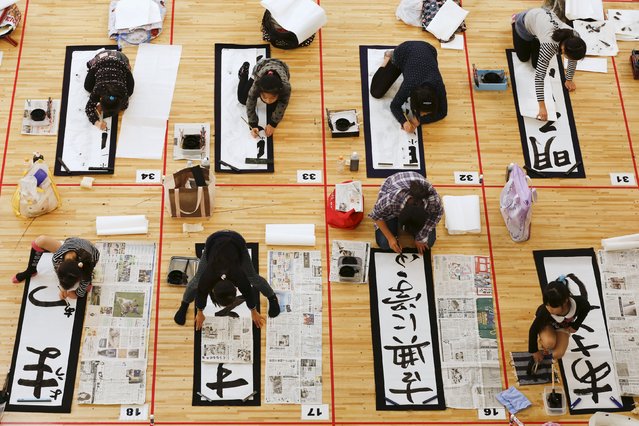
Pupils participate in a calligraphy contest to celebrate the New Year in Tokyo January 5, 2016. (Photo by Thomas Peter/Reuters)

Pupils participate in a calligraphy contest to celebrate the New Year in Tokyo January 5, 2016. Over 3,000 calligraphers who qualified in competitions throughout Japan wrote resolutions or wishes onto paper sheets during the annual contest that marks the start of the new year, according to organizers. (Photo by Thomas Peter/Reuters)
Details
07 Jan 2016 08:02:00
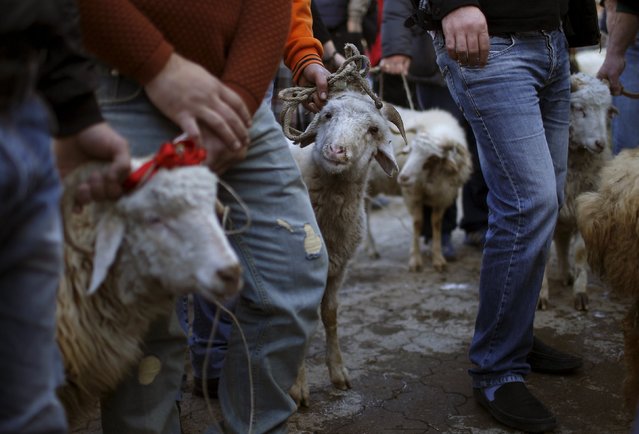
People stand with sheep for sacrifice outside a church during St. George's Day celebration in the village of Ikalto, Georgia, November 23, 2015. (Photo by David Mdzinarishvili/Reuters)

People stand with sheep for sacrifice outside a church during St. George's Day celebration in the village of Ikalto, Georgia, November 23, 2015. Georgia marks on Monday one of its most popular religious and public holidays. (Photo by David Mdzinarishvili/Reuters)
Details
25 Nov 2015 08:03:00