Loading...
Done
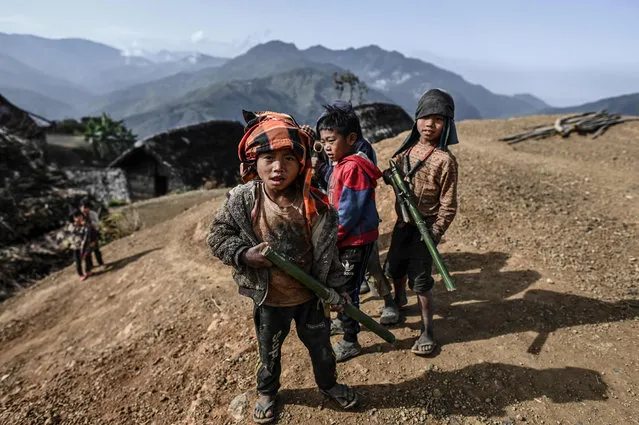
This photo taken on February 9, 2020 shows children playing in front of their homes in Tarmaw Lawri village in the Lahe township in Myanmar's Sagaing region. (Photo by Ye Aung Thu/AFP Photo)

This photo taken on February 9, 2020 shows children playing in front of their homes in Tarmaw Lawri village in the Lahe township in Myanmar's Sagaing region. A haunting refrain pierces the night as the tribeswomen of the Gongwang Bonyo, among the most isolated people in Myanmar, dance around a campfire to bless the harvest ahead. (Photo by Ye Aung Thu/AFP Photo)
Details
31 Mar 2020 00:05:00
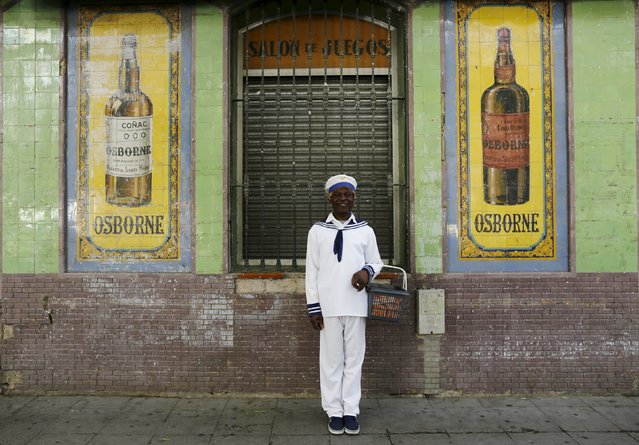
Howard Jackson, a Liberian migrant, poses for a portrait in the Andalusian capital of Seville, southern Spain March 7, 2016. (Photo by Marcelo del Pozo/Reuters)

Howard Jackson, a Liberian migrant, poses for a portrait in the Andalusian capital of Seville, southern Spain March 7, 2016. Jackson escaped civil war and spent three years crossing Africa before reaching Spain. Dressed up in one of his more than 200 costumes, from Peter Pan to Little Red Riding Hood, he is a well-known figure at an intersection entering the Spanish city of Seville where he has sold tissues to motorists for over a decade. Jackson is studying law and wants to become a judge. (Photo by Marcelo del Pozo/Reuters)
Details
24 Mar 2016 12:14:00
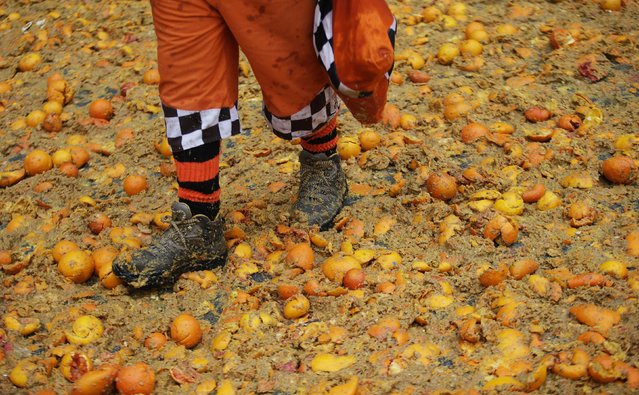
A member of a rival team walks during an annual carnival battle with oranges in the northern Italian town of Ivrea February 15, 2015. Dressed up as Middle Age kings' guards, a group of men ride in a horse-drawn carriage and pelt “foot soldiers” with oranges as thousands of people gather to re-enact a Middle Age battle when the townsfolk of Ivrea overthrew an evil king. (Photo by Max Rossi/Reuters)

A member of a rival team walks during an annual carnival battle with oranges in the northern Italian town of Ivrea February 15, 2015. Dressed up as Middle Age kings' guards, a group of men ride in a horse-drawn carriage and pelt “foot soldiers” with oranges as thousands of people gather to re-enact a Middle Age battle when the townsfolk of Ivrea overthrew an evil king. In a strange twist, instead of swords and cross bows, these days the weapons of choice are oranges. (Photo by Max Rossi/Reuters)
Details
16 Feb 2015 13:06:00
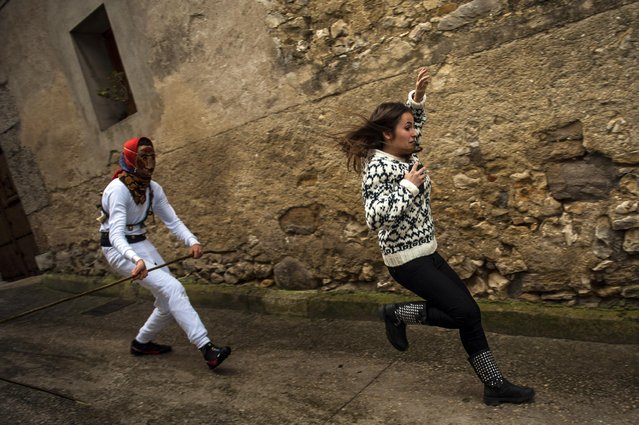
In this photo taken on Sunday, February 15, 2015 a girl runs away from a “Mamuxarro” during the carnival, in the small town of Unanu, northern Spain. While Rio de Janeiro may boast the world’s most famous carnival, the festive period of masquerades and wild and colorful costumes that precedes the Christian religious season of Lent is also a permanent and popular fixture for celebration in Spain and Portugal, with each country having its own strange and unique way of doing it. (Photo by Alvaro Barrientos/AP Photo)

In this photo taken on Sunday, February 15, 2015 a girl runs away from a “Mamuxarro” during the carnival, in the small town of Unanu, northern Spain. In the northern Spanish ancient village of Unamu, people dress up as “Mamuxarro”, folkloric figures in white with a red sash and a metal mask to cover their faces as they pursue townsfolk with sticks. According to custom, their “victims” (usually young women) must kneel and kiss the mamuxarro’s knee after he makes the sign of the cross on their forehead. (Photo by Alvaro Barrientos/AP Photo)
Details
22 Feb 2015 10:51:00
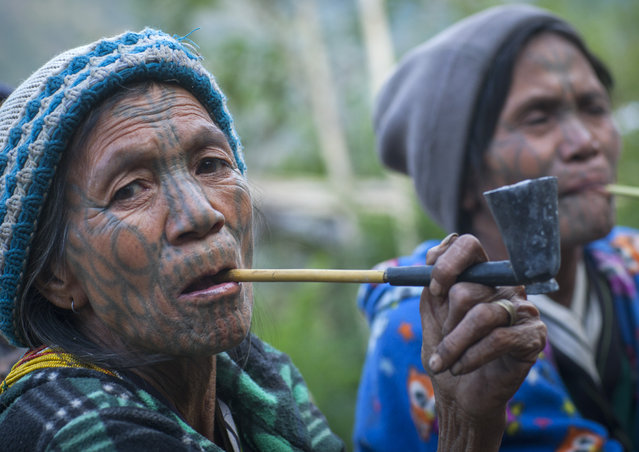
A group of tattooed women from the Muun tribe who inhabit the hills of the Arakan state. The design, known as the letter B-pattern, is common in the Mindat area. It is composed of dots, lines and occasionally circles, in February, 2015, in Myanmar, Burma. (Photo by Eric Lafforgue/Barcroft Media)

A group of tattooed women from the Muun tribe who inhabit the hills of the Arakan state. The design, known as the letter B-pattern, is common in the Mindat area. It is composed of dots, lines and occasionally circles, in February, 2015, in Myanmar, Burma. With spider webs, B-patterns and crossed lines painstakingly inked on their faces these stunning photographs show the tattooed women of Burma. French photographer Eric Lafforgue travelled to the Chin, Rakhine and Arakan states of northwestern Myanmar to capture the rare facial designs. (Photo by Eric Lafforgue/Barcroft Media)
Details
16 Mar 2015 10:54:00
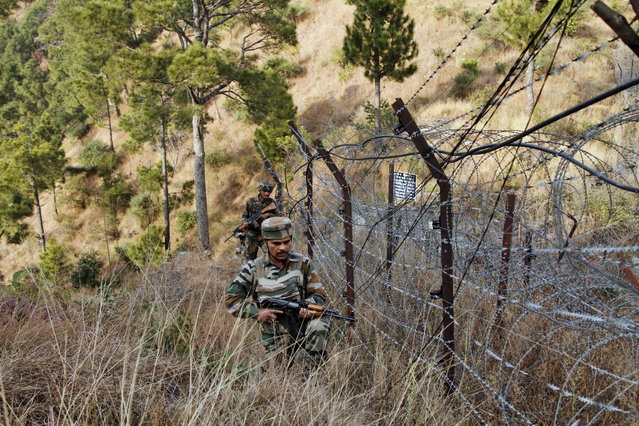
In this December 23, 2013 photo, Indian army soldiers patrol near one of their forward post at the Line of Control (LOC), that divides Kashmir between India and Pakistan, at Krishna Ghati (KG Sector) in Poonch, 290 kilometers (180 miles) from Jammu, India. (Photo by Channi Anand/AP Photo)

In this December 23, 2013 photo, Indian army soldiers patrol near one of their forward post at the Line of Control (LOC), that divides Kashmir between India and Pakistan, at Krishna Ghati (KG Sector) in Poonch, 290 kilometers (180 miles) from Jammu, India. The military commanders of longtime rivals India and Pakistan met on Tuesday in a bid to stop frequent cross-border attacks in disputed Kashmir which escalated tensions in the region in recent months. (Photo by Channi Anand/AP Photo)
Details
29 Dec 2013 08:18:00
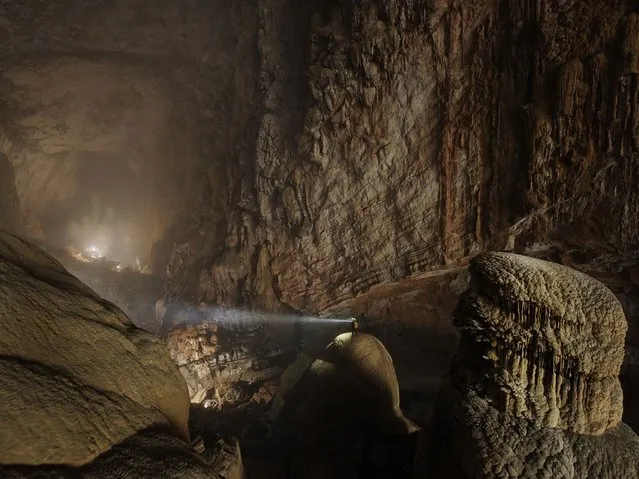
Son Doong Cave

Son doong cave is a cave in Phong Nha-Kẻ Bàng National Park, Bố Trạch district, Quảng Bình Province, Vietnam. Currently the biggest known cave in the world, the cave is located near the Laos-Vietnam border. Inside is a large, fast-flowing underground river.
In early August 2013, the first tourist group explored the cave on a guided tour at a cost of US$3,000 each. The group had six members from Australia, Norway, Russia and USA and spent 7 days and 6 nights for the tour. Next exploration trips will be arranged.
Details
22 Sep 2013 12:30:00
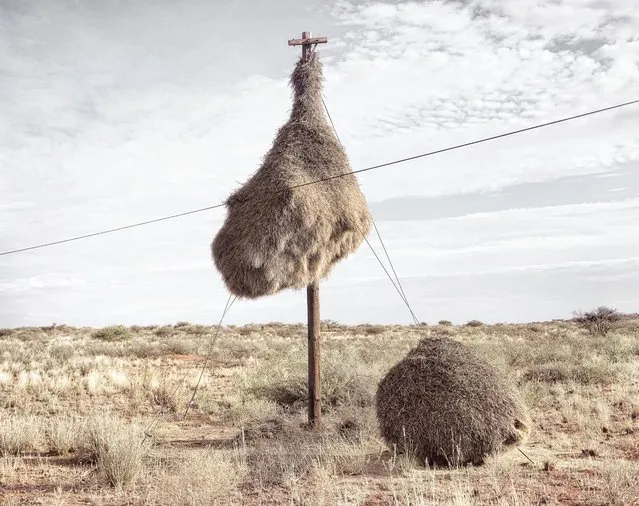
Assimilation By Dillon Marsh

Captured by South African photographer Dillon Marsh, these fantastic photographs depict the many designs employed by sociable weavers to build sturdy nests that are safe from intruders such as cobras and tree snakes. They are also nice cool during the day, and stay warm during cold desert nights. A University of Stellenbosch graduate, Marsh is currently interested in landscape photographer who seeks out anomalies that can be arranged in a photographic series. Assimilation depicts scores of intricate weaver’s nests atop utility poles in Southern Africa. Colonies of sociable weavers have been known to stay attached to one particular nest for up to 100 years, according to The San Diego Zoo.
Details
15 Feb 2014 14:47:00