Loading...
Done
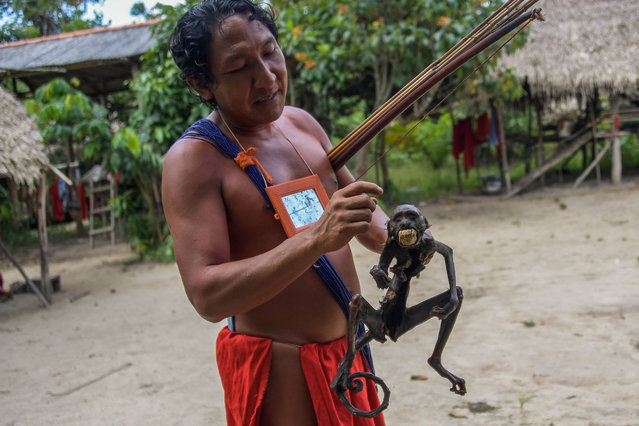
Chieftain Japarupi Waiapi shows a roasted monkey -part of Waiapi's diet, also based in Manioc and fruits- at the reserve in Amapa state in Brazil on October 13, 2017. When Waiapis walks into the Amazon forest surrounding their village, they do not see trees, but a kind of shopping mall providing medicine, food, shelter, tools and weapons  all under the eye of multiple spirits. (Photo by Apu Gomes/AFP Photo)

Chieftain Japarupi Waiapi shows a roasted monkey -part of Waiapi's diet, also based in Manioc and fruits- at the reserve in Amapa state in Brazil on October 13, 2017. When Waiapis walks into the Amazon forest surrounding their village, they do not see trees, but a kind of shopping mall providing medicine, food, shelter, tools and weapons all under the eye of multiple spirits. (Photo by Apu Gomes/AFP Photo)
Details
27 Oct 2017 08:39:00
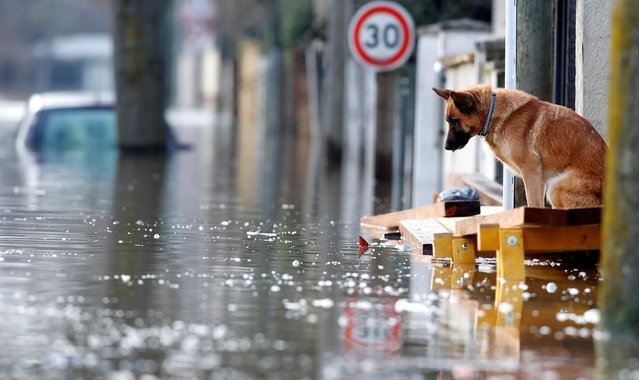
A dog is seen at the entrance of a house in the flooded residential area of Villeneuve-Saint-Georges, near Paris, France January 26, 2018. (Photo by Christian Hartmann/Reuters)

A dog is seen at the entrance of a house in the flooded residential area of Villeneuve-Saint-Georges, near Paris, France January 26, 2018. The Paris region has been deeply affected by the floods that hit the country over the past week, but in Paris, it was business as usual. (Photo by Christian Hartmann/Reuters)
Details
27 Jan 2018 07:16:00
A woman looks at head of bluefin tuna on display in front of a store at Tsukiji fish market in Tokyo, Monday, February 19, 2018.  The large bluefin are particularly valuable in Japan, where they are considered a premium sushi and sashimi fish. A single fish sold for more than $1.75 million at an auction in Japan in 2013. (Photo by Koji Sasahara/AP Photo)

A woman looks at head of bluefin tuna on display in front of a store at Tsukiji fish market in Tokyo, Monday, February 19, 2018. The large bluefin are particularly valuable in Japan, where they are considered a premium sushi and sashimi fish. A single fish sold for more than $1.75 million at an auction in Japan in 2013. (Photo by Koji Sasahara/AP Photo)
Details
06 Mar 2018 00:05:00
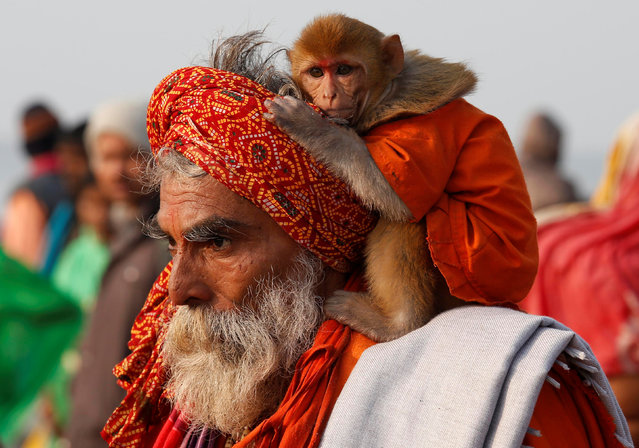
A Sadhu or a Hindu holy man carrying his pet monkey walks after taking a dip at the confluence of the river Ganges and the Bay of Bengal on the occasion of “Makar Sankranti” festival at Sagar Island, south of Kolkata, India, January 14, 2017. (Photo by Rupak De Chowdhuri/Reuters)

A Sadhu or a Hindu holy man carrying his pet monkey walks after taking a dip at the confluence of the river Ganges and the Bay of Bengal on the occasion of “Makar Sankranti” festival at Sagar Island, south of Kolkata, India, January 14, 2017. (Photo by Rupak De Chowdhuri/Reuters)
Details
16 Jan 2017 10:30:00
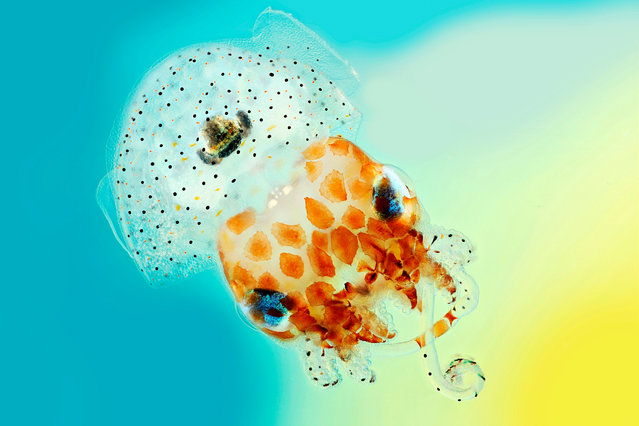
With its huge eyes, comical name and diminutive size, Mark R. Smith’s image of a baby Hawaiian bobtail squid can’t help but raise a smile. A curiously endearing creature, the cephalopod is just 1.5cm across, its mantle cavity bearing more than a passing resemblance to a rather natty shower cap. But it is also a beautiful example of symbiosis – nature’s version of “I’ll scratch your back if you scratch mine” – for on the underside of the squid is a light organ which houses bioluminescent bacteria. The squid offers the bacteria protection and food, while the bacteria emit a glow – a handy trait that the squid uses to offset its silhouette, helping it to evade predators in the depths below. Mark R. Smith’s entry combines several images of a Hawaiian bobtail squid with different focus lengths to create a final picture with greater depth of field than normal. (Photo by Mark R. Smith/Wellcome Images/Macroscopic Solutions)

With its huge eyes, comical name and diminutive size, Mark R. Smith’s image of a baby Hawaiian bobtail squid can’t help but raise a smile. A curiously endearing creature, the cephalopod is just 1.5cm across, its mantle cavity bearing more than a passing resemblance to a rather natty shower cap. But it is also a beautiful example of symbiosis – nature’s version of “I’ll scratch your back if you scratch mine” – for on the underside of the squid is a light organ which houses bioluminescent bacteria. The squid offers the bacteria protection and food, while the bacteria emit a glow – a handy trait that the squid uses to offset its silhouette, helping it to evade predators in the depths below. Mark R. Smith’s entry combines several images of a Hawaiian bobtail squid with different focus lengths to create a final picture with greater depth of field than normal. (Photo by Mark R. Smith/Wellcome Images/Macroscopic Solutions)
Details
08 Mar 2017 00:05:00
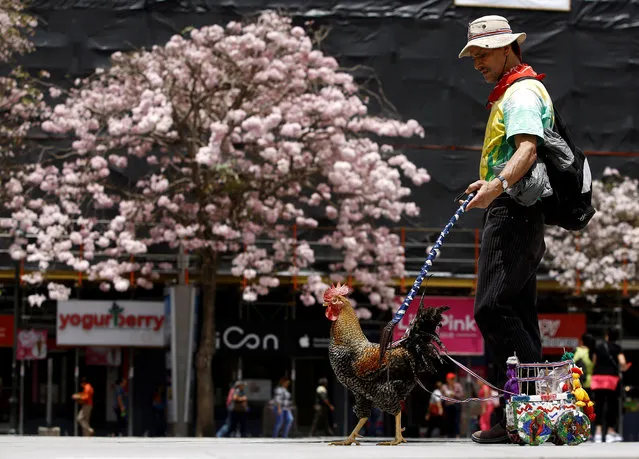
Martin Herrera, 58, who has had a love for roosters since his childhood, and has spent the last 20 years domesticating and training them, walks with his favorite rooster “Paquito” in San Jose, Costa Rica April 27, 2017. (Photo by Juan Carlos Ulate/Reuters)

Martin Herrera, 58, who has had a love for roosters since his childhood, and has spent the last 20 years domesticating and training them, walks with his favorite rooster “Paquito” in San Jose, Costa Rica April 27, 2017. (Photo by Juan Carlos Ulate/Reuters)
Details
05 May 2017 07:34:00
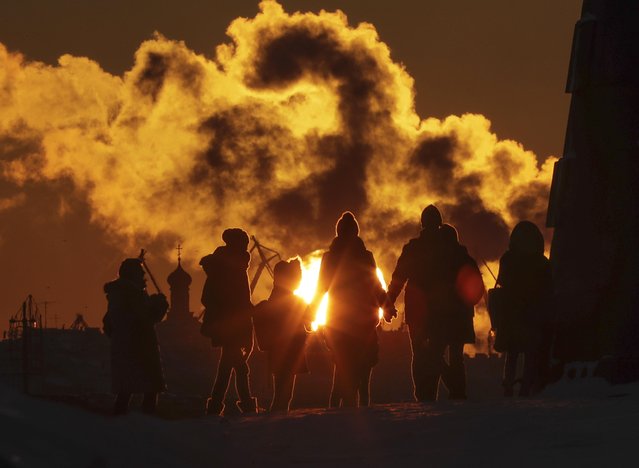
People walk along the Neva River at sunset in St.Petersburg, Russia, Tuesday, December 6, 2016. The temperature in St.Petersburg is -9C ( 15.8 °F). (Photo by Dmitri Lovetsky/AP Photo)

People walk along the Neva River at sunset in St.Petersburg, Russia, Tuesday, December 6, 2016. The temperature in St.Petersburg is –9C ( 15.8 °F). (Photo by Dmitri Lovetsky/AP Photo)
Details
10 Jun 2017 08:38:00
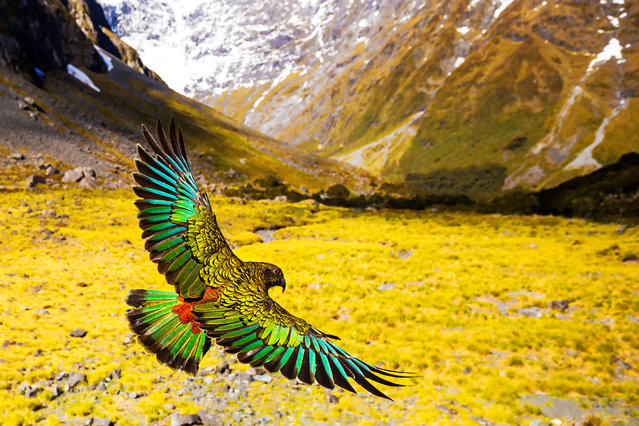
Kea are the only true alpine parrots in the world and thrive as cunning opportunists in the freezing conditions of the Southern Alps. Kea are thought to have developed their wide array of food-finding strategies during the last great ice age, where they learned to adapt using their unusual powers of curiosity. (Photo by Tom Walker/BBC Pictures/The Guardian)

Kea are the only true alpine parrots in the world and thrive as cunning opportunists in the freezing conditions of the Southern Alps. Kea are thought to have developed their wide array of food-finding strategies during the last great ice age, where they learned to adapt using their unusual powers of curiosity. (Photo by Tom Walker/BBC Pictures/The Guardian)
Details
19 Jul 2016 13:03:00