Loading...
Done
Cars sit abandoned in a former shopping centre in the United Nations buffer zone in central Nicosia March 12, 2014. The cars were imported from Japan to be sold at a Toyota dealership. They were stored here during the 1974 conflict and have not been moved since. (Photo by Neil Hall/Reuters)

Cars sit abandoned in a former shopping centre in the United Nations buffer zone in central Nicosia March 12, 2014. The cars were imported from Japan to be sold at a Toyota dealership. They were stored here during the 1974 conflict and have not been moved since. (Photo by Neil Hall/Reuters)
Details
16 Apr 2014 08:50:00
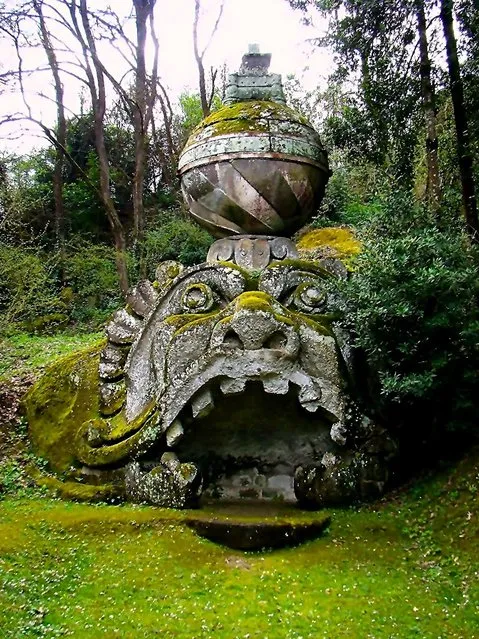
The Park Of Monsters

Bomarzo's main attraction is a garden, usually referred to as the Bosco Sacro (Sacred grove) or, locally, Bosco dei Mostri ("Monsters' Grove"), named after the many larger-than-life sculptures, some sculpted in the bedrock, which populate this predominantly barren landscape.
Details
10 May 2014 11:28:00
A large variety of weapons were for sale at the Washington County Fairgrounds Gun Show that drew thousands of people over the weekend, on March 22, 2013. (Photo by Gary Porter)

A large variety of weapons were for sale at the Washington County Fairgrounds Gun Show that drew thousands of people over the weekend, on March 22, 2013. (Photo by Gary Porter)
Details
24 Mar 2013 09:43:00
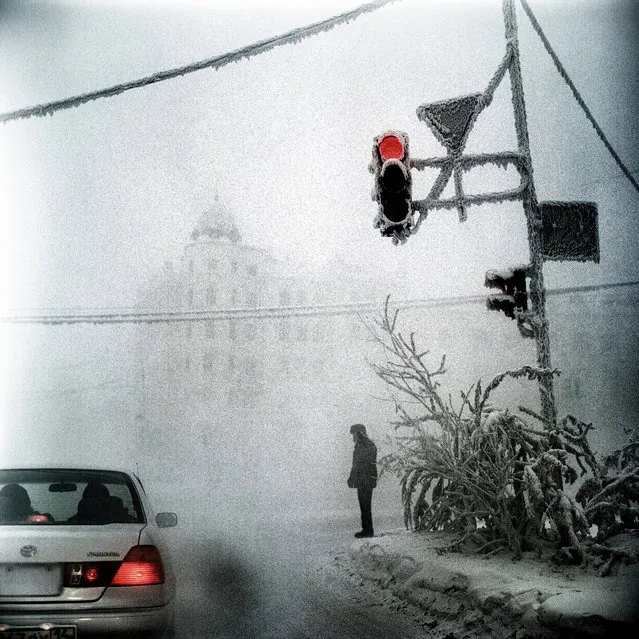
January 2013. A scene in Yakutsk, Siberia, the coldest city in the world. (Photo by Steeve Iuncker/Agence VU)

Yakutsk, a remote city in Eastern Siberia along the Lena River, is the coldest city in the world. Located 1840 km away from Irkoustk and 5000 km away from Moscow, this city founded in 1632 by the Cossacks imposes upon its inhabitants an extreme way of life. And yet, despite particularly harsh conditions, Yakutsk boasts a population of 270,000, or a quarter of the entire population of Siberia. No other place on the planet experiences the temperature extreme found here: in winter, the temperatures regularly fall to minus 40° (the coldest temperature recorded was –64°C) and in summer often reaches temperatures above 30°C. Photo: January 2013. A scene in Yakutsk, Siberia, the coldest city in the world. (Photo by Steeve Iuncker/Agence VU)
Details
29 Apr 2013 10:30:00
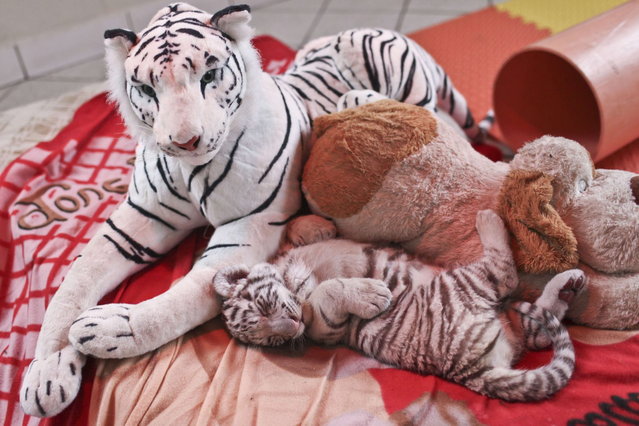
A 42-day-old white bengal tiger cub (bottom), the first of its kind born in Peru, sleeps between toys as he is presented at the Huachipa's zoo in Lima on August 6, 2013. (Photo by Ernesto Benavides/AFP Photo)

A 42-day-old white bengal tiger cub (bottom), the first of its kind born in Peru, sleeps between toys as he is presented at the Huachipa's zoo in Lima on August 6, 2013. (Photo by Ernesto Benavides/AFP Photo)
Details
12 Aug 2013 06:50:00
Meatpacking District, NYC

“I wonder about everyone that I photograph, what are they thinking at the moment, what is going on in their life, what are they really like. Photographs are such abstractions of real life, both true and false at the same time and so limited in the scope of what can be captured, yet limitless in how it stimulates our imagination. Indeed, photography is a rich medium”. – Mike Peters. Photo: Meatpacking District, NYC, September 28, 2012. (Photo by Mike Peters)
Details
14 Nov 2013 09:26:00
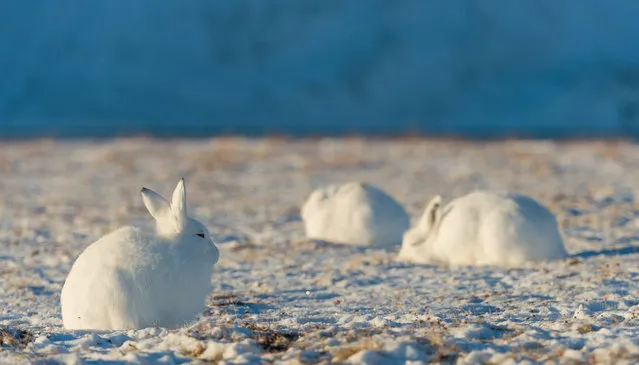
Arctic Hare

The arctic hare, or polar rabbit, is a species of hare which is adapted largely to polar and mountainous habitats. The arctic hare survives with a thick coat of fur and usually digs holes in the ground or under snow to keep warm and sleep. Arctic hares look like rabbits but have shorter ears, are taller when standing, and, unlike rabbits, can thrive in cold climates. They can travel together with many other hares, sometimes huddling with dozens or more, but are usually found alone, taking, in some cases, more than one partner. The arctic hare can run up to 60 kilometres per hour (40 mph). Its predators include the arctic wolf, arctic fox, and ermine.
Details
17 Mar 2014 13:56:00
An Andean man and a woman, depicting Inca's legendary characters Manco Capac and Mama Ocllo, pose for a portrait in a Uros island at Lake Titicaca before a re-enactment in Puno November 5, 2014. The Uros islands are a group of 70 man-made totora reed islands floating on the lake, which according to Peru's tourism board iPeru is the world's highest navigable lake at over 4,000 meters above sea level. (Photo by Enrique Castro-Mendivil/Reuters)

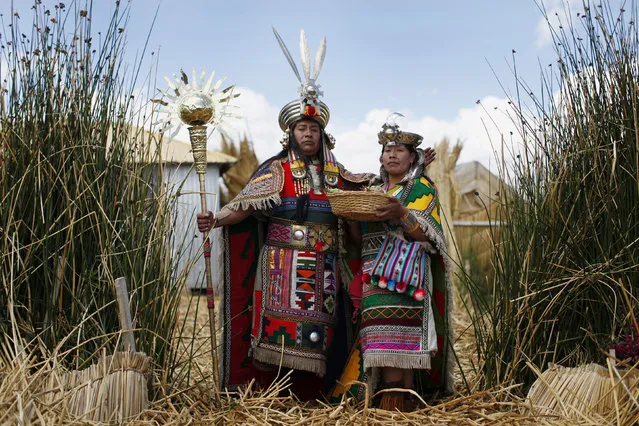
An Andean man and a woman, depicting Inca's legendary characters Manco Capac and Mama Ocllo, pose for a portrait in a Uros island at Lake Titicaca before a re-enactment in Puno November 5, 2014. The Uros islands are a group of 70 man-made totora reed islands floating on the lake, which according to Peru's tourism board iPeru is the world's highest navigable lake at over 4,000 meters above sea level. The Uros people fish and hunt, but tourism is their main source of livelihood. (Photo by Enrique Castro-Mendivil/Reuters)
Details
07 Nov 2014 12:52:00