Loading...
Done
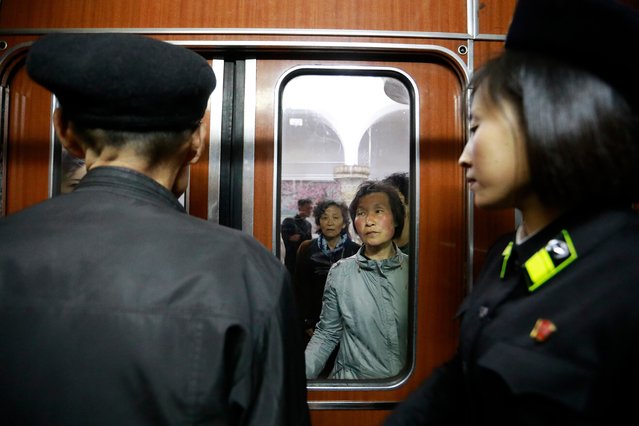
North Korean commuters are seen through a door window waiting to board a train in a subway train station in Pyongyang, North Korea, 14 April 2017. North Koreans are preparing to celebrate the “Day of the Sun” festival, commemorating the 105th birthday anniversary of former supreme leader Kim Il-sung on 15 April, as tension over nuclear issues rise in the region. (Photo by How Hwee Young/EPA)

North Korean commuters are seen through a door window waiting to board a train in a subway train station in Pyongyang, North Korea, 14 April 2017. North Koreans are preparing to celebrate the “Day of the Sun” festival, commemorating the 105th birthday anniversary of former supreme leader Kim Il-sung on 15 April, as tension over nuclear issues rise in the region. (Photo by How Hwee Young/EPA)
Details
17 Apr 2017 07:53:00
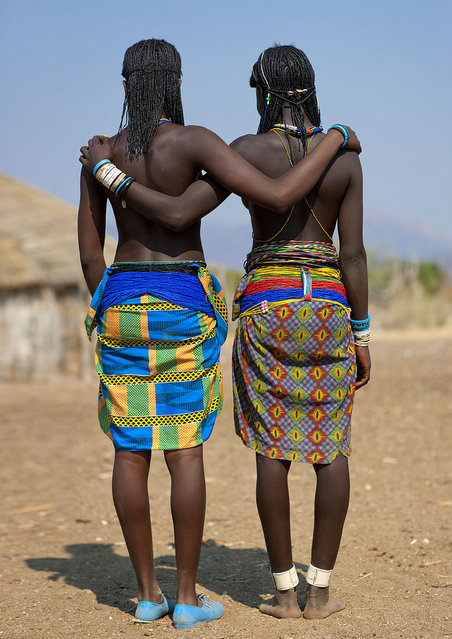
“Show us our butts! Mucawana tribe – Angola. In Soba village, the Muhacaona (Mucawana) tribe, perhaps the best place i have visited. They use cow dung and fat to make this so nice haircut, and love the beads. They asked me to make pictures of their backs... and butts to see on the camera screen if everything was perfect!”. (Eric Lafforgue)

“Show us our butts! Mucawana tribe – Angola. In Soba village, the Muhacaona (Mucawana) tribe, perhaps the best place i have visited. They use cow dung and fat to make this so nice haircut, and love the beads. They asked me to make pictures of their backs... and butts to see on the camera screen if everything was perfect!”. (Photo and comments by Eric Lafforgue)
Details
09 Nov 2012 15:04:00
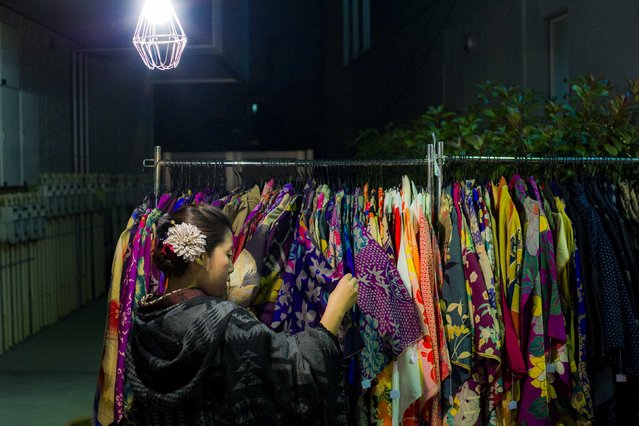
A woman browses through kimonos for sale at Boroichi flea market in Tokyo December 15, 2014. In the 16th century, Boroichi was a place for farmers to buy and sell rags, known as boro, for mending clothes and weaving sandals. Now in its 436th year, the original spirit lingers, with about 700 stands hawking fabric, used clothes and piles of rags. Others sell kitchen tools, pottery, seaweed and spices. (Photo by Thomas Peter/Reuters)

A woman browses through kimonos for sale at Boroichi flea market in Tokyo December 15, 2014. In the 16th century, Boroichi was a place for farmers to buy and sell rags, known as boro, for mending clothes and weaving sandals. Now in its 436th year, the original spirit lingers, with about 700 stands hawking fabric, used clothes and piles of rags. Others sell kitchen tools, pottery, seaweed and spices. About 200,000 people flock to the market, which is only open for four mid-winter days a year – two in December and two in January. (Photo by Thomas Peter/Reuters)
Details
19 Dec 2014 12:50:00
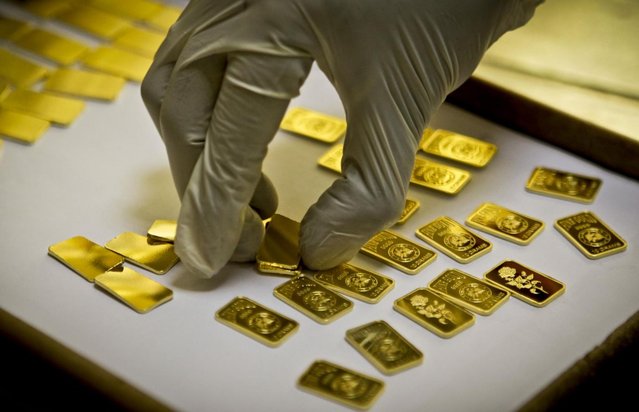
A gold press operator collects 10 gram gold blanks to press them with the logo of the Emirates Gold company in Dubai, United Arab Emirates. Gold prices remained relatively steady in 2012, close to $1,700 an ounce. (Photo by Kamran Jebreili/AP Photo)

“Dubai is sometimes called the “City of Gold” because of its stunning growth from a sleepy Gulf port to a world-famous business crossroads in the space of a single generation. Its nickname has a literal meaning for traders in the precious metal. The city is building itself up as a center for the gold trade, between sources in Africa and consumers in the rising economies of China and India”. – Kamran Jebreili via Associated Press

Photo: A gold press operator collects 10 gram gold blanks to press them with the logo of the Emirates Gold company in Dubai, United Arab Emirates. Gold prices remained relatively steady in 2012, close to $1,700 an ounce. (Photo by Kamran Jebreili/AP Photo)
Details
06 Jan 2013 12:38:00
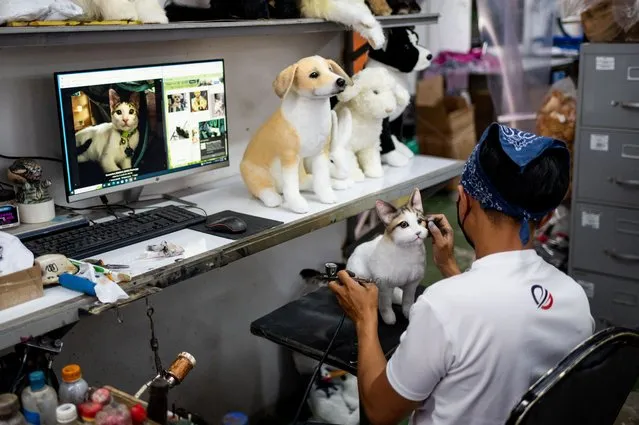
A worker paints the face of a realistic pet plushie, at the Pampanga Teddy Bear Factory, in Angeles City, Pampanga province, Philippines on March 10, 2023. (Photo by Lisa Marie David/Reuters)

A worker paints the face of a realistic pet plushie, at the Pampanga Teddy Bear Factory, in Angeles City, Pampanga province, Philippines on March 10, 2023. (Photo by Lisa Marie David/Reuters)
Details
15 Apr 2023 03:21:00
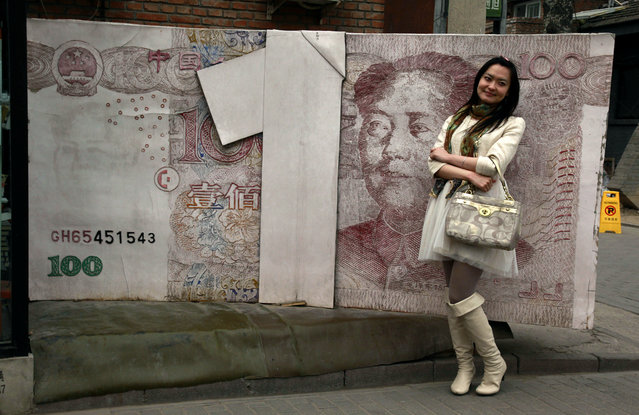
In this March 15, 2012 file photo, a Chinese woman poses for photos near a sculpture depicting a Chinese yuan note at an art district in Beijing, China. China devalued its tightly controlled currency on Tuesday, August 11,2015,  following a slump in trade, triggering the yuan's biggest one-day decline in a decade. The central bank said the yuan's 1.3 percent fall was due to a change aimed at making its exchange rate controls more market-oriented. But any change raises the risk of tensions with China's trading partners. (Photo by Ng Han Guan/AP Photo)

In this March 15, 2012 file photo, a Chinese woman poses for photos near a sculpture depicting a Chinese yuan note at an art district in Beijing, China. China devalued its tightly controlled currency on Tuesday, August 11,2015, following a slump in trade, triggering the yuan's biggest one-day decline in a decade. The central bank said the yuan's 1.3 percent fall was due to a change aimed at making its exchange rate controls more market-oriented. But any change raises the risk of tensions with China's trading partners. (Photo by Ng Han Guan/AP Photo)
Details
12 Aug 2015 13:11:00
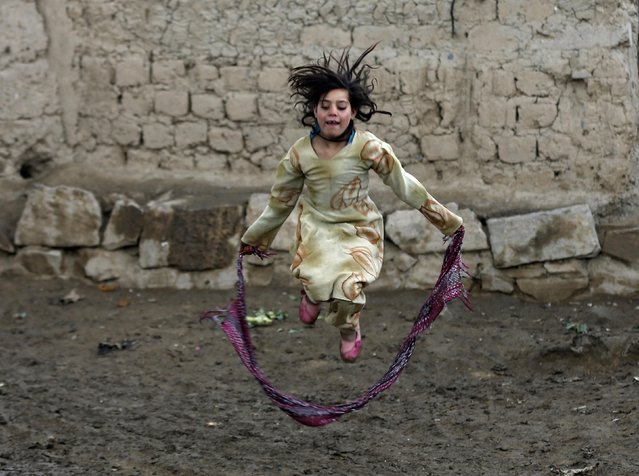
An internally displaced Afghan girl plays near their shelter at a refugee camp in Kabul January 13, 2015. (Photo by Omar Sobhani/Reuters)

An internally displaced Afghan girl plays near their shelter at a refugee camp in Kabul January 13, 2015. (Photo by Omar Sobhani/Reuters)
Details
15 Jan 2015 14:04:00
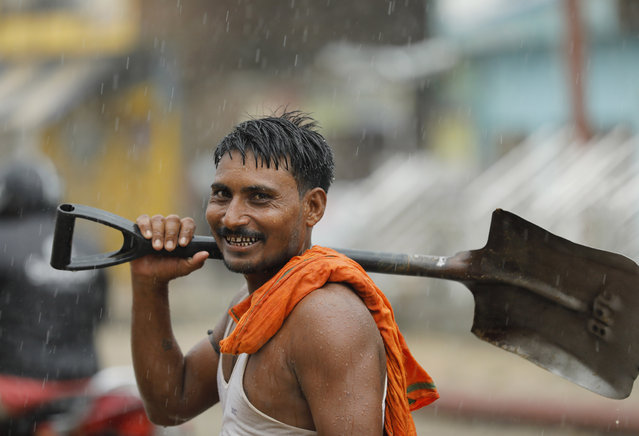
An Indian worker crosses a street holding a shovel during monsoon rains in Prayagraj, in the northern Indian state of Uttar Pradesh, Wednesday, July 29, 2020. (Photo by Rajesh Kumar Singh/AP Photo)

An Indian worker crosses a street holding a shovel during monsoon rains in Prayagraj, in the northern Indian state of Uttar Pradesh, Wednesday, July 29, 2020. (Photo by Rajesh Kumar Singh/AP Photo)
Details
03 Aug 2020 00:05:00