Loading...
Done
A Bull Frog hops around as Carlos Costly #13 of Honduras brings the ball up against the USA at Sun Life Stadium

A Bull Frog hops around as Carlos Costly #13 of Honduras brings the ball up against the USA at Sun Life Stadium on October 8, 2011 in Miami Gardens, Florida. (Photo by Marc Serota/Getty Images)
Details
31 Dec 2011 10:02:00


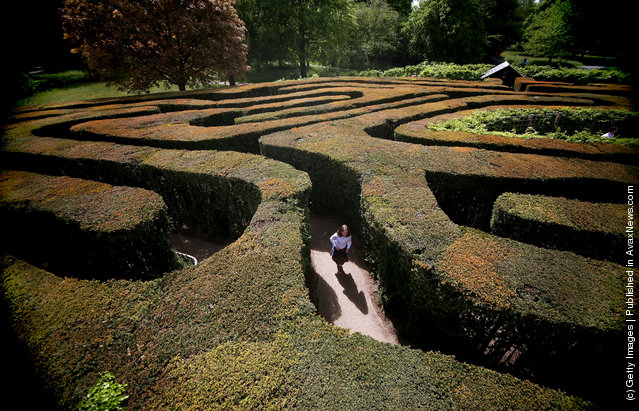
A young girl navigates her way around Hampton Court maze in the spring sunshine on May 2, 2009 in London, England. The Hampton Court maze is one of the most famous hedge mazes in the world and was planted between 1689 and 1695 by George London and Henry Wise. (Photo by Dan Kitwood/Getty Images)
Details
12 Jun 2011 09:31:00
Cambodian motorcyclists drive near a double rainbow, following the conclusion of a ceasefire deal between Cambodia and Thailand, in Siem Reap, Cambodia, on July 29, 2025. (Photo by Daniel Ceng/Anadolu via Getty Images)

Cambodian motorcyclists drive near a double rainbow, following the conclusion of a ceasefire deal between Cambodia and Thailand, in Siem Reap, Cambodia, on July 29, 2025. (Photo by Daniel Ceng/Anadolu via Getty Images)
Details
06 Nov 2025 04:53:00
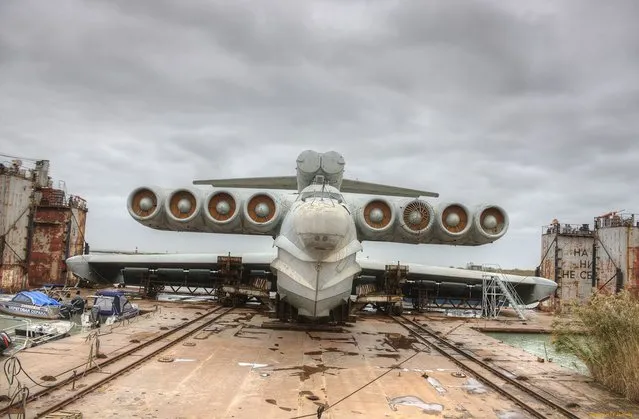
The Lun-class Ekranoplane was used by the Soviet Navy starting in 1987, and wasn't retired until the late 1990s, after the Soviet Union's fall. (Igor113)

“The Lun-class ekranoplan (NATO reporting name Duck) was a ground effect vehicle (GEV) designed by Rostislav Evgenievich Alexeev and used by the Soviet and Russian navies from 1987 until sometime in the late 1990s. It “flew” using the lift generated by the ground effect of its large wings when close to the surface of the water – about four metres or less. Although they might look similar and/or have related technical characteristics, ekranoplans like the Lun are not aircraft, seaplanes, hovercraft, or hydrofoils – ground effect is a separate technology altogether. The International Maritime Organization classifies these vehicles as maritime ships. The name Lun comes from the Russian for harrier”. – Wikipedia (Photo by Igor113)
Details
08 Aug 2014 10:51:00
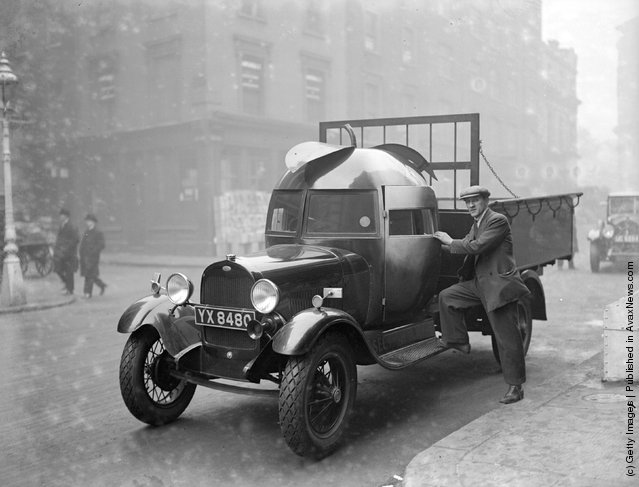
1928: A fruit importer's lorry at Covent Garden, London, with its driver's cabin in the shape of an apple

A fruit importer's lorry at Covent Garden, London, with its driver's cabin in the shape of an apple. (Photo by Harold Clements/London Express/Getty Images). October 1928
Details
21 Oct 2011 10:24:00
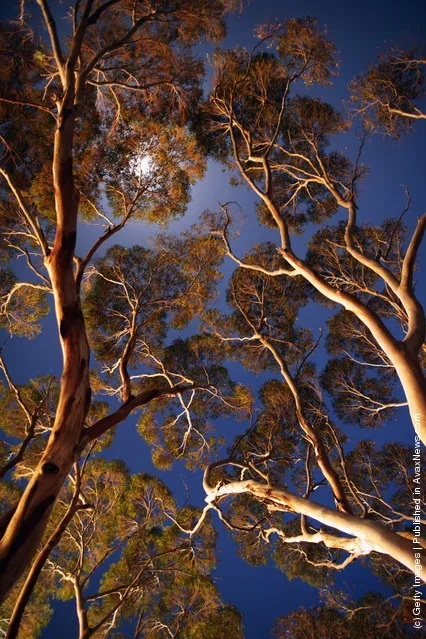
The moon shines through trees at a United Nations displacement camp at dusk

The moon shines through trees at a United Nations displacement camp at dusk on March 14, 2011 in Ras Jdir, Tunisia. (Photo by Dan Kitwood/Getty Images)
Details
21 Feb 2012 13:03:00
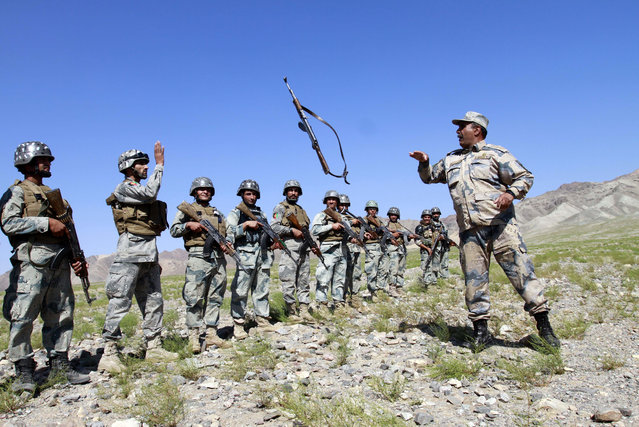
An officer of the Afghan border police throws an assault rifle to a policeman participating in a military exercise on the outskirts of Herat, Afghanistan, Monday, September 7, 2015. Twelve female and seventy male border police personnel participated in the military exercise near the border with Iran in Herat province. (Photo by Hoshang Hashimi/AP Photo)

An officer of the Afghan border police throws an assault rifle to a policeman participating in a military exercise on the outskirts of Herat, Afghanistan, Monday, September 7, 2015. Twelve female and seventy male border police personnel participated in the military exercise near the border with Iran in Herat province. (Photo by Hoshang Hashimi/AP Photo)
Details
08 Sep 2015 12:01:00
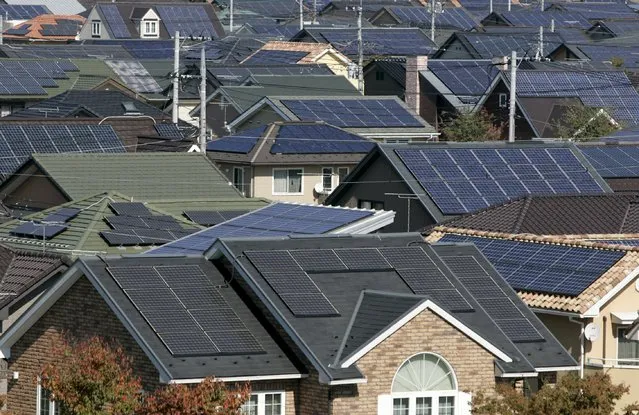
Rooftops of solar powered houses are pictured in Ota, 80 km northwest of Tokyo in this October 28, 2008 file photo. One by one, Japan is turning off the lights at the giant oil-fired power plants that propelled it to the ranks of the world's top industrialised nations. With nuclear power in the doldrums after the Fukushima disaster, it's solar energy that is becoming the alternative. (Photo by Yuriko Nakao/Reuters)

Rooftops of solar powered houses are pictured in Ota, 80 km northwest of Tokyo in this October 28, 2008 file photo. One by one, Japan is turning off the lights at the giant oil-fired power plants that propelled it to the ranks of the world's top industrialised nations. With nuclear power in the doldrums after the Fukushima disaster, it's solar energy that is becoming the alternative. Solar power is set to become profitable in Japan as early as this quarter, according to the Japan Renewable Energy Foundation (JREF), freeing it from the need for government subsidies and making it the last of the G7 economies where the technology has become economically viable. (Photo by Yuriko Nakao/Reuters)

Details
24 Nov 2015 08:04:00