Loading...
Done
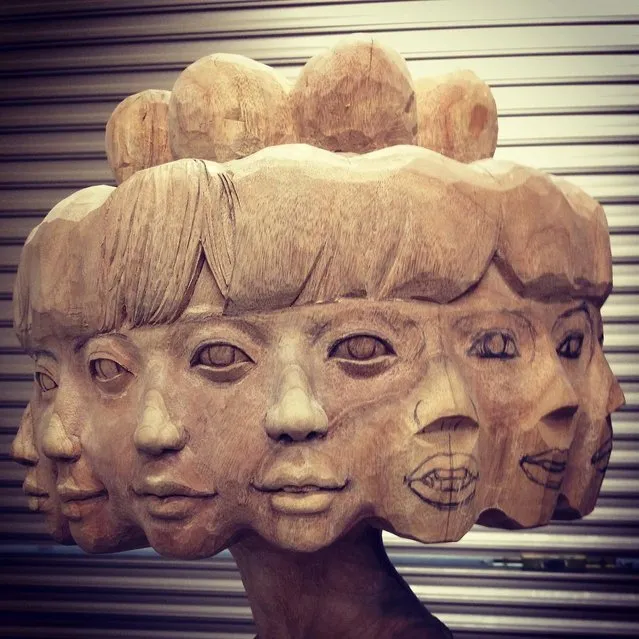
Sculpture By Yoshitoshi Kanemaki

There are many ways to interpret the creations of Yoshitoshi Kanemaki, whose works usually involve sculptures of people where two or more characters have merged into a single being. Possibly, Yoshitoshi Kanemaki is trying to express through his sculptures that everyone’s soul is multifaceted. Good emotions are mixed with the bad, love is mixed with hate, contempt with admiration. How often do you hear that a person loves someone deeply, while doing completely horrendous things, unable to see that he or she is destroying their object of love? Nevertheless, we should be thankful to the nature for all the different emotions that we are able to feel. Unlike animals, who only show simple forms of emotions, such as anger, happiness, and a few others, human soul is much deeper, allowing us to feel a full plethora of emotions. (Photo by Yoshitoshi Kanemaki)
Details
20 Nov 2014 12:26:00
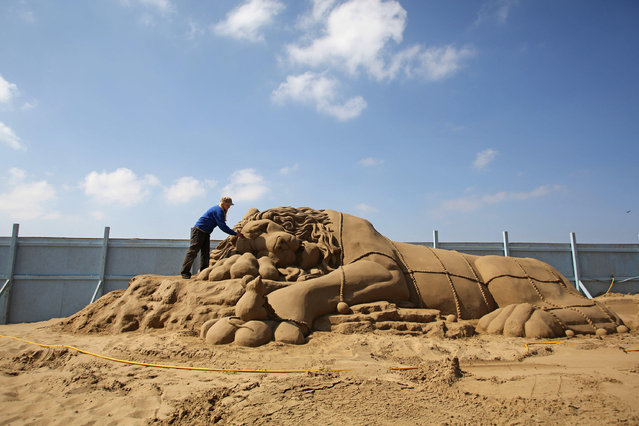
Artist Rachel Stubbs works on the final touches of a sand sculpture she has built as part of this year's “Once Upon a Time” themed annual Weston-super-Mare Sand Sculpture festival on April 16, 2014 in Weston-Super-Mare, England. (Photo by Matt Cardy/Getty Images)

Artist Rachel Stubbs works on the final touches of a sand sculpture she has built as part of this year's “Once Upon a Time” themed annual Weston-super-Mare Sand Sculpture festival on April 16, 2014 in Weston-Super-Mare, England. Due to open on Good Friday, a team of award winning sand sculptors from across the globe have been working to create sand sculptures influenced by fairy tales and fables but that also include some current television and cinema blockbuster hits such as The Hunger Games, Game of Thrones and The Hobbit. (Photo by Matt Cardy/Getty Images)
Details
18 Apr 2014 06:51:00
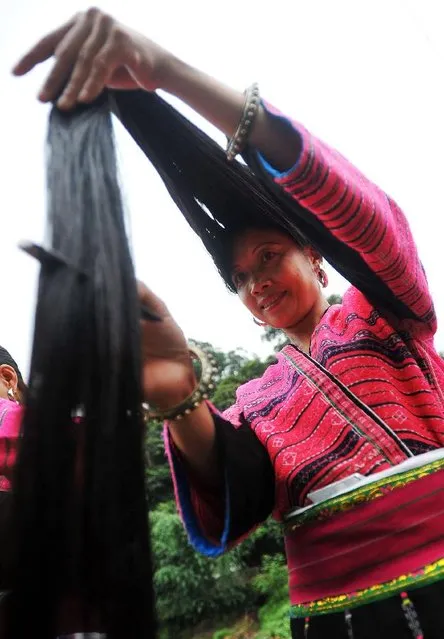
A woman combs her hair at the Huangluo Village of the Yao ethnic group in Guilin, south China's Guangxi Zhuang Autonomous Region, July 15, 2012. (Photo by Lu Boan/Xinhua)

“The Yao nationality is a government classification for various minorities in China. They form one of the 55 ethnic minority groups officially recognized by the People's Republic of China, where they reside in the mountainous terrain of the southwest and south”. – Wikipedia

Photo: A woman combs her hair at the Huangluo Village of the Yao ethnic group in Guilin, south China's Guangxi Zhuang Autonomous Region, July 15, 2012. The Huangluo Village of the Yao ethnic group locates at the Longji Terraces in Heping Town of Longsheng County in Guilin. Women here have the tradition of keeping long hair. They believe that long hair brings good luck and fortune. The average length of hair of 180 women in the village is 1.7 meters. (Photo by Lu Boan/Xinhua)
Details
07 Mar 2015 08:33:00
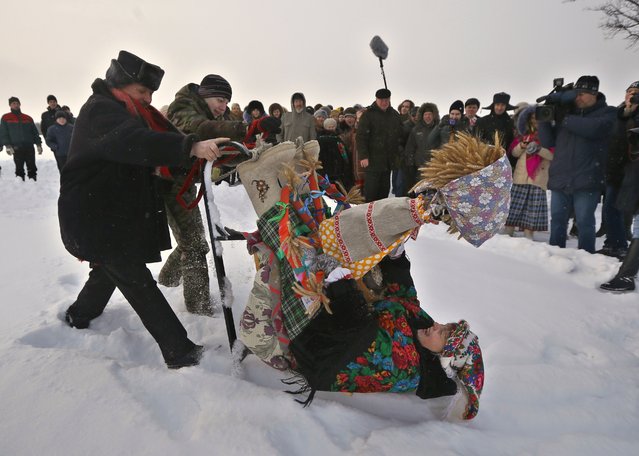
Belarusians wearing national costumes celebrate a Pull the Kolyada Up the Oak rite in the village of Martsiyanauka, some 77 km (48 miles) east of capital Minsk, Belarus, Thursday, January 21, 2016. (Photo by Sergei Grits/AP Photo)

Belarusians wearing national costumes celebrate a Pull the Kolyada Up the Oak rite in the village of Martsiyanauka, some 77 km (48 miles) east of capital Minsk, Belarus, Thursday, January 21, 2016. The merry ancient rite Pull the Kolyada Up the Oak marks the end of Orthodox Christmas celebrations in Belarus. On Jan. 21 a wheel, the so-called Kolyada, would be pulled up an oak or any old tree. The Belarusians believed that the ritual heralds a good harvest, luck and happiness for the entire year. (Photo by Sergei Grits/AP Photo)
Details
22 Jan 2016 10:13:00
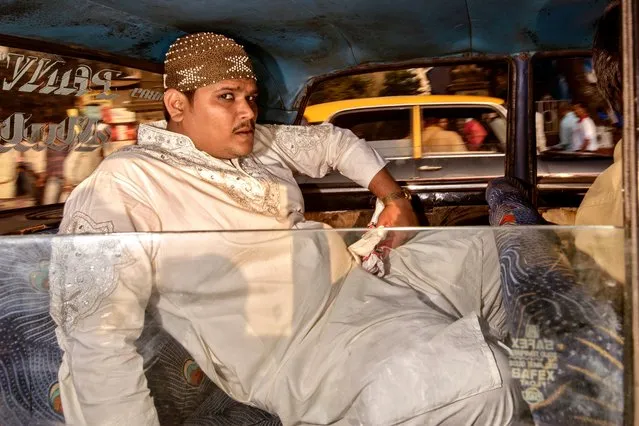
“I’m not scared of breaking the fourth wall”, Wallace has said of the photos where the subject is clearly aware of him taking the shot. “If they are looking at you in a photograph most photographers will think, oh, that’s not a good image. (But) people like to be involved and in the picture. You can see what they are thinking, see them talking”. (Photo by Dougie Wallace/The Guardian)

In Dougie Wallace’s photos of Mumbai taxis, the chatter, yelling, and constant horns of the city are almost audible. A selection of his images is on show at Gayfield Creative Spaces, Edinburgh, as part of the Retina photography festival until 30 July. For four years, the Glasgow-born Wallace focused his photos on one kind of taxi in particular: the Premier Padmini, a 1960s workhorse painted in black and yellow. Locally known as “Kaali-Peeli”, there were once more than 60,000 of them in the Indian city. But thanks to laws restricting pollution, the cars now are fast disappearing from Mumbai’s streets. (Photo by Dougie Wallace/The Guardian)
Details
13 Jul 2016 13:50:00
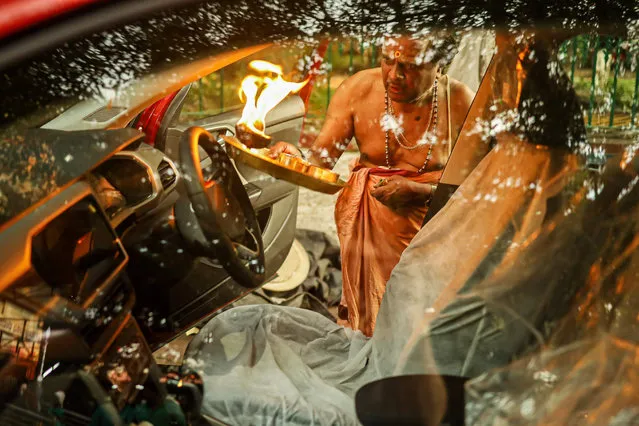
In this picture taken on August 1, 2022, a priest performs a ritual on a newly purchased car to seek blessings from the deities for safety outside a temple in Bangalore. (Photo by Sebastien Berger/AFP Photo)

In this picture taken on August 1, 2022, a priest performs a ritual on a newly purchased car to seek blessings from the deities for safety outside a temple in Bangalore. (Photo by Sebastien Berger/AFP Photo)
Details
08 Aug 2022 06:09:00
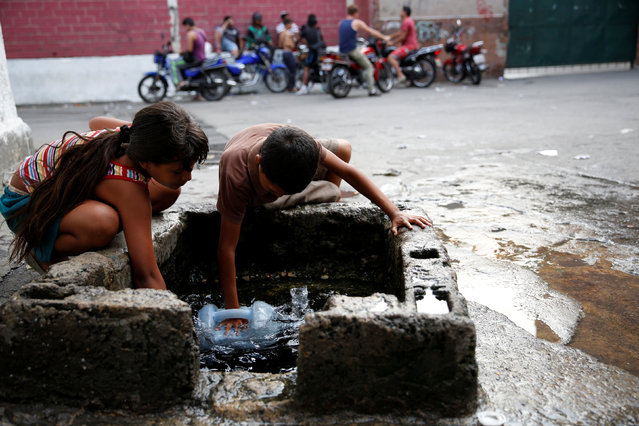
Children fill plastic containers with water from a well on a street, close to a neighbourhood called “The Tank” in the slum of Petare in Caracas, Venezuela, March 17, 2016. (Photo by Carlos Garcia Rawlins/Reuters)

Children fill plastic containers with water from a well on a street, close to a neighbourhood called “The Tank” in the slum of Petare in Caracas, Venezuela, March 17, 2016. Although their nation has one of the world's biggest hydroelectric dams and vast rivers like the fabled Orinoco, Venezuelans are still suffering water and power cuts most days. The problems with stuttering services have escalated in the last few weeks: yet another headache for the OPEC nation's 30 million people already reeling from recession, the world's highest inflation rate, and scarcities of basic goods. President Nicolas Maduro blames a drought, while the opposition blames government incompetence. (Photo by Carlos Garcia Rawlins/Reuters)
Details
08 May 2016 11:15:00
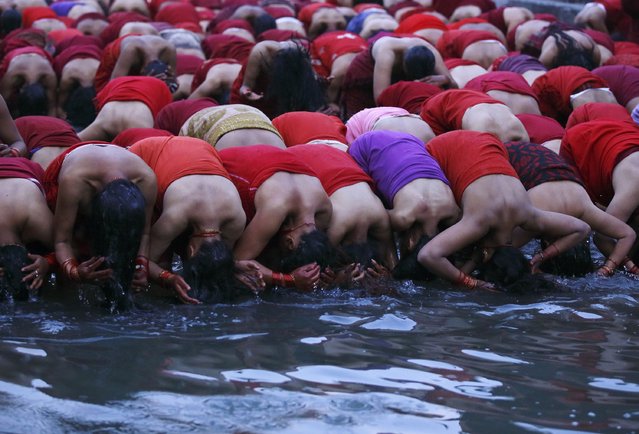
Devotees take a holy bath during the Swasthani Brata Katha festival in Kathmandu January 20, 2015. During the month-long festival, devotees recite one chapter of a Hindu tale daily from the 31-chapter sacred Swasthani Brata Katha book that is dedicated to God Madhavnarayan and Goddess Swasthani, alongside various other gods and goddesses and the miraculous feats performed by them. (Photo by Navesh Chitrakar/Reuters)

Devotees take a holy bath during the Swasthani Brata Katha festival in Kathmandu January 20, 2015. During the month-long festival, devotees recite one chapter of a Hindu tale daily from the 31-chapter sacred Swasthani Brata Katha book that is dedicated to God Madhavnarayan and Goddess Swasthani, alongside various other gods and goddesses and the miraculous feats performed by them. The devotees also go on pilgrimages to various temples, perform religious rituals, take a holy bath in the rivers and fast for a month, especially among women who believe fasting helps in their family's well-being or in getting them a good husband. (Photo by Navesh Chitrakar/Reuters)
Details
21 Jan 2015 13:50:00