Loading...
Done
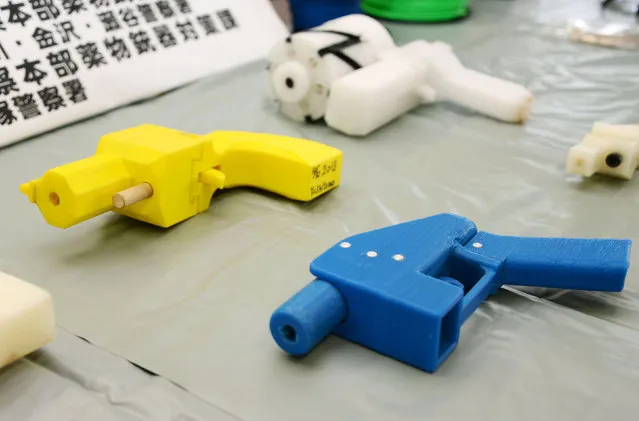
Seized plastic handguns which were created using 3D printing technology are displayed at Kanagawa police station in Yokohama, south of Tokyo, in this photo taken by Kyodo May 8, 2014. (Photo by Reuters/Kyodo)

Seized plastic handguns which were created using 3D printing technology are displayed at Kanagawa police station in Yokohama, south of Tokyo, in this photo taken by Kyodo May 8, 2014. Yoshimoto Imura became the first man to be arrested in Japan for illegal possession of two guns he created himself using 3D printing technology, Japanese media said on Thursday. The 27-year-old, a college employee in the city of Kawasaki, was arrested after police found video online posted by Imura claiming to have produced his own guns. Gun possession is strictly regulated in Japan. Police raided Imura's home and found five guns, two of which could fire real bullets, Japanese media said. (Photo by Reuters/Kyodo)
Details
12 May 2014 10:46:00
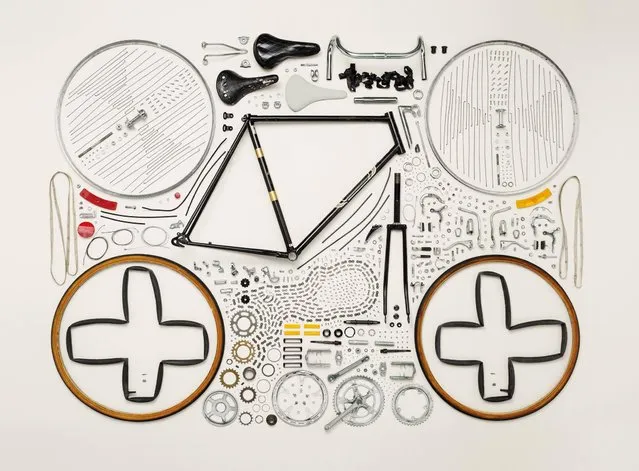
Deconstructed Objects By Todd McLellan

It is simply staggering how complicated some items really are. We never think about it, but some items that we use every day consist of hundreds of parts meticulously put together and working perfectly. Todd McLellan is a photographer who based his newest book “Things Come Apart” on the complexity of various old and new tech. By carefully taking apart various items and arranging all of the parts in perfect order, Todd has allowed us not only to look inside various appliances, but also to appreciate the astounding complexity of these items. Just like the human mind, we are so used to seeing and talking with people that we forget just how complicated their minds really are. It would be great if we could “take apart” the human mind in order to gain some insight into the person’s thoughts and desires. However, very few people are capable of doing it, while the rest will remain blind to the obvious. (Photo by Todd McLellan)
Details
15 Nov 2014 12:30:00
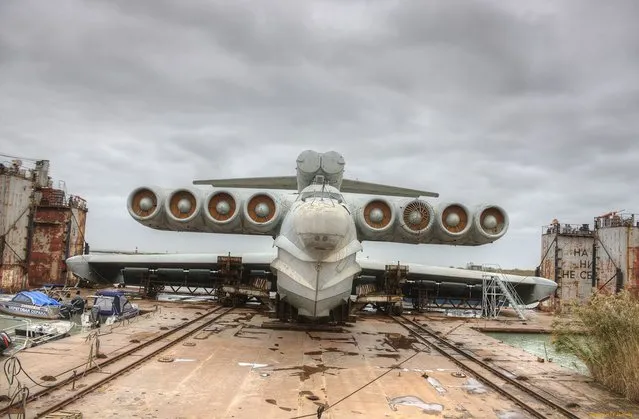
The Lun-class Ekranoplane was used by the Soviet Navy starting in 1987, and wasn't retired until the late 1990s, after the Soviet Union's fall. (Igor113)

“The Lun-class ekranoplan (NATO reporting name Duck) was a ground effect vehicle (GEV) designed by Rostislav Evgenievich Alexeev and used by the Soviet and Russian navies from 1987 until sometime in the late 1990s. It “flew” using the lift generated by the ground effect of its large wings when close to the surface of the water – about four metres or less. Although they might look similar and/or have related technical characteristics, ekranoplans like the Lun are not aircraft, seaplanes, hovercraft, or hydrofoils – ground effect is a separate technology altogether. The International Maritime Organization classifies these vehicles as maritime ships. The name Lun comes from the Russian for harrier”. – Wikipedia (Photo by Igor113)
Details
08 Aug 2014 10:51:00
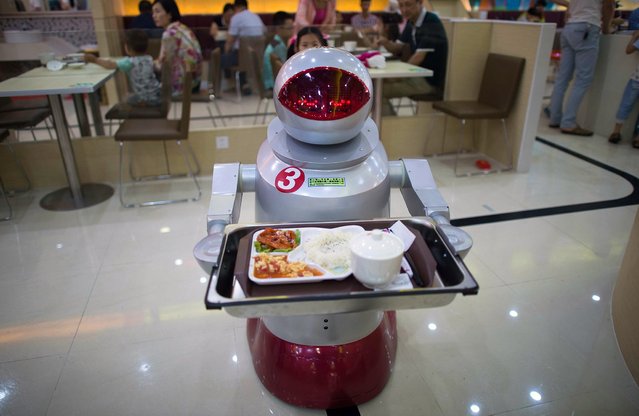
This photo taken on August 13, 2014, shows a robot carrying food to customers in a restaurant in Kunshan. It's more teatime than Terminator – a restaurant in China is electrifying customers by using more than a dozen robots to cook and deliver food. (Photo by Johannes Eisele/AFP Photo)

Located in Kunshan, eastern China, the restaurant relies on over a dozen machines for tasks such as greeting customers, waiting on tables and cooking basic meals. The eatery becomes the third café in the world to rely on the use of robot employees, potentially giving a glimpse into how future businesses could operate. Photo: This photo taken on August 13, 2014, shows a robot carrying food to customers in a restaurant in Kunshan. It's more teatime than Terminator – a restaurant in China is electrifying customers by using more than a dozen robots to cook and deliver food. (Photo by Johannes Eisele/AFP Photo)
Details
24 Aug 2014 09:40:00
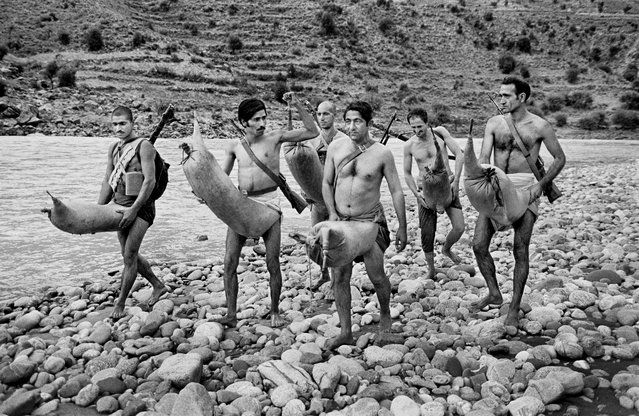
Kunar province, 1980. Armed mujahideen carry animal skins to use as inflatable buoys to cross rapids. (Photo by  Steve McCurry/Taschen/Magnum Photos/The Guardian)

Afghanistan, published by Taschen later July, is a retrospective portfolio of the Magnum photographer Steve McCurry’s most striking images of the country, from 1979 to 2016. Here: Kunar province, 1980. Armed mujahideen carry animal skins to use as inflatable buoys to cross rapids. (Photo by Steve McCurry/Taschen/Magnum Photos/The Guardian)
Details
12 Aug 2017 05:54:00
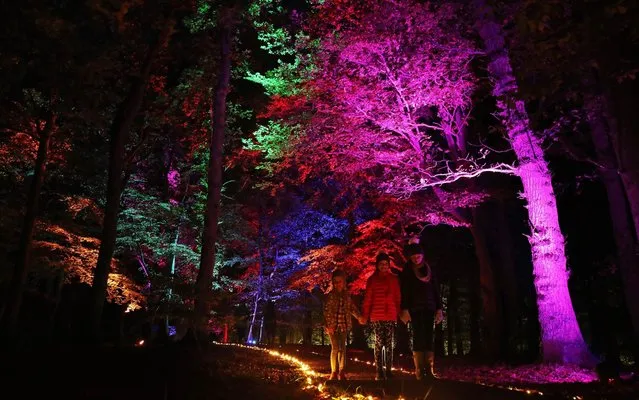
The Lake of Lights at Talkin Tarn lake near Brampton in Cumbria, England on October 22, 2017 – where hundreds of lights in the surrounding woodland represent a cherished memory of a relative friend or loved one no longer with us. (Photo by Owen Humphreys/PA Images via Getty Images)

The Lake of Lights at Talkin Tarn lake near Brampton in Cumbria, England on October 22, 2017 – where hundreds of lights in the surrounding woodland represent a cherished memory of a relative friend or loved one no longer with us. (Photo by Owen Humphreys/PA Images via Getty Images)
Details
24 Oct 2017 08:34:00
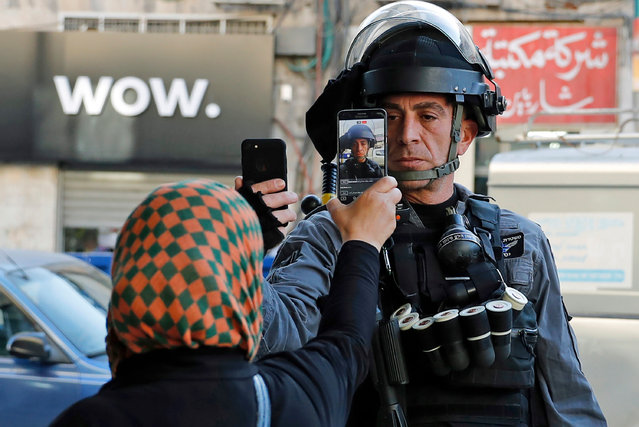
A Palestinian woman takes a picture of a member of the Israeli security forces as he takes her picture in a street in Jerusalem on December 16, 2017, as demonstrations continue to flare in the Middle East and elsewhere over the US president' s declaration of Jerusalem as Israel' s capital. (Photo by Ahmad Gharabli/AFP Photo)

A Palestinian woman takes a picture of a member of the Israeli security forces as he takes her picture in a street in Jerusalem on December 16, 2017, as demonstrations continue to flare in the Middle East and elsewhere over the US president' s declaration of Jerusalem as Israel' s capital. (Photo by Ahmad Gharabli/AFP Photo)
Details
24 Dec 2017 09:20:00
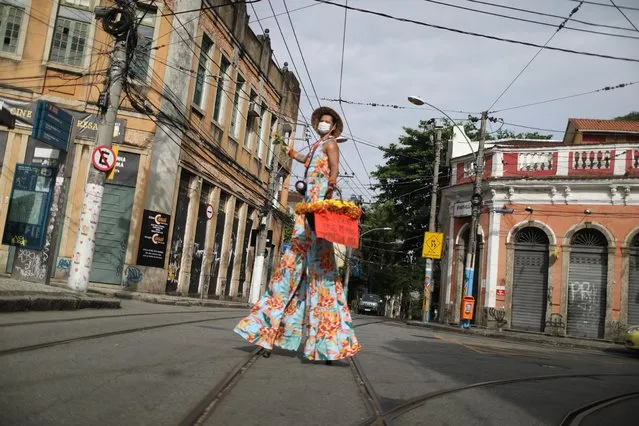
Anilson Costa, reveller of the annual block party “Ceu na Terra”, walks along the Santa Teresa neighborhood where the block party used to be celebrated, as Carnival celebrations have been canceled, amid the coronavirus disease (COVID-19) pandemic, in Rio de Janeiro, Brazil on February 12, 2021. (Photo by Pilar Olivares/Reuters)

Anilson Costa, reveller of the annual block party “Ceu na Terra”, walks along the Santa Teresa neighborhood where the block party used to be celebrated, as Carnival celebrations have been canceled, amid the coronavirus disease (COVID-19) pandemic, in Rio de Janeiro, Brazil on February 12, 2021. (Photo by Pilar Olivares/Reuters)
Details
13 Feb 2021 10:42:00