Loading...
Done
Pineapple

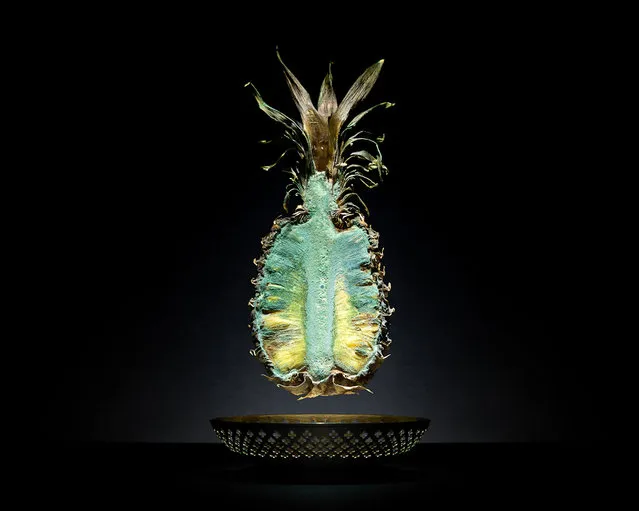
“One Third” – a project on food waste by an Austrian photography Klaus Pichler. According to a UN study one third of the world's food goes to waste – the largest part thereof in the industrialized nations of the global north. Equally, 925 million people around the world are threatened by starvation. The series “One Third” describes the connection between individual wastage of food and globalized food production.

Photo: Pineapple. Place of production: Guayaquil, Ecuador. Cultivation method: Outdoor plantation • Time of harvest: All- season. Transporting distance: 10.666 km (linear distance) • Means of transportation: Aircraft, truck. Carbon footprint (total) per kg: 11,94 kg • Water requirement (total) per kg: 360 l. Price: 2,10 € / kg. (Photo by Klaus Picher)
Details
02 May 2012 11:01:00
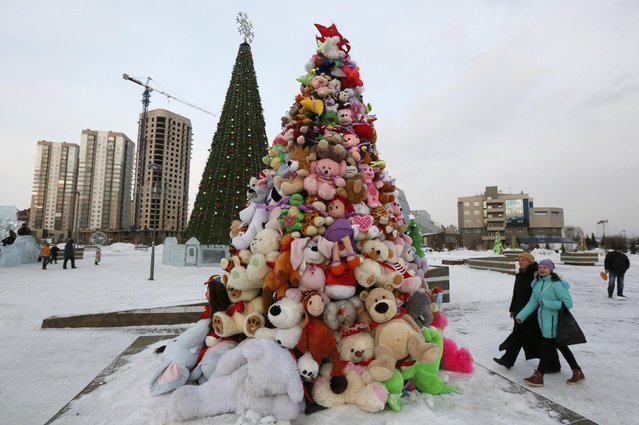
People walk past a New Year fir tree made of toys at a park in Krasnoyarsk, Siberia, Russia January 2, 2017. (Photo by Ilya Naymushin/Reuters)

People walk past a New Year fir tree made of toys at a park in Krasnoyarsk, Siberia, Russia January 2, 2017. (Photo by Ilya Naymushin/Reuters)
Details
03 Jan 2017 11:31:00
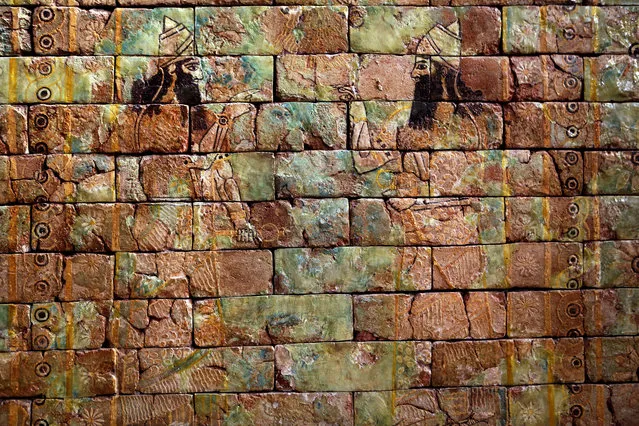
This Monday, September 15, 2014 photo shows glazed bricks displayed at the Iraqi National Museum in Baghdad. The Islamic State militants seek to purge society of all influences that don't conform with their strict, puritanical version of Islam. That means destroying not only relics seen as pagan but also Muslim sites they see as contradicting their ideology, particularly Sunni Muslim shrines they see as idolatrous as well as mosques used by Shiites, a branch of Islam they consider heretical. (Photo by Hadi Mizban/AP Photo)

This Monday, September 15, 2014 photo shows glazed bricks displayed at the Iraqi National Museum in Baghdad. The Islamic State militants seek to purge society of all influences that don't conform with their strict, puritanical version of Islam. That means destroying not only relics seen as pagan but also Muslim sites they see as contradicting their ideology, particularly Sunni Muslim shrines they see as idolatrous as well as mosques used by Shiites, a branch of Islam they consider heretical. (Photo by Hadi Mizban/AP Photo)
Details
21 Sep 2014 10:31:00
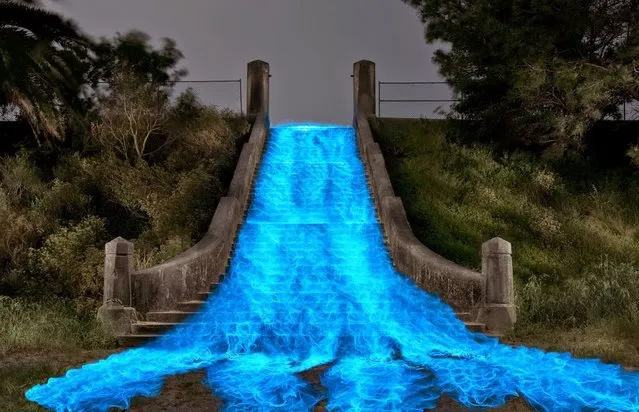
Winner of the NSW (New South Wales) prize: Peter Solness said: “I wanted to re-imagine the lost waterways, so I got my light-painting tools to work. In this image, water is being released from the top of the historic Centennial Park No. 2 Reservoir, which was built in 1925 and holds 90 megalitres of water. After 89 years of incarceration these waters now run free!”. (Photo by Peter Solness/Head On)

Touching and dramatic portraits and landscape shots have won prizes at Australia's prestigious photography prize. Photo: Winner of the NSW (New South Wales) prize: Peter Solness said: “I wanted to re-imagine the lost waterways, so I got my light-painting tools to work. In this image, water is being released from the top of the historic Centennial Park No. 2 Reservoir, which was built in 1925 and holds 90 megalitres of water. After 89 years of incarceration these waters now run free!”. (Photo by Peter Solness/Head On)
Details
21 May 2014 11:11:00
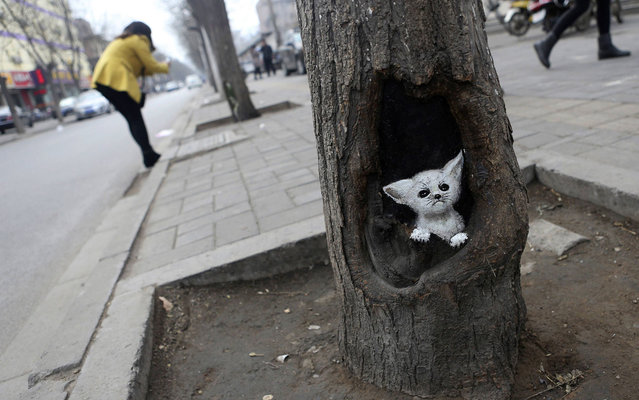
An image of a Fennec fox painted on a tree hole by Wang Yue is seen in Shijiazhuang, on March 13, 2013. Wang Yue, a senior at Dalian Industry University, uses her paintbrush to turn ugly tree holes into lovely views in Shijiazhuang, capital city of Hebei Province, China. Wang and her companions call the tree-hole paintings “meitu”, which means “beautiful journey”. The paintings on the trees have brightened the city during the dull, grey winter. (Photo by Pillar Lee/Reuters)

An image of a Fennec fox painted on a tree hole by Wang Yue is seen in Shijiazhuang, on March 13, 2013. Wang Yue, a senior at Dalian Industry University, uses her paintbrush to turn ugly tree holes into lovely views in Shijiazhuang, capital city of Hebei Province, China. Wang and her companions call the tree-hole paintings “meitu”, which means “beautiful journey”. The paintings on the trees have brightened the city during the dull, grey winter. (Photo by Pillar Lee/Reuters)

P.S. All pictures are presented in high resolution. To see Hi-Res images – just TWICE click on any picture. In other words, click small picture – opens the BIG picture. Click BIG picture – opens VERY BIG picture (if available; this principle works anywhere on the site AvaxNews).
Details
16 Mar 2013 11:27:00
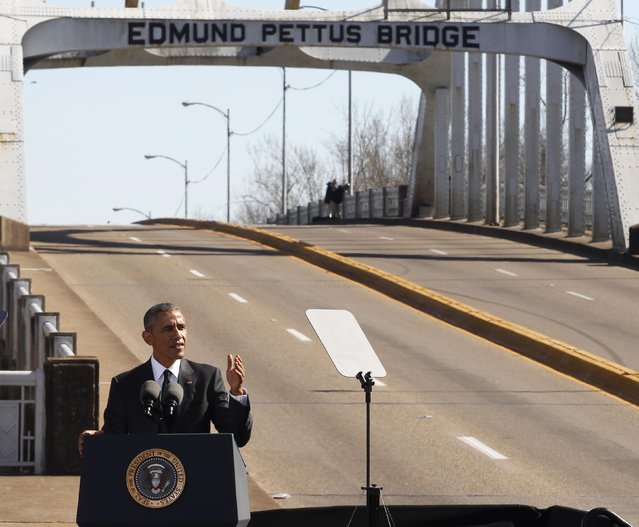
U.S. President Barack Obama speaks at the foot of the Edmund Pettus Bridge in Selma, Alabama March 7, 2015. With a nod to ongoing U.S. racial tension and attempts to limit voting rights, Obama declared the work of the Civil Rights Movement advanced but unfinished on Saturday on a visit to the Alabama bridge that spawned a landmark voting law.  REUTERS/Tami Chappell  (UNITED STATES - Tags: POLITICS ANNIVERSARY SOCIETY)

U.S. President Barack Obama speaks at the foot of the Edmund Pettus Bridge in Selma, Alabama March 7, 2015. With a nod to ongoing U.S. racial tension and attempts to limit voting rights, Obama declared the work of the Civil Rights Movement advanced but unfinished on Saturday on a visit to the Alabama bridge that spawned a landmark voting law. REUTERS/Tami Chappell (UNITED STATES - Tags: POLITICS ANNIVERSARY SOCIETY)
Details
09 Mar 2015 13:51:00
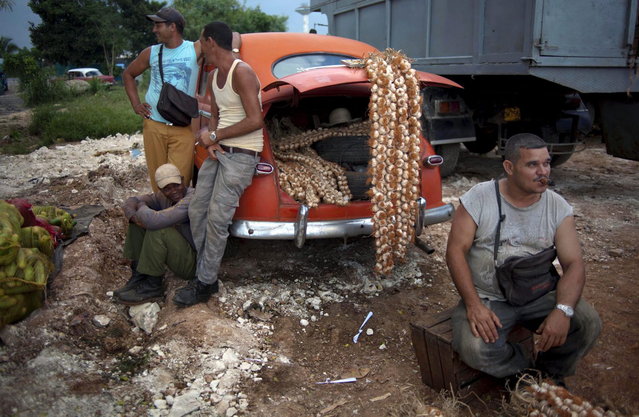
In this September 30, 2013 photo, farmers wait for customers next to their 1950s Chevrolet loaded with garlic for sale at the 114th Street Market on the outskirts of Havana, Cuba. The market s bustle is a result of economic reforms begun in 2010 by President Raul Castro, which includes relaxing rules on private farming. (Photo by Ramon Espinosa/AP Photo)

In this September 30, 2013 photo, farmers wait for customers next to their 1950s Chevrolet loaded with garlic for sale at the 114th Street Market on the outskirts of Havana, Cuba. The market s bustle is a result of economic reforms begun in 2010 by President Raul Castro, which includes relaxing rules on private farming. (Photo by Ramon Espinosa/AP Photo)
Details
02 Oct 2013 11:32:00
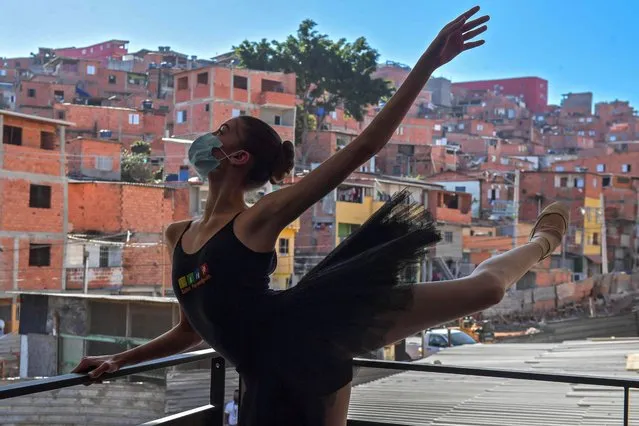
Mariana Sousa, student of the Ballet Paraisopolis, warms up during a rehearse in Paraisopolis favela, outskirts of Sao Paulo, Brazil on August 27, 2020, amid the new coronavirus COVID-19 pandemic. The 200 ballet students of Paraisopolis, the second largest favela in Sao Paulo, restarted rehearsals after five months with a coreography about a police operation that put their community in mourning last year. (Photo by Nelson Almeida/AFP Photo)

Mariana Sousa, student of the Ballet Paraisopolis, warms up during a rehearse in Paraisopolis favela, outskirts of Sao Paulo, Brazil on August 27, 2020, amid the new coronavirus COVID-19 pandemic. The 200 ballet students of Paraisopolis, the second largest favela in Sao Paulo, restarted rehearsals after five months with a coreography about a police operation that put their community in mourning last year. (Photo by Nelson Almeida/AFP Photo)
Details
11 Sep 2020 00:03:00