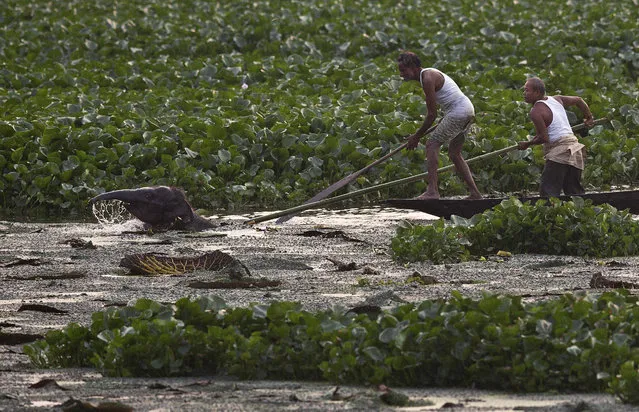
In this Friday, May 10, 2019, file photo, rescuers help a baby wild elephant cross the wetland to return to the forest at Deepor Beel wildlife sanctuary in Gauhati, India. The elephant had gotten stuck in the waters of Deepor Beel after it was separated from a herd of wild elephant that came down in search of food last night. (Photo by Anupam Nath/AP Photo)
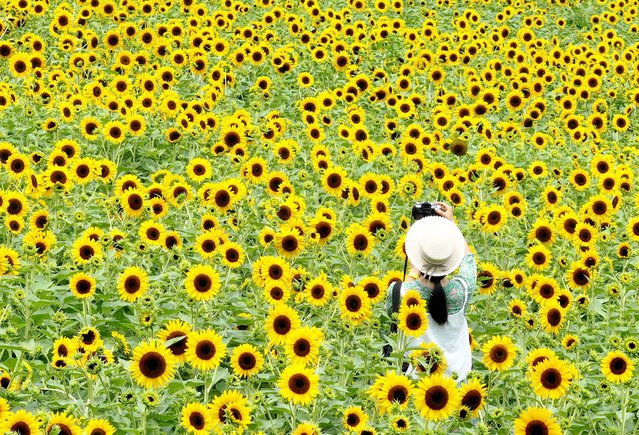
A visitor takes a selfie with a backdrop of sunflowers in full bloom at the E-World Sunflower Garden in Daegu, 237 kilometers southeast of Seoul, South Korea, 13 July 2024. (Photo by Yonhap/EPA)
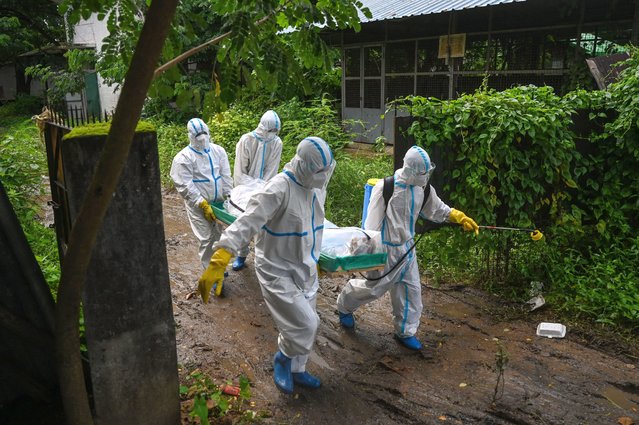
Volunteers wearing personal protective equipment (PPE) carry the body of a victim of the Covid-19 coronavirus to a cemetery in Hlegu Township in Yangon on July 10, 2021. (Photo by Ye Aung Thu/AFP Photo)
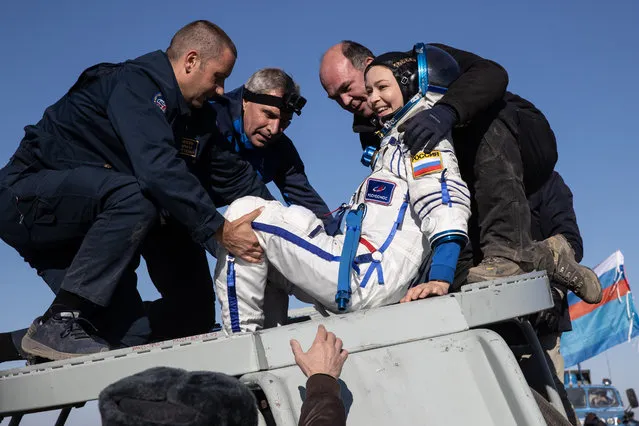
Ground personnel tend to actress Yulia Peresild after the landing of the Soyuz MS-18 reentry capsule with herself and director Klim Shipenko of the “Vyzov” (The Challenge) film crew as well as Roscosmos cosmonaut Oleg Novitsky on board, in steppes southeast of Jezkazgan, Kazakhstan on October 17, 2021. (Photo by Sergei Savostyanov/TASS)
A performer wearing a lion mask performs the Ise Daikagura lion dance at the remote village of Yamanawa on February 08, 2021 in Ryuo, Japan. Ise Daikagura is a group of traditional Lion Dance performers who pray in front of farmers houses and businesses for good grain harvests and disease-free lives. (Photo by Buddhika Weerasinghe/Getty Images)
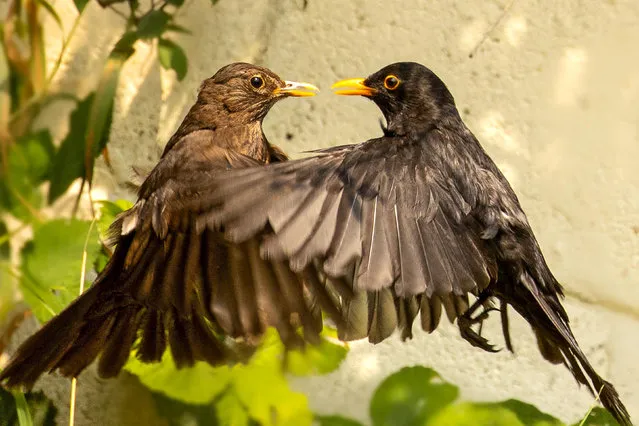
It looks like a kiss but this male and female blackbird were fighting in flight in Charlton Adam, Somerset, South West England in July 2022. (Photo by Ben Pulletz/Solent News)
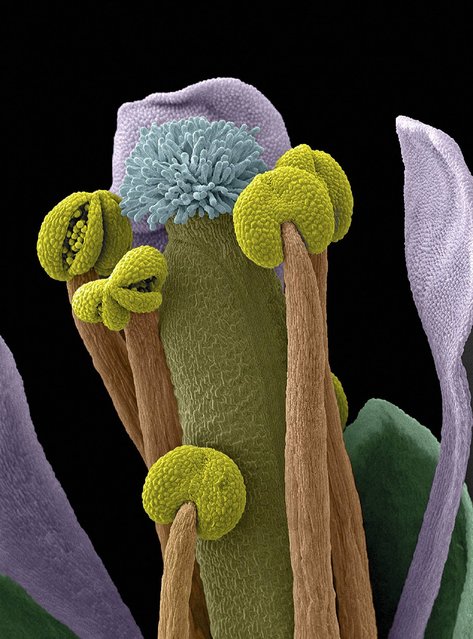
Beautiful, strange and occasionally alarming pictures from the shortlist for this year’s Wellcome image awards – which celebrate the very best in science photography and imaging – from an x-ray of a bat to a micrograph of a kidney stone. The exhibition opens on 12 March at three science centres and the Museum of Science and Industry in Manchester. Photo: Scanning electron micrograph (SEM) of an Arabidopsis thaliana flower, also commonly known as thale cress. Some of the anthers are open, revealing pollen grains ready for dispersal. Arabidopsis was the first plant to have its entire genome sequenced and is widely used as a model organism in molecular and plant biology. Horizontal width of image is 1200 microns. Magnification 100x. (Photo by Stefan Eberhard/Wellcome Images)