Loading...
Done
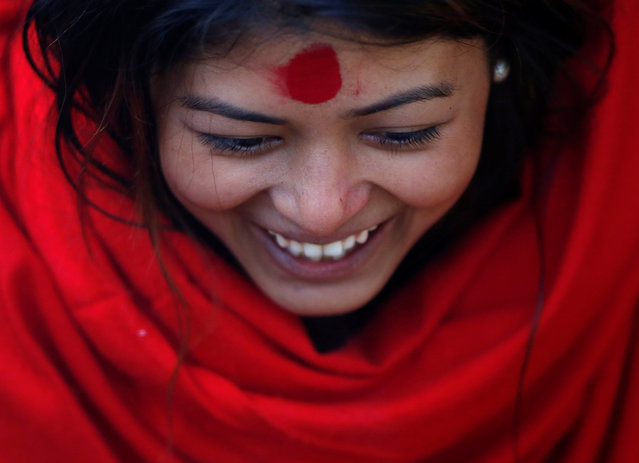
A devotee smiles as she offers prayers during the Swasthani Brata Katha festival in Kathmandu, Nepal January 12, 2017. (Photo by Navesh Chitrakar/Reuters)

A devotee smiles as she offers prayers during the Swasthani Brata Katha festival in Kathmandu, Nepal January 12, 2017. (Photo by Navesh Chitrakar/Reuters)
Details
08 Feb 2017 00:00:00
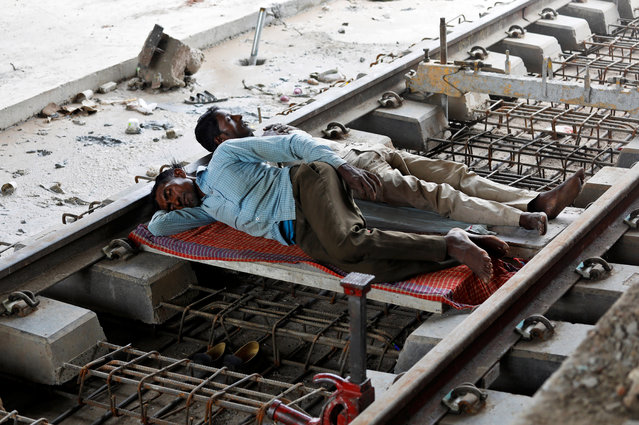
Workers sleep on a railway track under repair in New Delhi, India, June 15, 2018. (Photo by Saumya Khandelwal/Reuters)

Workers sleep on a railway track under repair in New Delhi, India, June 15, 2018. (Photo by Saumya Khandelwal/Reuters)
Details
22 Jun 2018 00:01:00
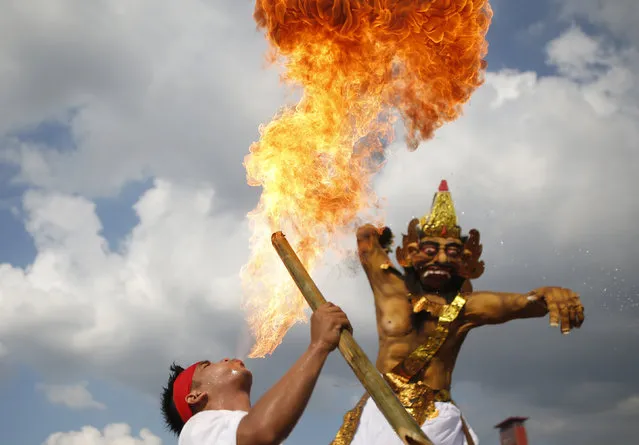
A Balinese Hindu blows fire, during a parade carrying Ogoh-ogoh effigies symbolising evil spirits, during a ritual before Nyepi, the day of silence, in Palembang, South Sumatra province, Indonesia March 8, 2016. Nyepi is a day of silence for self-reflection celebrating the Balinese Hindu new year, where people may not use lights, light fires, work, travel nor enjoy entertainment. (Photo by Darren Whiteside/Reuters)

A Balinese Hindu blows fire, during a parade carrying Ogoh-ogoh effigies symbolising evil spirits, during a ritual before Nyepi, the day of silence, in Palembang, South Sumatra province, Indonesia March 8, 2016. Nyepi is a day of silence for self-reflection celebrating the Balinese Hindu new year, where people may not use lights, light fires, work, travel nor enjoy entertainment. (Photo by Darren Whiteside/Reuters)
Details
09 Mar 2016 13:49:00
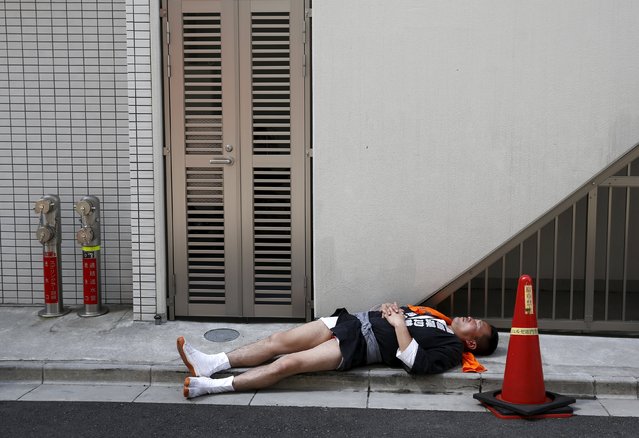
A reveller sleeps on the pavement during the Sanja Matsuri festival in the Asakusa district of Tokyo May 17, 2015. The Sanja Matsuri festival attracts over about one million visitors over its duration of three days, when parties of revellers carry portable shrines through the Asakusa neighbourhood, rocking and shaking them in a belief that this intensified the powers of the deities that reside inside them. (Photo by Thomas Peter/Reuters)

A reveller sleeps on the pavement during the Sanja Matsuri festival in the Asakusa district of Tokyo May 17, 2015. The Sanja Matsuri festival attracts over about one million visitors over its duration of three days, when parties of revellers carry portable shrines through the Asakusa neighbourhood, rocking and shaking them in a belief that this intensified the powers of the deities that reside inside them. (Photo by Thomas Peter/Reuters)
Details
19 May 2015 12:06:00
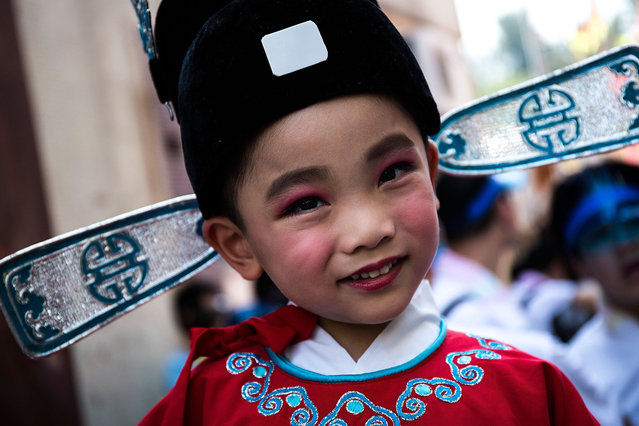
A child parades on a float during the Bun Festival on May 25, 2015 in Hong Kong, Hong Kong. One of Hong Kong's most colourful cultural celebration event, Cheung Chau Bun Festival, will be staged on 25 May 2015 (Monday) till 26 May 2015 midnight (Tuesday). This festival has over 100 years of history. (Photo by Lam Yik Fei/Getty Images)

A child parades on a float during the Bun Festival on May 25, 2015 in Hong Kong, Hong Kong. One of Hong Kong's most colourful cultural celebration event, Cheung Chau Bun Festival, will be staged on 25 May 2015 (Monday) till 26 May 2015 midnight (Tuesday). This festival has over 100 years of history. Every year, thousands of people descend upon the tiny island for The Piu Sik (Floating Colours) Parade, Lucky Bun (Ping On Bun) and The Bun Scrambling Competition, the ancient custom during the festival. (Photo by Lam Yik Fei/Getty Images)
Details
26 May 2015 10:54:00
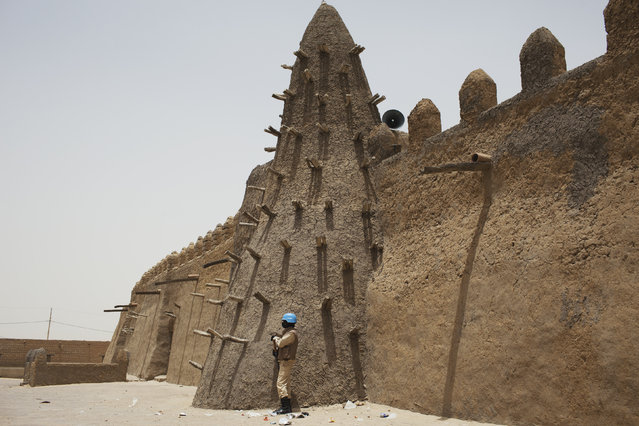
Timbuktu: A UN peacekeeper from Burkina Faso stands guard at the Djinguereber mosque, built in the 14th century, during a visit by a UN delegation on election day in Timbuktu, Mali, July 28, 2013. (Photo by Joe Penney/Reuters)

Timbuktu: A UN peacekeeper from Burkina Faso stands guard at the Djinguereber mosque, built in the 14th century, during a visit by a UN delegation on election day in Timbuktu, Mali, July 28, 2013. (Photo by Joe Penney/Reuters)
Details
08 Jul 2015 12:33:00
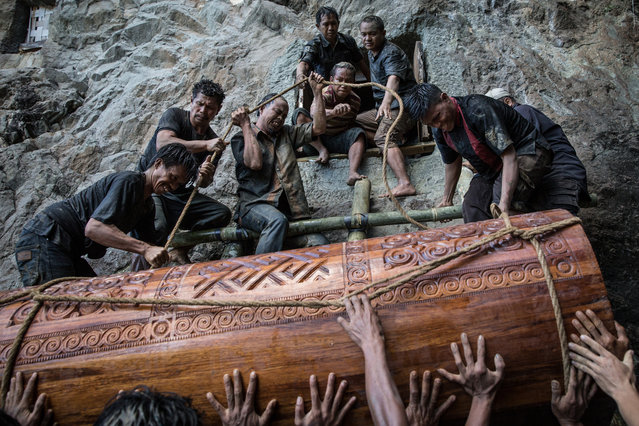
It is said that Torajans are people who “live to die”. For this Indonesian ethnic group, funerals are such extravagant events that they sometimes attract tourists. Families can postpone burials years (and the deceased are considered sick and hosted at home until the funeral) until the family can raise enough money and gather as many relatives as possible. And then it’s a jubilant multiday social event with a parade, dances and animal sacrifices. Agung Parameswara photographed these funerary practices when he traveled to South Sulawesi province, where the Torajans live. But often, their funeral isn’t the last time the dead are seen. In August, crypts are opened, coffins are slid back out and bodies delicately unsheathed. This tender ritual is known as Ma’Nene, which is customarily performed every few years. (Photo by Agung Parameswara/The Washington Post)

It is said that Torajans are people who “live to die”. For this Indonesian ethnic group, funerals are such extravagant events that they sometimes attract tourists. Families can postpone burials years (and the deceased are considered sick and hosted at home until the funeral) until the family can raise enough money and gather as many relatives as possible. And then it’s a jubilant multiday social event with a parade, dances and animal sacrifices. Agung Parameswara photographed these funerary practices when he traveled to South Sulawesi province, where the Torajans live. (Photo by Agung Parameswara/The Washington Post)
Details
06 Oct 2016 09:15:00
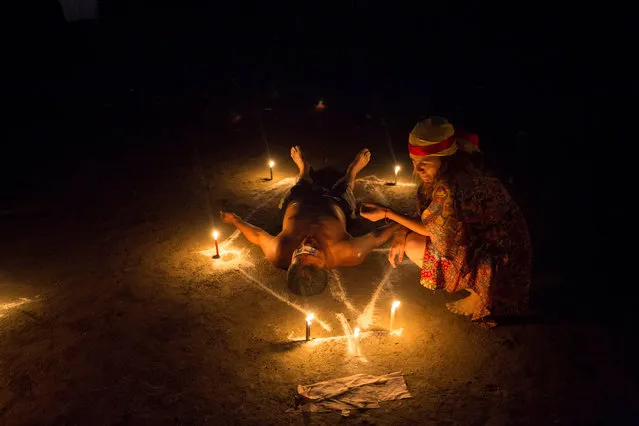
A man lies on the floor during a ritual at the Sorte Mountain on the outskirts of Chivacoa, in the state of Yaracuy, Venezuela October 10, 2015. (Photo by Marco Bello/Reuters)

A man lies on the floor during a ritual at the Sorte Mountain on the outskirts of Chivacoa, in the state of Yaracuy, Venezuela October 10, 2015. One long night every year in a mountainous rainforest in Venezuela, hundreds gather to dance on red-hot embers, enter trance-like states, and worship an ancient goddess known as Maria Lionza. Those who travel to the mountain known as Sorte in central Venezuela are practitioners of a cult that is built on local indigenous traditions. (Photo by Marco Bello/Reuters)
Details
08 Jul 2016 12:19:00