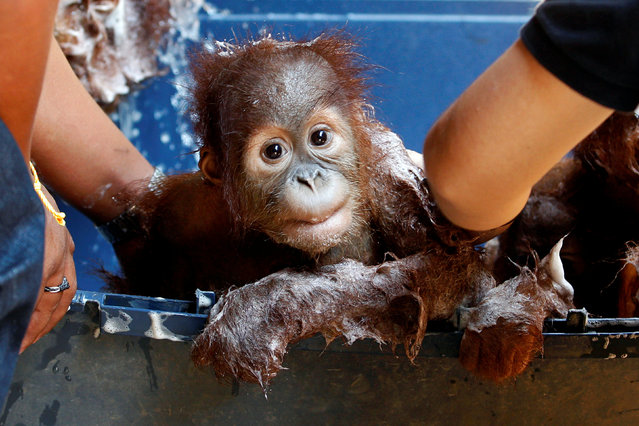
A baby Sumatran orangutan is bathed after arriving at a wildlife center at Ratchaburi province in Thailand September 13, 2017. (Photo by Kerek Wongsa/Reuters)
Gifts for the homeless are handed out during Santa Bar Crawl, Oxford, England on December 5, 2017. Here: Oxford university students on a Santa-themed pub crawl. (Photo by Greg Blatchford/Rex Features/Shutterstock)
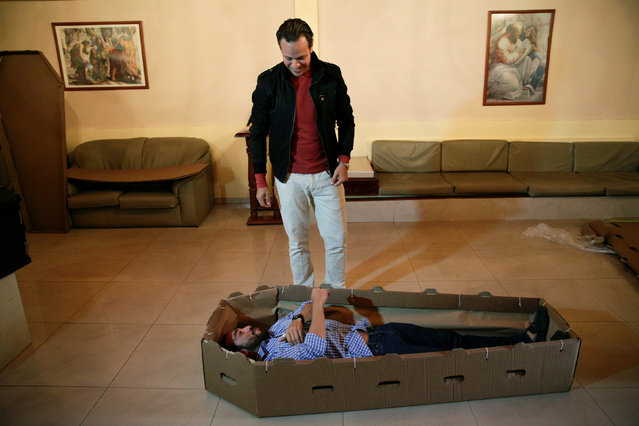
Elio Angulo (bottom C) lies inside a cardboard coffin next to Alejandro Blanchard as they introduce their product to potential customers at a mortuary in Valencia, in the state of Carabobo, Venezuela August 25, 2016. When Venezuelan entrepreneurs Alejandro Blanchard and Elio Angulo decided to create cardboard coffins, they were looking for an ecological selling point to compete against classic wood and brass caskets. Three years on, with the oil-rich country mired in deep economic crisis, their “bio-coffins” are becoming a viable option because of high prices for wooden coffins and shortages of brass ones. (Photo by Marco Bello/Reuters)
A reveler strikes a pose during an unofficial carnival block party referred to as “blocos”, in Rio de Janeiro, Brazil, Saturday, February 26, 2022. City Hall banned all blocos, the tightly packed street parties attended by those who cannot or don't want to buy pricey tickets for the official parade at the Sambadrome, due to a wave of the Omicron variant. (Photo by Silvia Izquierdo/AP Photo)
Bra-clad Uber passenger was caught on camera stealing from a driver’s tip jar, while brazenly looking into the car’s security camera in New York City, USA in August (issued November 7, 2017). The unnamed rider was with two others. When they got out she looked around as she grabbed dollars out of the jar. The driver then looked down after the three got out, but it was too late. The publication later reported that the woman’s name is Gabita, and she’s 18 years old. (Photo by YouTube/The Epochtimes)
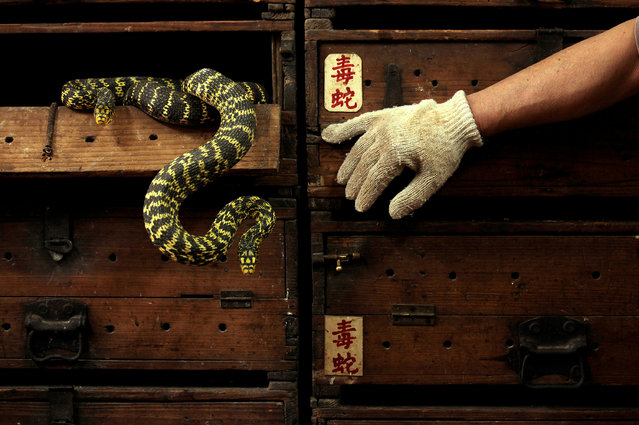
Snakes hang from a wooden cabinet marked with the Chinese characters “poisonous snake”, at a snake soup shop ahead of the Spring Festival in Hong Kong January 29, 2013. (Photo by Bobby Yip/Reuters)
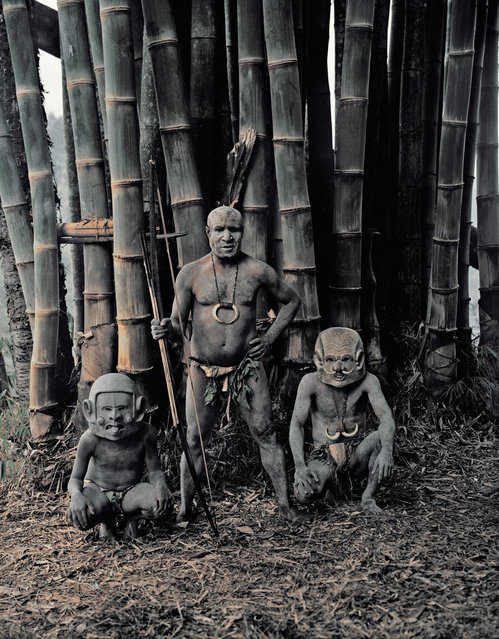
“Asaro from the Eastern Highlands”. The mudmen could not cover their faces with mud because the people of Papua New Guinea thought that the mud from the Asaro river was poisonous. So instead of covering their faces with this alleged poison, they made masks from pebbles that they heated and water from the waterfall, with unusual designs such as long or very short ears either going down to the chin or sticking up at the top, long joined eyebrows attached to the top of the ears, horns and sideways mouths. (Photo and caption by Jimmy Nelson)