Loading...
Done
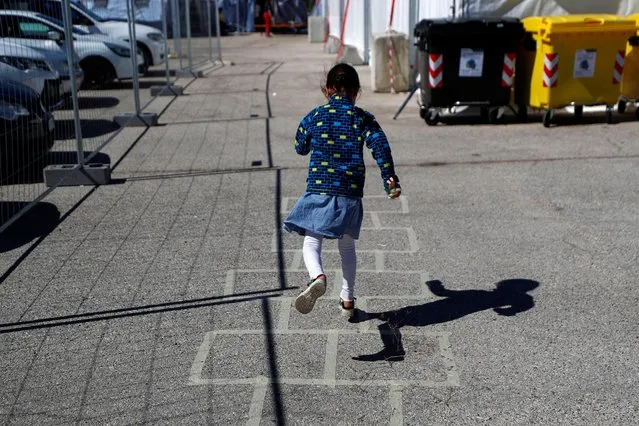
A model practices her walk ahead of Dakar fashion week on Goree Island in Dakar, Senegal, on December 03, 2022. The 20th anniversary of Dakar fashion week is held in a preserved colonial era fort on Goree island, which was one of Africas biggest slave trading centres during the 15th and 16th century. (Photo by John Wessels/AFP Photo)

A model practices her walk ahead of Dakar fashion week on Goree Island in Dakar, Senegal, on December 03, 2022. The 20th anniversary of Dakar fashion week is held in a preserved colonial era fort on Goree island, which was one of Africas biggest slave trading centres during the 15th and 16th century. (Photo by John Wessels/AFP Photo)
Details
15 Dec 2022 02:02:00
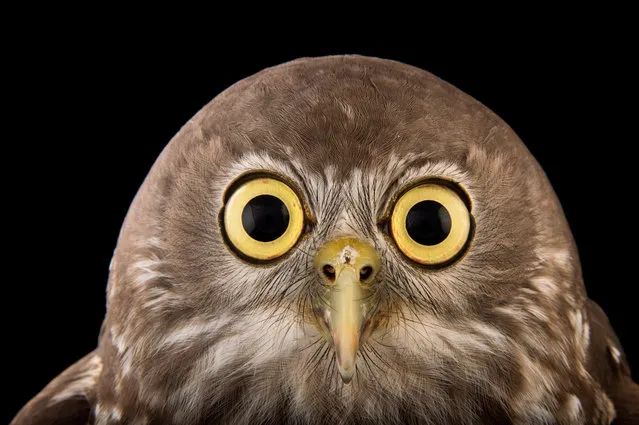
The National Geographic Photo Ark is a travelling exhibition of photographer Joel Sartore’s quest to create a photo archive of biodiversity around the world. So far, Sartore has captured studio portraits of more than 6,000 species – a number that he hopes to double. On 1 July, the ark will open at Melbourne zoo – the first time it has been exhibited in the southern hemisphere. More than 50 portraits will be on display, including many of Australian endangered animals being protected by programs at the zoo itself. These captions have been edited from text supplied by Melbourne zoo. Here: Barking owl. So-named because its call sounds like a barking dog, these birds are native to Australia, Indonesia and Papua New Guinea. In Victoria they are listed as an endangered species, and in 2003 there were estimated to be fewer than 50 breeding pairs. The main threat to the species in Victoria is loss of habitat, especially large trees with hollows in which they can nest and on which many of their prey depend. Apart from a bark, they may utter a chilling scream when they feel threatened. (Photo by Joel Sartore/National Geographic Photo Ark/The Guardian)

The National Geographic Photo Ark is a travelling exhibition of photographer Joel Sartore’s quest to create a photo archive of biodiversity around the world. So far, Sartore has captured studio portraits of more than 6,000 species – a number that he hopes to double. On 1 July, the ark will open at Melbourne zoo – the first time it has been exhibited in the southern hemisphere. More than 50 portraits will be on display, including many of Australian endangered animals being protected by programs at the zoo itself. These captions have been edited from text supplied by Melbourne zoo. Here: Barking owl. (Photo by Joel Sartore/National Geographic Photo Ark/The Guardian)
Details
01 Jul 2017 07:45:00
A group of PETA supporters protest Canada Goose's use of coyote fur, with “Canada Goose Kills” painted on their backs in New York, USA on October 18, 2018. (Photo by Erik Pendzich/Rex Features/Shutterstock)

A group of PETA supporters protest Canada Goose's use of coyote fur, with “Canada Goose Kills” painted on their backs in New York, USA on October 18, 2018. (Photo by Erik Pendzich/Rex Features/Shutterstock)
Details
21 Oct 2018 00:07:00
A participant takes part in donkey racing, during the 21st edition of annual Lamu Cultural Festival, in Lamu, Kenya, Saturday December 2, 2023. (Photo by AP Photo/Stringer)

A participant takes part in donkey racing, during the 21st edition of annual Lamu Cultural Festival, in Lamu, Kenya, Saturday December 2, 2023. (Photo by AP Photo/Stringer)
Details
13 Dec 2023 04:37:00
Orlando Pirates fan reacts during the Premier Soccer League (PSL) South African Premier Division football match between Orlando Pirates and Kaizer Chiefs at the FNB Stadium in Johannesburg on March 9, 2024. (Photo by Phill Magakoe/AFP Photo)

Orlando Pirates fan reacts during the Premier Soccer League (PSL) South African Premier Division football match between Orlando Pirates and Kaizer Chiefs at the FNB Stadium in Johannesburg on March 9, 2024. (Photo by Phill Magakoe/AFP Photo)
Details
22 Mar 2024 06:07:00
Yak near Yamdrok lake, Tibet. It is a long-haired bovinae found throughout the Himalayan region of south Central Asia, the Tibetan Plateau and as far north as Mongolia and Russia. The Tibetan economy is dominated by subsistence agriculture. Due to limited arable land, the primary occupation of the Tibetan Plateau is raising livestock, such as sheep, cattle, goats, camels, yaks, dzo, and horses. The Tibetan yak is an integral part of Tibetan life. (Photo by Dennis Jarvis)

Yak near Yamdrok lake, Tibet. It is a long-haired bovinae found throughout the Himalayan region of south Central Asia, the Tibetan Plateau and as far north as Mongolia and Russia. The Tibetan economy is dominated by subsistence agriculture. Due to limited arable land, the primary occupation of the Tibetan Plateau is raising livestock, such as sheep, cattle, goats, camels, yaks, dzo, and horses. The Tibetan yak is an integral part of Tibetan life. (Photo by Dennis Jarvis)
Details
10 Jun 2015 10:48:00
A vendor (C) cuts slaughtered dogs for sale at his roadside stall in Duong Noi village, outside Hanoi December 16, 2011. While animal rights activists have condemned eating dog meat as cruel treatment of the animals, it is still an accepted popular delicacy for some Vietnamese, as well in some other Asian countries. (Photo by Reuters/Kham)

A vendor (C) cuts slaughtered dogs for sale at his roadside stall in Duong Noi village, outside Hanoi December 16, 2011. While animal rights activists have condemned eating dog meat as cruel treatment of the animals, it is still an accepted popular delicacy for some Vietnamese, as well in some other Asian countries. Duong Noi is well-known as a dog-meat village, where hundreds of dogs are killed each day for sale as popular traditional food. Dog-eating as a custom is rooted in Vietnam and was developed as a result of poverty. One kilogram of dog meat costs about 130,000 dongs ($6.2). (Photo by Reuters/Kham)
Details
16 Jul 2013 11:40:00


A young man “painting” the Eiffel Tower. (Photo by Keystone/Getty Images). 9th May 1970
Details
12 May 2011 09:05:00