Loading...
Done
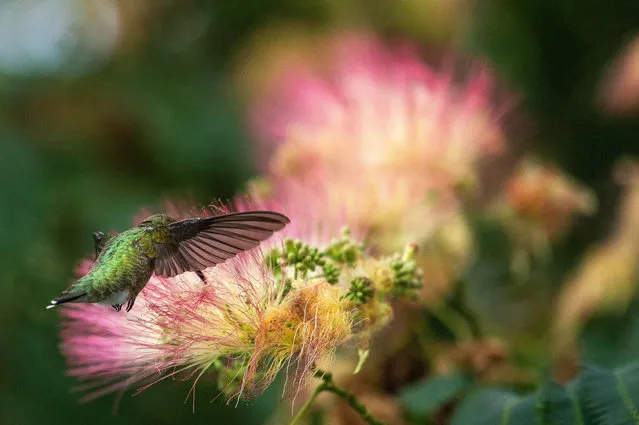
A hummingbird feeds on the nectar from a Mimosa tree in Saugus, Massachusetts on July 30, 2020. (Photo by Joseph Prezioso/ZUMA Wire/Rex Features/Shutterstock)

A hummingbird feeds on the nectar from a Mimosa tree in Saugus, Massachusetts on July 30, 2020. (Photo by Joseph Prezioso/ZUMA Wire/Rex Features/Shutterstock)
Details
16 Aug 2020 00:03:00
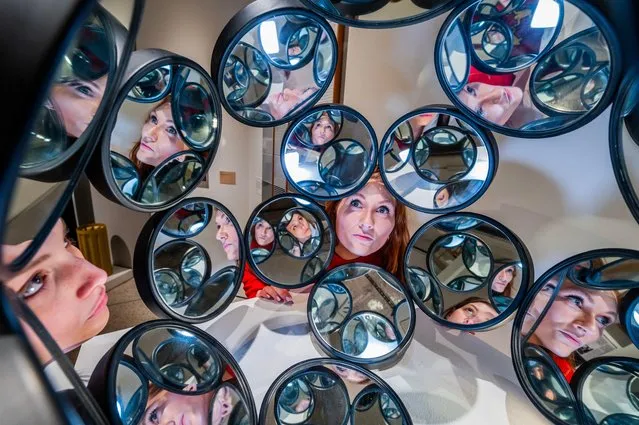
A retrospective spanning Enzo Mari's 60-year career. at the Science Museum in London on March 27, 2024. This large-scale exhibition includes the full spectrum of Mari's output, from his work as a designer, but also as an artist, teacher, critic and theorist. In total, more than 300 objects will be on display – most have not been seen in the UK before. (Photo by Guy Bell/Alamy Live News)

A retrospective spanning Enzo Mari's 60-year career. at the Science Museum in London on March 27, 2024. This large-scale exhibition includes the full spectrum of Mari's output, from his work as a designer, but also as an artist, teacher, critic and theorist. In total, more than 300 objects will be on display – most have not been seen in the UK before. (Photo by Guy Bell/Alamy Live News)
Details
02 May 2024 04:25:00
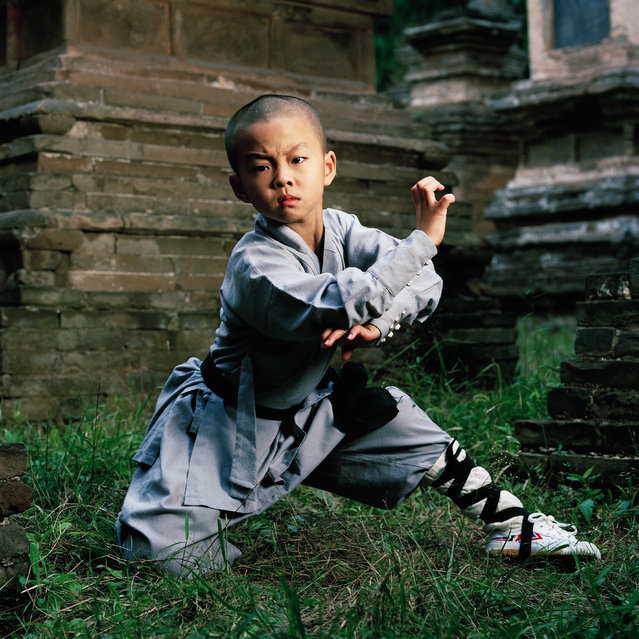
Hao Han (8), Shaolin kung fu student and child actor. Shaolin Monastery, Henan. (Photo by Mathias Braschler and Monika Fischer)

Hao Han (8), Shaolin kung fu student and child actor. Shaolin Monastery, Henan. (Photo by Mathias Braschler and Monika Fischer)
Details
19 Feb 2013 14:51:00
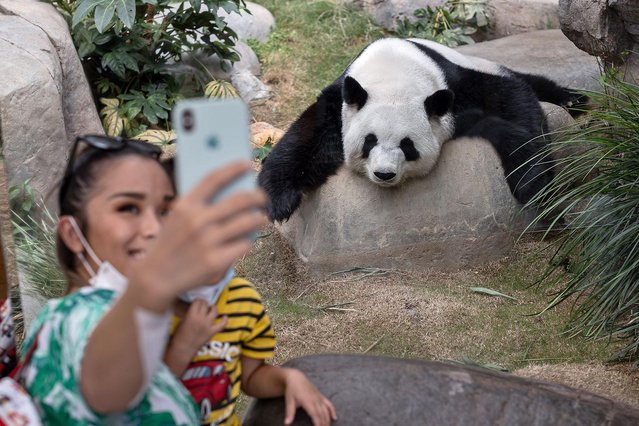
Giant panda Ying Ying rests on a rock in its enclosure while a visitor takes a selfie at Ocean Park in Hong Kong, China, 24 September 2020. An An turned 35 in August. Giant pandas in the wild can live up to 20 years on average, while lifespans of those under human care can reach over 30 years. (Photo by Jerome Favre/EPA/EFE)

Giant panda Ying Ying rests on a rock in its enclosure while a visitor takes a selfie at Ocean Park in Hong Kong, China, 24 September 2020. An An turned 35 in August. Giant pandas in the wild can live up to 20 years on average, while lifespans of those under human care can reach over 30 years. (Photo by Jerome Favre/EPA/EFE)
Details
08 Oct 2020 00:03:00
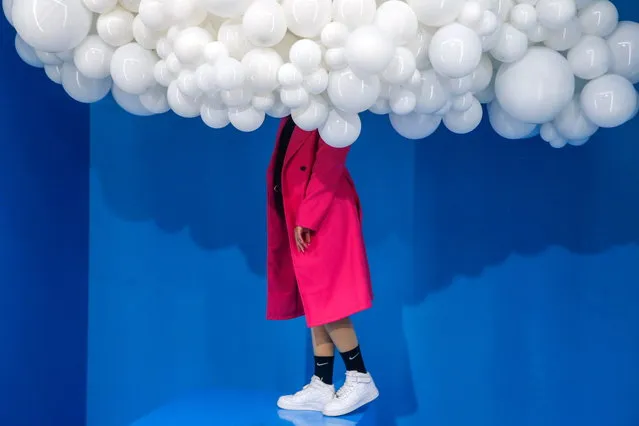
A woman visits the exhibition “Pop Air” at the Balloon Museum in Madrid, Spain, 22 March 2023. The exhibition, dedicated to balloons and inflatable arts, opened to the public in Madrid on 18 March and runs through 23 July 2023. (Photo by Alejandro Lopez/EPA)

A woman visits the exhibition “Pop Air” at the Balloon Museum in Madrid, Spain, 22 March 2023. The exhibition, dedicated to balloons and inflatable arts, opened to the public in Madrid on 18 March and runs through 23 July 2023. (Photo by Alejandro Lopez/EPA)
Details
04 Apr 2023 04:17:00
A seal infront of a passing cruise ship on the shore between Sandhaven village and Fraserburgh in Scotland in August 2023. (Photo by Mark Grant/Caters News Agency)

A seal infront of a passing cruise ship on the shore between Sandhaven village and Fraserburgh in Scotland in August 2023. (Photo by Mark Grant/Caters News Agency)
Details
27 Aug 2023 03:13:00
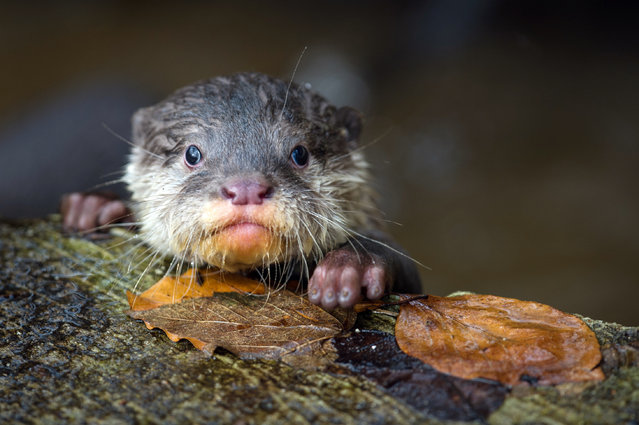
A young oriental small-clawed otter at the zoo in Neumuenster, Germany, March 5, 2014. The six young otters (one male, five female) were born on December 7, 2013. (Photo by Maja Hitij/EPA)

A young oriental small-clawed otter at the zoo in Neumuenster, Germany, March 5, 2014. The six young otters (one male, five female) were born on December 7, 2013. (Photo by Maja Hitij/EPA)
Details
08 Mar 2014 11:28:00
In this undated photo made available by journal Nature on January 15, 2014, a northern bald ibis (Geronticus eremita) flies in Tuscany, Italy. A new study released Wednesday, January 15, 2014 says the birds choreograph the flapping of their wings, getting a boost from an updraft of air in the wake of the flapping wings by flying behind the first bird and off to the side. When a flock of birds take advantage of these aerodynamics, they form a V. (Photo by Markus Unsöld/AP Photo)

In this undated photo made available by journal Nature on January 15, 2014, a northern bald ibis (Geronticus eremita) flies in Tuscany, Italy. A new study released Wednesday, January 15, 2014 says the birds choreograph the flapping of their wings, getting a boost from an updraft of air in the wake of the flapping wings by flying behind the first bird and off to the side. When a flock of birds take advantage of these aerodynamics, they form a V. (Photo by Markus Unsöld/AP Photo)
Details
18 Jan 2014 13:54:00