“A Balinese man shows off his pride and joy, a fighting cock, while on a cigarette break after a morning’s work in nearby fields”. (Photo by Coltrane Koh/The Guardian)
A combination picture shows Aleppo's Umayyad mosque, Syria, before it was damaged on March 12, 2009 (top) and after it was damaged (bottom) December 13, 2016. (Photo by Omar Sanadiki/Reuters)
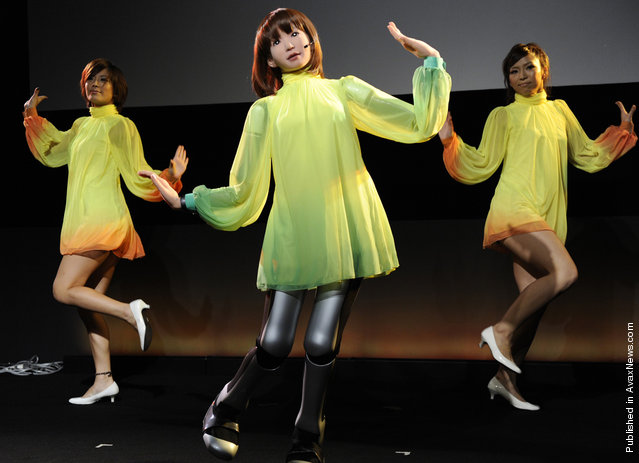
HRP-4C, a five-foot humanoid robot developed at Japan's National Institute of Advanced Industrial Science and Technology, sings and dances with performers at the Digital Contents Expo in Tokyo on October 17, 2010. The robot runs entertainment software called Choreonoid, a name formed from the words “choreograph” and “humanoid”. (Yoshikazu Tsuno/AFP)
Japan's On-Art Corp's eight metre tall dinosaur-shaped mechanical suit robot “TRX03” performs during its unveiling in Tokyo, Japan November 10, 2016. Stomping and roaring dinosaurs took to the stage in Tokyo on Thursday as part of a presentation for a proposed entertainment park where visitors will be able to see the realistic replicas first-hand. Japanese firm ON-ART Corp. unveiled man-operated robotic models of raptors, an allosaurus and a tyrannosaurus rex, in a performance at a hotel hall. (Photo by Toru Hanai/Reuters)
Photographer Joana Choumali’s latest project explores body image and beauty by documenting the men building Abidjan’s clothing models. The “Awoulaba” mannequin is a customised model designed with the African ideal of beauty in mind, curvier than the stick-thin examples usually seen in the west. They first appeared in 2011, and have since become a familiar sight outside the numerous clothing shops dotted throughout Ivory Coast’s capital, Abidjan. Here: An apprentice lines up his work on a roadside. (Photo by Joana Choumali)
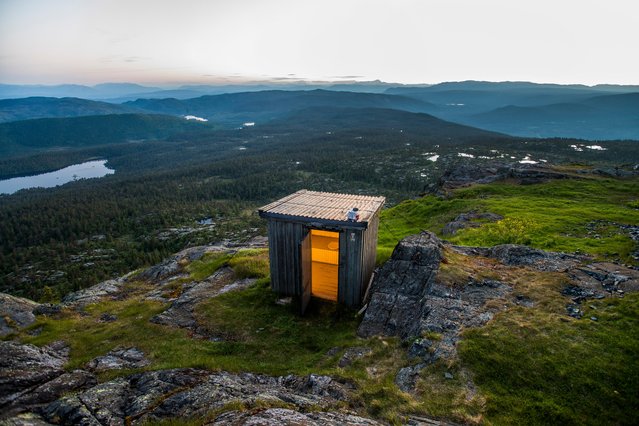
This restroom on the rubbly flanks of Jonsknuten in Norway looks up at the peak of the 904m mountain. Yu have to leave the door open to enjoy the view but the chances of being disturbed are minimal. (Photo by Olaf Menz/Lonely Planet)
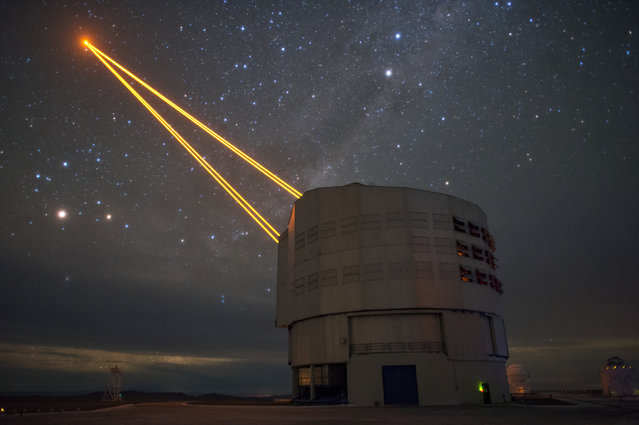
Four pillars of light from the 4 Laser Guide Star Facility on ESO's Very Large Telescope (VLT) are shown reaching into the Chilean night sky in this image from ESO Photo Ambassador Fred Kamphues, on September 2, 2016. The lasers are a key part of the adaptive optics system on the VLT. Adaptive optics allows astronomers to drastically reduce the atmospheric distortion present at even the best sites in the world for astronomy, including Paranal in Chile, the home of the VLT. (Photo by F. Kamphues/ESO)