Zurich soccer player Loris Benito tries to catch a marten during the Swiss Super League match between FC Thun and FC Zurich in Thun, Switzerland, March 10, 2013. (Photo by Marcel Bieri/Keystone)
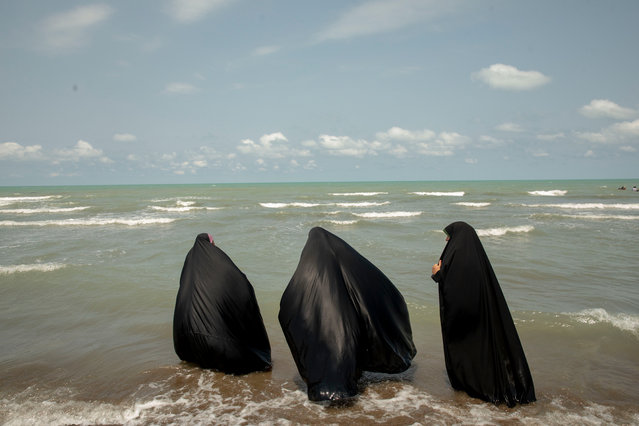
Three Iranian women bathe in the sea on a shore of the Caspian sea in the city of Babolsar north of Tehran, on July 14, 2023 in Babolsar, Iran. The 7th National Festival of Sand Sculptures is being held in this town on the edge of the Caspian Sea. (Photo by Majid Saeedi/Getty Images)
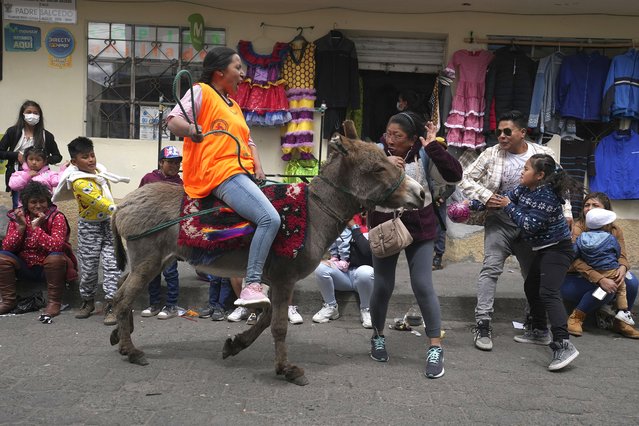
Spectators react as a competitor races past in the annual donkey festival in Salcedo, Ecuador, Saturday, September 10, 2022. (Photo by Dolores Ochoa/AP Photo)
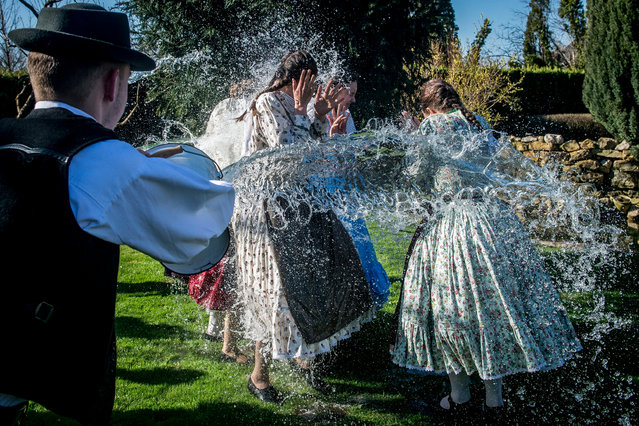
Members of the Mayossa Folk Dance Group pour water on young women in Kiskunmajsa, some 140 kms southeast of Budapest, Hungary, Monday, April 2, 2018. According to a several hundred years old tradition of Hungarian villages young men pour water on young women who in exchange present their sprinklers with beautifully colored eggs on Easter Monday. (Photo by Sandor Ujvari/MTI via AP Photo)
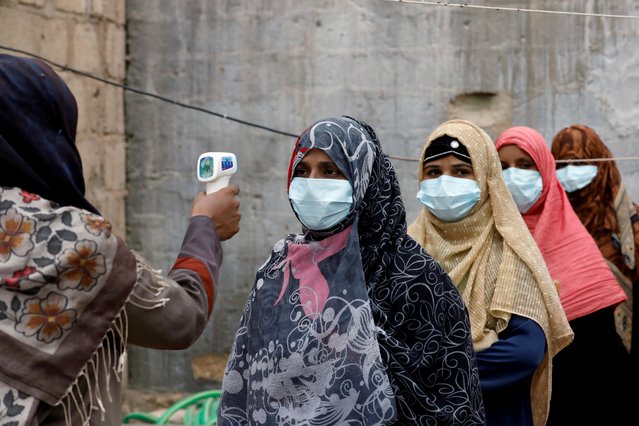
Vaccinators wear protective masks as they get their temperature checked, during an anti-polio campaign, in a low-income neighborhood as the spread of the coronavirus disease (COVID-19) continues, in Karachi, Pakistan on July 20, 2020. (Photo by Akhtar Soomro/Reuters)
I know, this answer was a little too short, so let me explain in a little more detail.
Imagine tossing a coin. Normally, any normal coin toss has two possible outcomes - heads or tails - with each one having a 50% chance of happening. Ideally, that is, because factors like the force of your finger tossing the coin, gravity, the wind, the moon phase and a passing TARDIS can all influence the outcome of the toss - but I have deviated from the subject.
A devotee carrying an idol of the Hindu god Ganesh, the deity of prosperity, jumps into the Sabarmati river to immerse the idol during the 10-day-long Ganesh Chaturthi festival in Ahmedabad, India, September 11, 2016. (Photo by Amit Dave/Reuters)