Loading...
Done
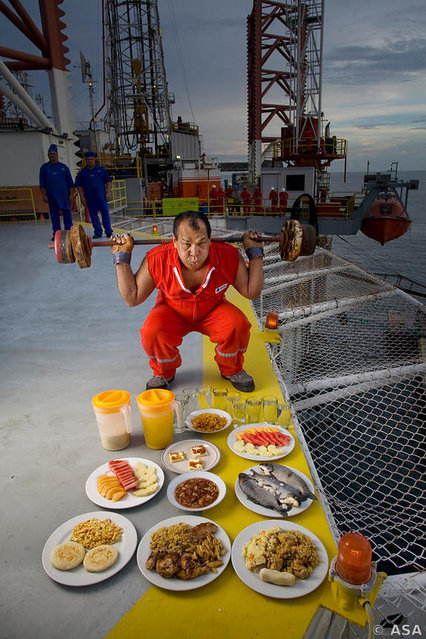
What the World Eats By Peter Menzel And Faith D'Aluisio Part 1

A stunning photographic collection featuring portraits of people from 30 countries and the food they eat in one day. In this fascinating study of people and their diets, 80 profiles are organized by the total number of calories each person puts away in a day. Featuring a Japanese sumo wrestler, a Massai herdswoman, world-renowned Spanish chef Ferran Adria, an American competitive eater, and more, these compulsively readable personal stories also include demographic particulars, including age, activity level, height, and weight. Essays from Harvard primatologist Richard Wrangham, journalist Michael Pollan, and others discuss the implications of our modern diets for our health and for the planet. This compelling blend of photography and investigative reportage expands our understanding of the complex relationships among individuals, culture, and food.
Details
23 Apr 2014 14:34:00
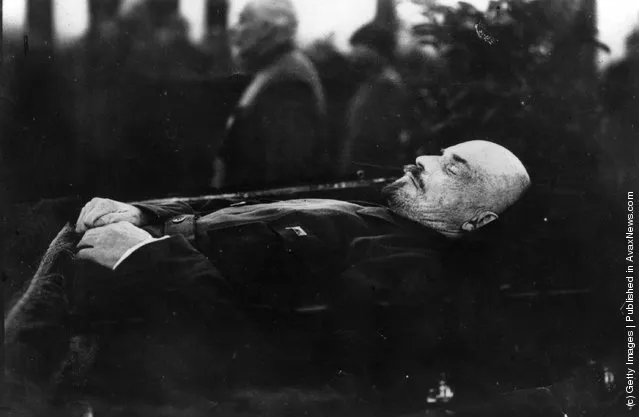
1924:  Vladimir Ilyich Lenin lying in state in the Kremlin

Photo: Vladimir Ilyich Lenin (1870 – 1924) lying in state in the Kremlin. (Photo by Hulton Archive/Getty Images). 1924

Important! For the same article in Russian language click here.

Something quite intriguing is happening within Russian-speaking internet during the last few – should you type a fully academic inquiry (at least, according to Russian academic requirements) in national search engines for "Lenin's mausoleum" – the first thing you get (even in top 10 searches) is website pages talking about black magic and occult. Website authors view this construction differently, but unconditionally agree on one thing: the mausoleum of the "leader of the world proletariat” – the essence of a magical artifact, a sort of “energy vampire”. It was built with a certain purpose: to drain the energy out of miserable Soviet citizens on one hand; and to poison the anthroposphere of one-sixth part of the earth with its vibes (the exact territory that was occupied by the former Soviet Union), depriving the Russian people of will to resist on the other hand. Complete nonsense? No doubt. Nevertheless, an intriguing one. Well, probably because some oddities do exist in mausoleum's history. These oddities are the thing we are going to discuss this time. First, let me refresh you memory on the subject.
Details
16 Oct 2011 11:27:00
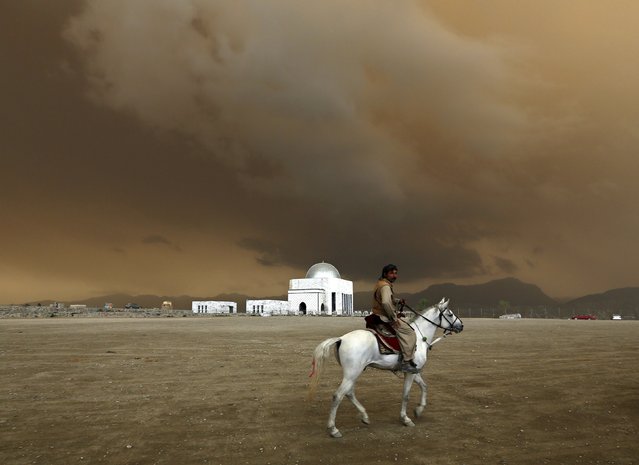
A man rides a horse at a playground on a hill in Kabul April 19, 2015. (Photo by Mohammad Ismail/Reuters)

A man rides a horse at a playground on a hill in Kabul April 19, 2015. (Photo by Mohammad Ismail/Reuters)
Details
21 Apr 2015 10:46:00
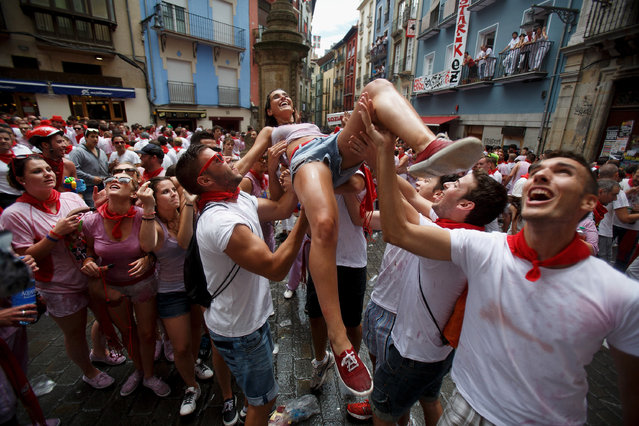
Revelers throw a woman to the air during the opening and the firing of the “Chupinazo” rocket which starts the 2014 Festival of the San Fermin Running of the Bulls on July 6, 2014 in Pamplona, Spain. The annual Fiesta de San Fermin, made famous by the 1926 novel of US writer Ernest Hemmingway entitled “The Sun Also Rises”, involves the daily running of the bulls through the historic heart of Pamplona to the bull ring. (Photo by Pablo Blazquez Dominguez/Getty Images)

Revelers throw a woman to the air during the opening and the firing of the “Chupinazo” rocket which starts the 2014 Festival of the San Fermin Running of the Bulls on July 6, 2014 in Pamplona, Spain. The annual Fiesta de San Fermin, made famous by the 1926 novel of US writer Ernest Hemmingway entitled “The Sun Also Rises”, involves the daily running of the bulls through the historic heart of Pamplona to the bull ring. (Photo by Pablo Blazquez Dominguez/Getty Images)
Details
12 Jul 2014 16:00:00


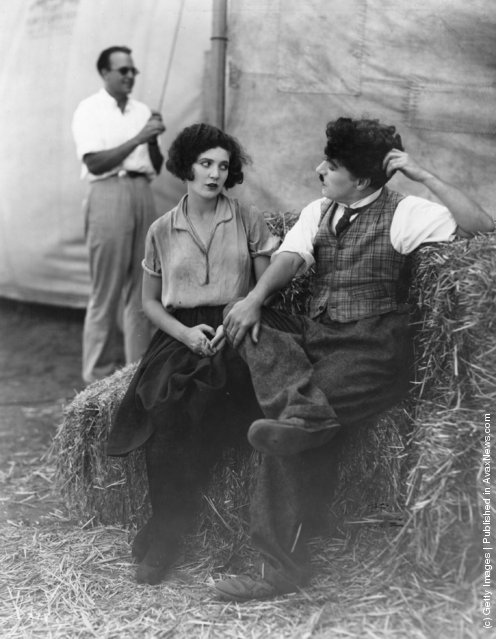
English comic actor and director Charlie Chaplin (Sir Charles Spencer Chaplin, 1889–1977) seated on straw bales during the filming of “The Circus” with his leading lady Merna Kennedy (1908–1944). (Photo by Margaret Chute/Getty Images). 1928
Details
16 Apr 2011 09:08:00
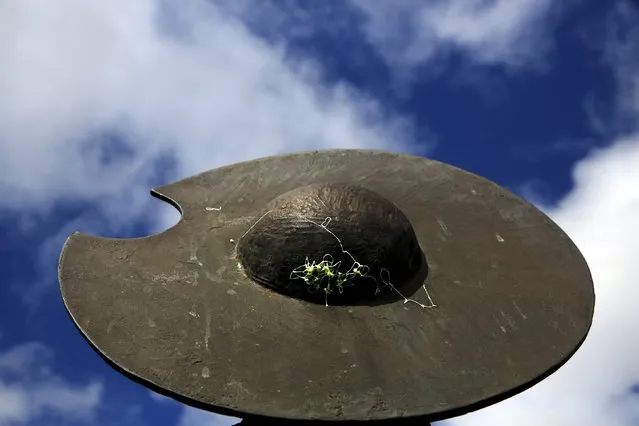
A sculpture of Don Quixote shows him wearing the basin he mistook for the enchanted helmet of the fictional Moorish king Mambrino in Alcazar de San Juan, Spain, April 5, 2016. (Photo by Susana Vera/Reuters)

A sculpture of Don Quixote shows him wearing the basin he mistook for the enchanted helmet of the fictional Moorish king Mambrino in Alcazar de San Juan, Spain, April 5, 2016. The arid central Spanish region of La Mancha is the setting for “Don Quixote”, the seventeenth-century novel by Miguel de Cervantes. Four hundred years after his death, references to the characters of Don Quixote, his loyal squire Sancho Panza and his beautiful lady Dulcinea abound in the surrounding villages from sweet treats to theatre productions involving livestock. Cervantes did not give away the name of the birthplace of Don Quixote, a middle-aged gentleman who becomes obsessed with chivalrous ideals. But many identify the village of Argamasilla de Alba as his hometown. The anniversary of Cervantes’ death is marked on the 23 April. (Photo by Susana Vera/Reuters)
Details
21 Apr 2016 12:32:00
A beluga whale sprays water towards visitors during a summer attraction at the Hakkeijima Sea Paradise aquarium in Yokohama, suburban Tokyo on July 20, 2015. Tokyo's temperature climbed over 34 degree Celsius on July 20, one day after the end of the rainy season. (Photo by Toshifumi Kitamura/AFP Photo)

A beluga whale sprays water towards visitors during a summer attraction at the Hakkeijima Sea Paradise aquarium in Yokohama, suburban Tokyo on July 20, 2015. Tokyo's temperature climbed over 34 degree Celsius on July 20, one day after the end of the rainy season. (Photo by Toshifumi Kitamura/AFP Photo)
Details
21 Jul 2015 11:10:00
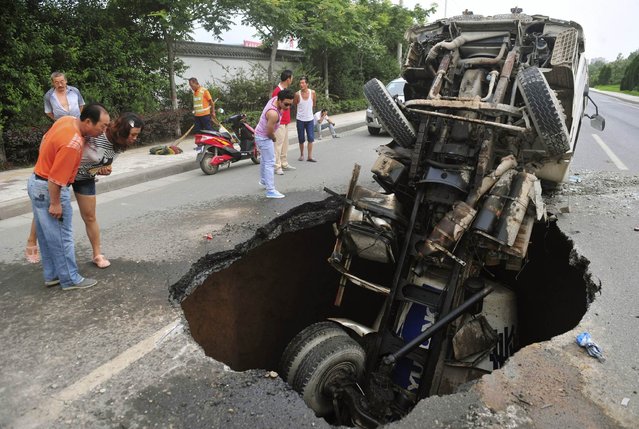
People look at a tanker after it fell into a caved-in area on a road in Xi'an, Shaanxi province, July 27, 2013. No casualty was reported in the accident, according to local media. (Photo by Reuters/Stringer)

People look at a tanker after it fell into a caved-in area on a road in Xi'an, Shaanxi province, July 27, 2013. No casualty was reported in the accident, according to local media. (Photo by Reuters/Stringer)
Details
03 Aug 2013 11:22:00