Loading...
Done
A massive, 8 metre tall sculpture of Marilyn Monroe, frozen with her dress blowing up, was on display at a shopping mall in downtown Dalian city, northeast China's Liaoning province, on Tuesday, November 14, 2017. The sculpture is a replica of Seward Johnson's Forever Marilyn in Chicago. (Photo by Imagine China/Rex Features/Shutterstock)

A massive, 8 metre tall sculpture of Marilyn Monroe, frozen with her dress blowing up, was on display at a shopping mall in downtown Dalian city, northeast China's Liaoning province, on Tuesday, November 14, 2017. The sculpture is a replica of Seward Johnson's Forever Marilyn in Chicago. (Photo by Imagine China/Rex Features/Shutterstock)
Details
17 Nov 2017 06:58:00
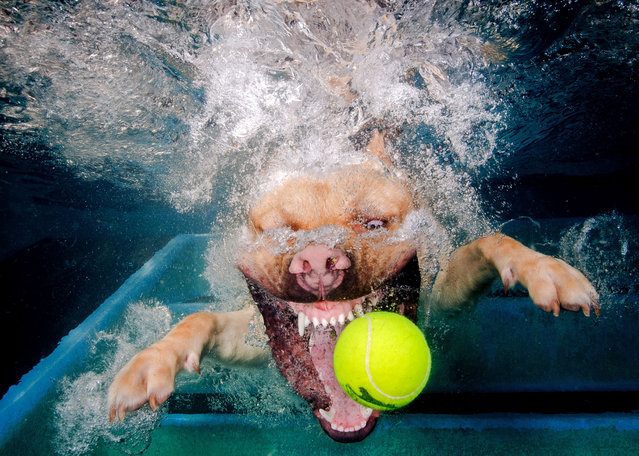
Jonny Simpson-Lee captures the moment these adorable pooches dove head first into a pool. A Golden Labrador jumps for a tennis ball baring his teeth. (Photo by Jonny Simpson-Lee/Caters News Agency)

Jonny Simpson-Lee captures the moment these adorable pooches dove head first into a pool. Here: A Golden Labrador jumps for a tennis ball baring his teeth. (Photo by Jonny Simpson-Lee/Caters News Agency)
Details
08 Mar 2018 00:05:00
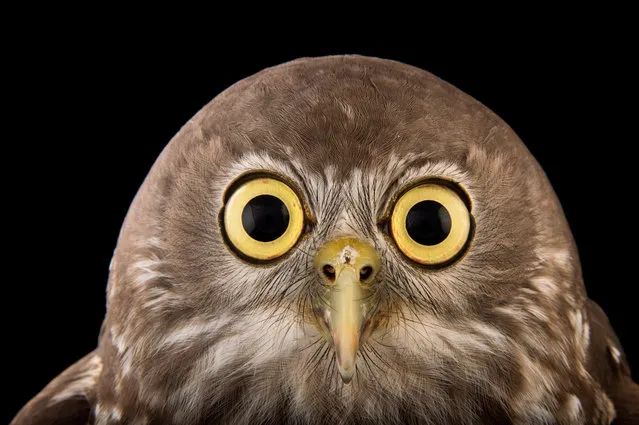
The National Geographic Photo Ark is a travelling exhibition of photographer Joel Sartore’s quest to create a photo archive of biodiversity around the world. So far, Sartore has captured studio portraits of more than 6,000 species – a number that he hopes to double. On 1 July, the ark will open at Melbourne zoo – the first time it has been exhibited in the southern hemisphere. More than 50 portraits will be on display, including many of Australian endangered animals being protected by programs at the zoo itself. These captions have been edited from text supplied by Melbourne zoo. Here: Barking owl. So-named because its call sounds like a barking dog, these birds are native to Australia, Indonesia and Papua New Guinea. In Victoria they are listed as an endangered species, and in 2003 there were estimated to be fewer than 50 breeding pairs. The main threat to the species in Victoria is loss of habitat, especially large trees with hollows in which they can nest and on which many of their prey depend. Apart from a bark, they may utter a chilling scream when they feel threatened. (Photo by Joel Sartore/National Geographic Photo Ark/The Guardian)

The National Geographic Photo Ark is a travelling exhibition of photographer Joel Sartore’s quest to create a photo archive of biodiversity around the world. So far, Sartore has captured studio portraits of more than 6,000 species – a number that he hopes to double. On 1 July, the ark will open at Melbourne zoo – the first time it has been exhibited in the southern hemisphere. More than 50 portraits will be on display, including many of Australian endangered animals being protected by programs at the zoo itself. These captions have been edited from text supplied by Melbourne zoo. Here: Barking owl. (Photo by Joel Sartore/National Geographic Photo Ark/The Guardian)
Details
01 Jul 2017 07:45:00
Binky Felted out and about in London, England on November 7, 2017. Binky looked amazing in a black blazer, (Photo by Flynet Pictures)

The UK reality TV mum Binky Felted out and about in London, England on November 7, 2017. Binky looked amazing in a black blazer, (Photo by Flynet Pictures)
Details
12 Nov 2017 08:41:00
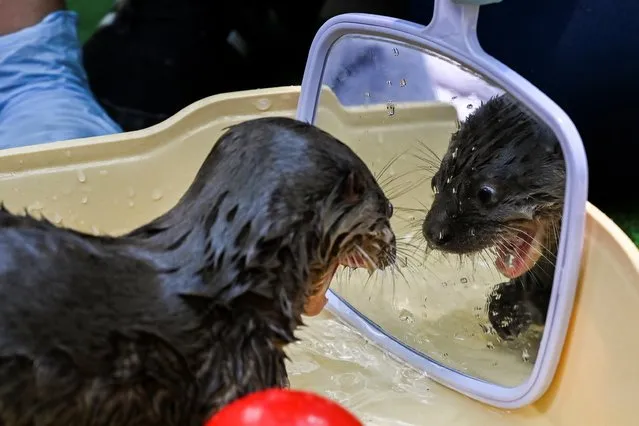
A river otter (lontra longicaudis) of 6-weeks-old looks in the mirror during a bath in the Animal Welfare Unit of the Zoo in Cali, Colombia, on October 22, 2019. The baby otter was found abandoned brought to the Cali Zoo for breeding, for its extensive experience in raising these species. According to the International Union for Conservation of Nature the river otter (lontra longicaudis) are in danger of extinction, because of mining, agriculture, pollution of rivers and housing construction in their habitat. (Photo by Luis Robayo/AFP Photo)

A river otter (lontra longicaudis) of 6-weeks-old looks in the mirror during a bath in the Animal Welfare Unit of the Zoo in Cali, Colombia, on October 22, 2019. The baby otter was found abandoned brought to the Cali Zoo for breeding, for its extensive experience in raising these species. According to the International Union for Conservation of Nature the river otter (lontra longicaudis) are in danger of extinction, because of mining, agriculture, pollution of rivers and housing construction in their habitat. (Photo by Luis Robayo/AFP Photo)
Details
27 Oct 2019 00:03:00
Luna the French Bulldog is dressed in red, white, and blue during the National Independence Day Parade in Washington, DC, on July 4, 2023. (Photo by Stefani Reynolds/AFP Photo)

Luna the French Bulldog is dressed in red, white, and blue during the National Independence Day Parade in Washington, DC, on July 4, 2023. (Photo by Stefani Reynolds/AFP Photo)
Details
12 Jul 2023 03:19:00
Disguised revellers parade on the occasion of the Cortege during the Carnival in Basel, Switzerland, February 17, 2016. (Photo by Georgios Kefalas/EPA)

Disguised revellers parade on the occasion of the Cortege during the Carnival in Basel, Switzerland, February 17, 2016. (Photo by Georgios Kefalas/EPA)
Details
18 Feb 2016 13:53:00
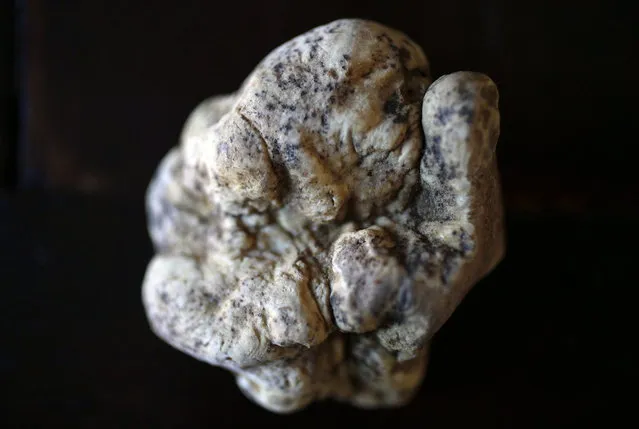
A truffle is seen on a table in Alba, north-western Italy November 11, 2013. Located in the heart of the Langhe – the hilly southern area of Italy's northwestern Piedmont region – Alba is the country's capital of white truffles, a variety of the prized fungus which grows underground. Truffles are found two to eight inches (5-20cm) below the ground near the roots of trees. (Photo by Stefano Rellandini/Reuters)

A truffle is seen on a table in Alba, north-western Italy November 11, 2013. Located in the heart of the Langhe – the hilly southern area of Italy's northwestern Piedmont region – Alba is the country's capital of white truffles, a variety of the prized fungus which grows underground. Truffles are found two to eight inches (5-20cm) below the ground near the roots of trees. They give off an odour which lasts for a limited period of time and can be detected with the assistance of well-trained dogs and experienced hunters. Output of white truffles, which are not cultivated and only grow naturally in forests, has fallen in Italy over the past few years, largely because climate change has brought a damaging mix of drought and torrential rains. (Photo by Stefano Rellandini/Reuters)
Details
31 Dec 2013 11:22:00