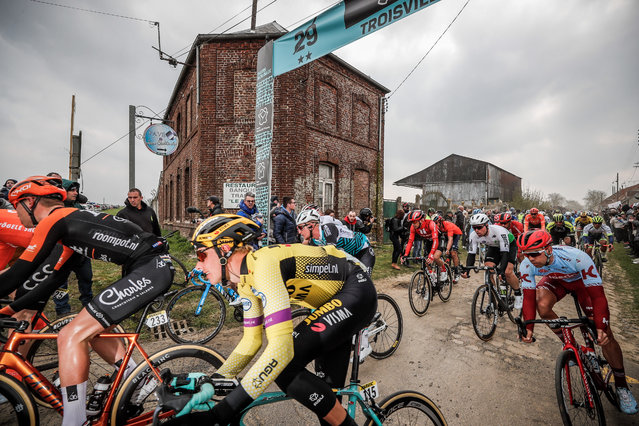
Riders of the Peloton approach a cobbled section near the Arenberg forrest at the 117th Paris-Roubaix cycle race in Wallers, France on April 12, 2019. (Photo by Christophe Petit-Tesson/EPA)
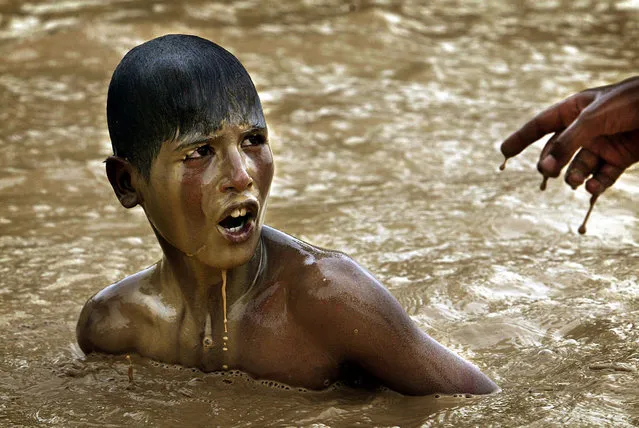
Iraqi teenagers swim in waste water from the nearby Tuweitha nuclear facility near Baghdad, Iraq on May 28, 2003. Iraqis are consuming contaminated water unaware of the dangerous pollutants that can cause severe ill health. (Photo by Damir Sagolj/Reuters)
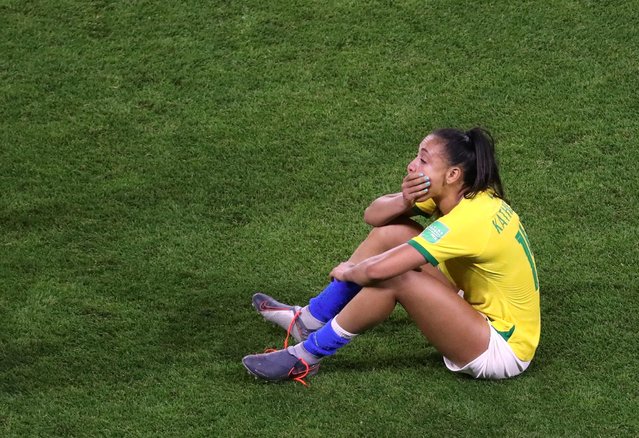
#14 Kathellen of Brazil show her dejection after the 2019 FIFA Women's World Cup France Round Of 16 match between France and Brazil at Stade Oceane on June 23, 2019 in Le Havre, France. (Photo by Yves Herman/Reuters)
A GDR Trabant car drives through the city during the local coronavirus disease (COVID-19) lockdown in Dresden, Germany, December 14, 2020. (Photo by Matthias Rietschel/Reuters)
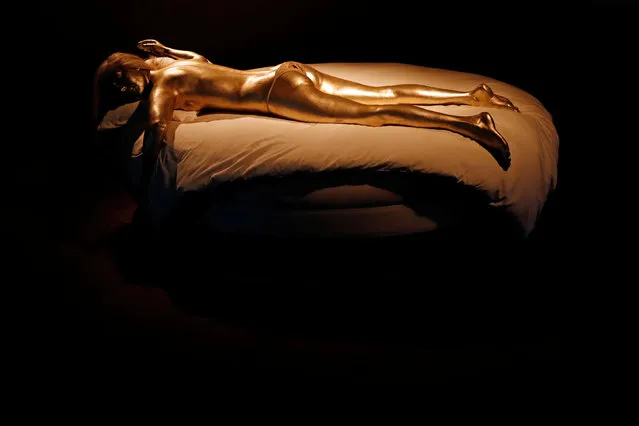
A mannequin of the woman painted gold in the James Bond film “Goldfinger” is displayed during a press presentation of the exhibition “The Designing 007: Fifty Years of Bond Style” at the Grande Halle de la Villette in Paris, France, April 13, 2016. (Photo by Benoit Tessier/Reuters)
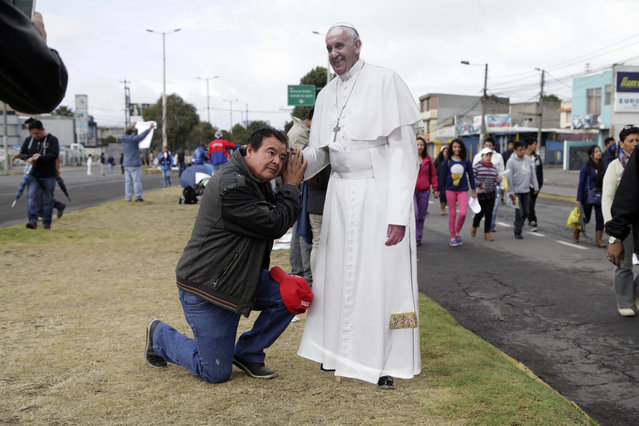
A man poses for a photo with a life size cutout of Pope Francis at Bicentennial Park where the pontiff celebrated Mass for an estimated half-million people, in Quito, Ecuador, Tuesday, July 7, 2015. Francis told an estimated half-million people gathered for the Mass that in a world divide by wars, violence and individualism, Catholics should be “builders of unity”, bringing together hopes and ideals of their people. (Photo by Ana Buitron/AP Photo)
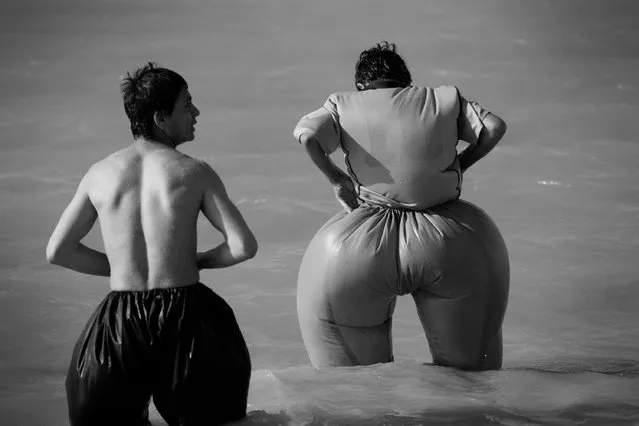
“Life in War” (FotoEvidence Press) by Iranian photographer Majid Saeedi is probably the only book about Afghanistan that doesn’t show images of war. For ten years his camera photographed daily life in the context of war. His photographs reveal the humanity of a people living through decades of war. Here: Afghan men escape increasing summer temperatures by wading in the Qarga reservoir on July 9, 2010 in a suburb of Kabul, Afghanistan. (Photo by Majid Saeedi/Getty Images)
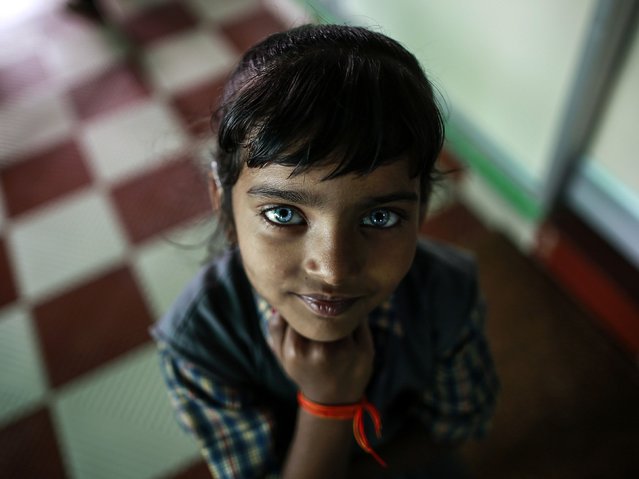
A girl who suffers from hearing and speech disorders reacts to the camera at a rehabilitation centre supported by Bhopal Medical Appeal, for children who were born with mental and physical disabilities, in Bhopal November 11, 2014. The rehabilitation centre only treats families they believe have been affected by the Union Carbide gas leak 30 years ago. Human rights groups say that thousands of tonnes of hazardous waste remain buried underground, and the government has conceded it is contaminated. There has, however, been no long-term epidemiological research which conclusively proves that birth defects are directly related to the drinking of the contaminated water. (Photo by Danish Siddiqui/Reuters)