Loading...
Done
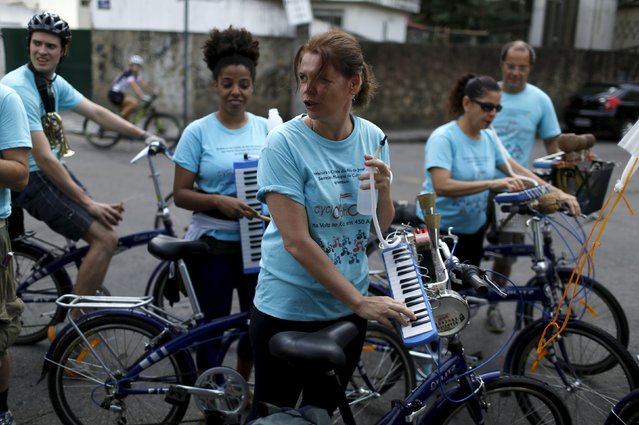
Members of the Cyclophonica band play instruments as they make a stop during a ride in Rio de Janeiro May 17, 2015. (Photo by Pilar Olivares/Reuters)

Members of the Cyclophonica band play instruments as they make a stop during a ride in Rio de Janeiro May 17, 2015. The Cyclophonica band was formed by a group of musicians riding bicycles around the city, mixing sport and culture and entertaining people on the streets, according to its founder Leonardo Fuks. (Photo by Pilar Olivares/Reuters)
Details
19 May 2015 11:46:00
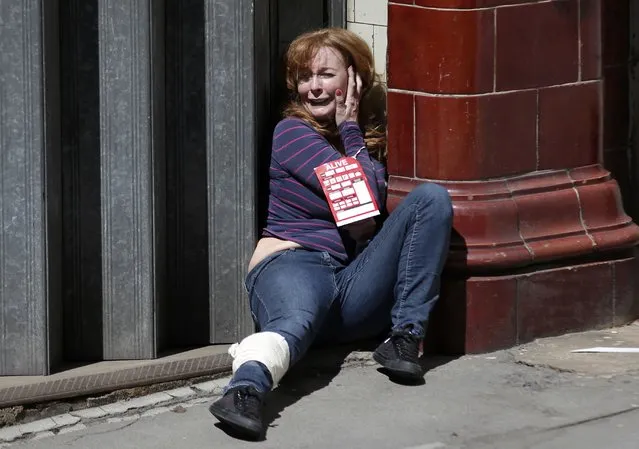
An actor plays an injured passer-by during Exercise Strong Tower, the scene of a mock terror attack at a disused underground station in central London, Britain June 30, 2015. (Photo by Peter Nicholls/Reuters)

An actor plays an injured passer-by during Exercise Strong Tower, the scene of a mock terror attack at a disused underground station in central London, Britain June 30, 2015. London police held their biggest-ever terrorism drill on Tuesday, pitting the emergency services against a group of marauding attackers, nearly 10 years since four young British Islamists killed 52 people in suicide bombings on London's transport network in July 2005. (Photo by Peter Nicholls/Reuters)
Details
01 Jul 2015 13:21:00
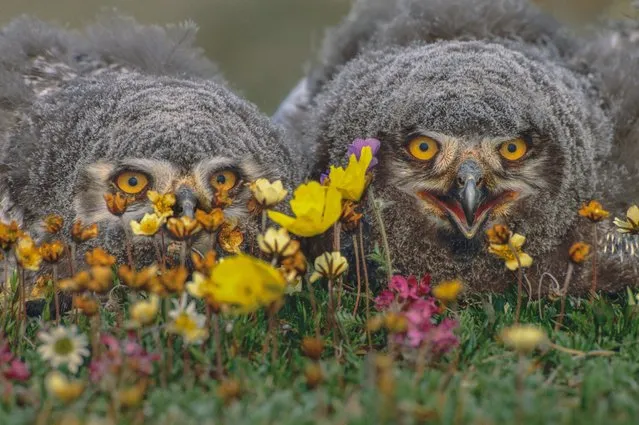
Snowy owlets (Bubo scandiacus), Arctic National Wildlife Refuge, Alaska, USA. “A pair of gray-feathered snowy owlets hunker down in the abundant flowers that flourish in the dropping-enriched soil of their nest mound”. (Photo by Art Wolfe/Art Wolfe Stock)

The photography of Art Wolfe covers the globe, capturing landscapes, wildlife, and cultures from every continent; here he talks through a selection of his favourite images. Art Wolfe is an American photographer and conservationist. His photographs have been noted by environmental advocacy groups for their “stunning” visual impact. Here: Snowy owlets (Bubo scandiacus), Arctic National Wildlife Refuge, Alaska, USA. (Photo by Art Wolfe/Art Wolfe Stock)
Details
19 Mar 2018 00:05:00
Lebanese university students wearing municipality police costume regulate the traffic in the village of Brummana, east Beirut, Lebanon, 23 June 2018. (Photo by Wael Hamzeh/EPA/EFE)

Lebanese university students wearing municipality police costume regulate the traffic in the village of Brummana, east Beirut, Lebanon, 23 June 2018. The touristic town of Brummana is making a daring move in anticipation of the crowded summer season, by forming a group of young policewomen wearing mini shorts to regulate the traffic. (Photo by Wael Hamzeh/EPA/EFE)
Details
26 Jun 2018 00:05:00
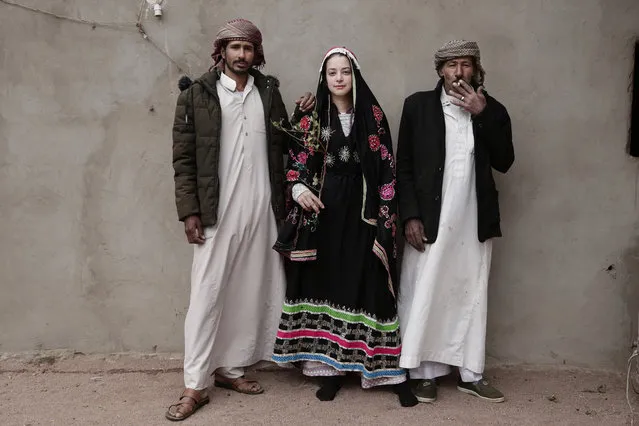
In this March 31, 2019 photo, an Egyptian student borrows a Bedouin wedding dress to pose for a photograph with Bedouin men from the Hamada tribe, in Wadi Sahw, Abu Zenima, in South Sinai, Egypt. Four Bedouin women are for the first time leading tours in Egypt’s Sinai Peninsula, breaking new ground in their deeply conservative community, where women almost never work outside the home or interact with outsiders.  The tourists can only be women, and the tours can’t go overnight. Each day before the sun sets, the group returns to the Hamada’s home village in Wadi Sahu, a narrow desert valley. (Photo by Nariman El-Mofty/AP Photo)

In this March 31, 2019 photo, an Egyptian student borrows a Bedouin wedding dress to pose for a photograph with Bedouin men from the Hamada tribe, in Wadi Sahw, Abu Zenima, in South Sinai, Egypt. Four Bedouin women are for the first time leading tours in Egypt’s Sinai Peninsula, breaking new ground in their deeply conservative community, where women almost never work outside the home or interact with outsiders. The tourists can only be women, and the tours can’t go overnight. Each day before the sun sets, the group returns to the Hamada’s home village in Wadi Sahu, a narrow desert valley. (Photo by Nariman El-Mofty/AP Photo)
Details
11 Apr 2019 00:01:00
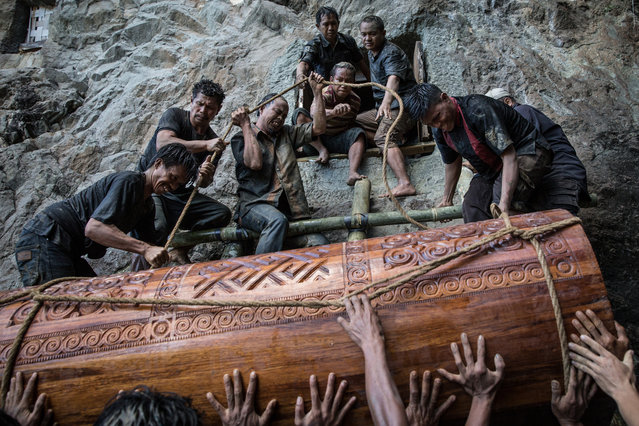
It is said that Torajans are people who “live to die”. For this Indonesian ethnic group, funerals are such extravagant events that they sometimes attract tourists. Families can postpone burials years (and the deceased are considered sick and hosted at home until the funeral) until the family can raise enough money and gather as many relatives as possible. And then it’s a jubilant multiday social event with a parade, dances and animal sacrifices. Agung Parameswara photographed these funerary practices when he traveled to South Sulawesi province, where the Torajans live. But often, their funeral isn’t the last time the dead are seen. In August, crypts are opened, coffins are slid back out and bodies delicately unsheathed. This tender ritual is known as Ma’Nene, which is customarily performed every few years. (Photo by Agung Parameswara/The Washington Post)

It is said that Torajans are people who “live to die”. For this Indonesian ethnic group, funerals are such extravagant events that they sometimes attract tourists. Families can postpone burials years (and the deceased are considered sick and hosted at home until the funeral) until the family can raise enough money and gather as many relatives as possible. And then it’s a jubilant multiday social event with a parade, dances and animal sacrifices. Agung Parameswara photographed these funerary practices when he traveled to South Sulawesi province, where the Torajans live. (Photo by Agung Parameswara/The Washington Post)
Details
06 Oct 2016 09:15:00


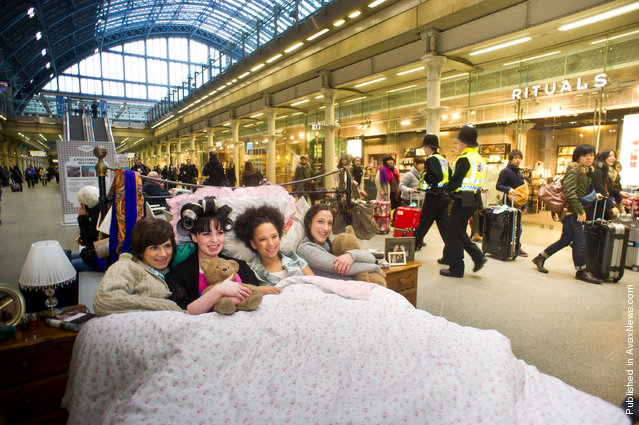
A group of young women have 'a bit of a do' for Oxfam at St Pancras International and enjoy a screening of the nation's favourite chick-flick Dirty Dancing on February 28, 2011 in London, England. Oxfam is calling on women across the UK to get together with their female friends in March to celebrate women's achievements for the 100th anniversary of International Women's Day (March 8, 2011) and raise money to support their work with women living in poverty. www.oxfam.org.uk/do (Photo by Ian Gavan/Getty Images for Oxfam). LONDON, ENGLAND – FEBRUARY 28
Details
07 Mar 2011 15:23:00
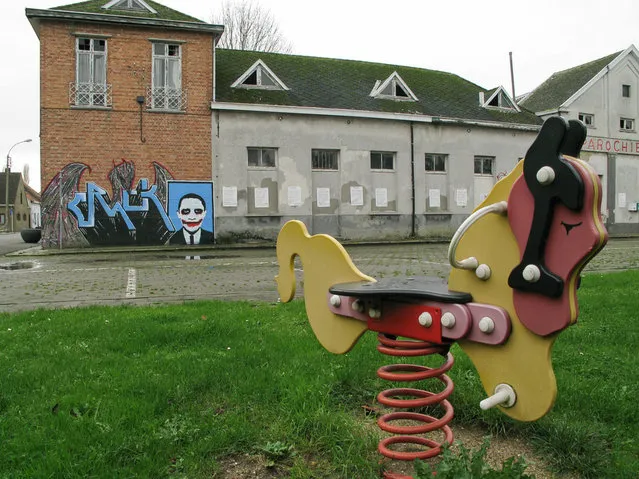
Abandon Village: Doel, Belgium

Doel is a 700 year old village on the river Scheldt in Belgium. Near to the local nuclear power plant, with its two giant cooling towers, it became the target for demolition not once but twice in order to make way for the ever expanding harbor. The successful protest groups of the seventies could not compete in the 90's and as residents began to leave, the government refused to rent out the properties again and instead let them fall into disrepair. On the 23rd of March 2007, the government decided that the village would be demolished by 2009 and in June 2008, residents received a letter informing them that they were to vacate their homes by the 1st of September 2009.
Details
20 Mar 2013 11:33:00