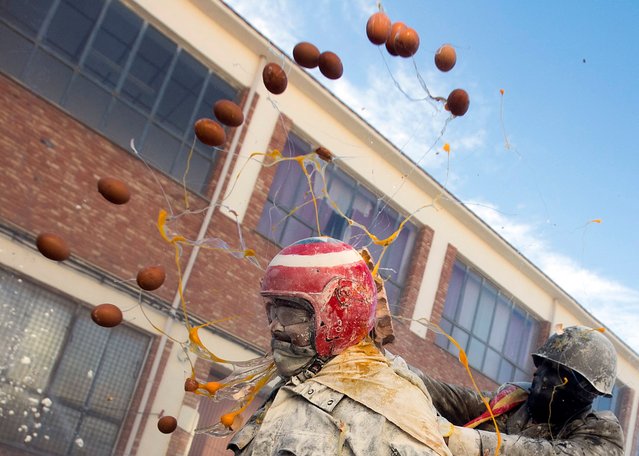
Revellers dressed in mock military garb take part in “Els Enfarinats” food-battle in the southeastern Spanish town of Ibi on December 28, 2022. (Photo by Jaime Reina/AFP Photo)
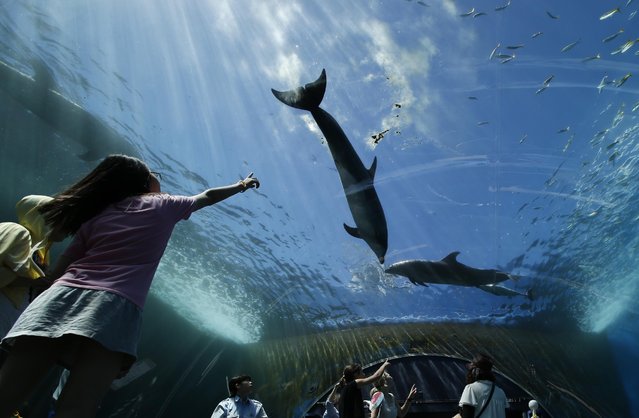
Bottlenose dolphins swim over visitors in water tank at the Hakkeijima Sea Paradise aquarium-amusement park complex in Yokohama, southwest of Tokyo, Tuesday, July 21, 2015. Temperatures in Tokyo's metropolitan area neared around 96 degree Fahrenheit, or 35 degree Celsius, on Tuesday. (Photo by Shuji Kajiyama/AP Photo)
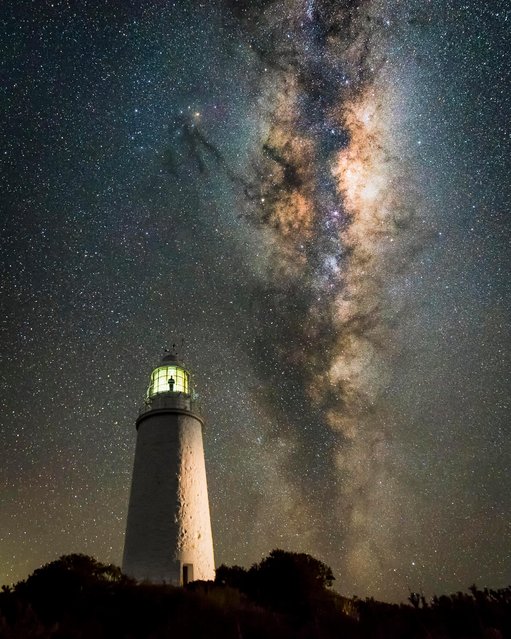
The competition is run by Royal Observatory Greenwich sponsored by Insight Investment and in association with BBC Sky at Night Magazine. This year astrophotographers from 91 countries sent in more than 4,200 spectacular entries. Here: The Milky Way rises above an isolated lighthouse in Tasmania. Shot by James Stone of Australia. (Photo by James Stone/Astronomy Photographer of the Year 2018)
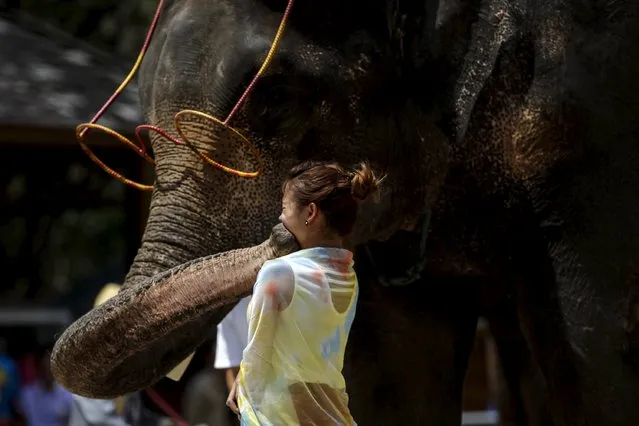
An elephant “kisses” a visitor during a show at an elephant training school in Xishuangbanna, Yunnan province, April 18, 2015. Some 16 elephants live at the school and give four 30-minute performances everyday for visitors. (Photo by Wong Campion/Reuters)
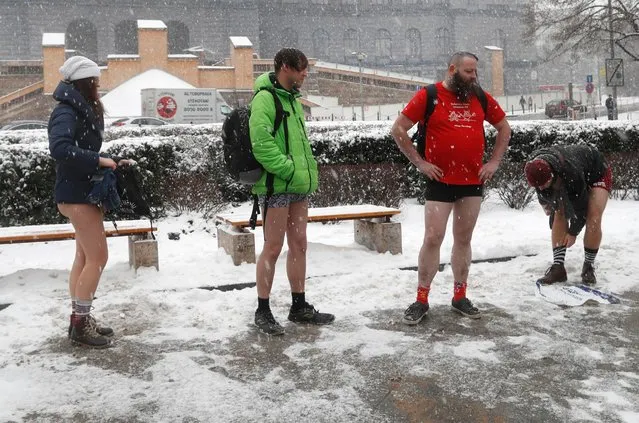
Passengers prepare to take part in the No Pants Subway Ride in Prague, Czech Republic, Sunday, January 8, 2017. The No Pants Subway Ride began in 2002 in New York as a stunt and has taken place in cities around the world since then. (Photo by Petr David Josek/AP Photo)
Schoolchildren perfom during celebrations to mark 35 years of Zimbabwe's Independence at the National sports stadium in Harare, Saturday, April 18, 2015. President Robert Mugabe, 91, the central figure in Zimbabwean politics 35 years after Independence from Britain, has led the country since 1980. (Photo by Tsvangirayi Mukwazhi/AP Photo)
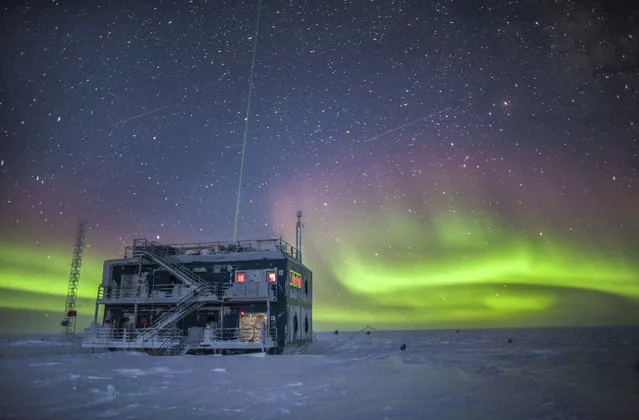
This undated photo provided by NOAA in May 2018 shows aurora australis near the South Pole Atmospheric Research Observatory in Antarctica. When a hole in the ozone formed over Antarctica, countries around the world in 1987 agreed to phase out several types of ozone-depleting chemicals called chlorofluorocarbons (CFCs). Production was banned, emissions fell and the hole shriveled. But according to a study released on Wednesday, May 16, 2018, scientists say since 2013, there’s more of a banned CFC going into the atmosphere. (Photo by Patrick Cullis/NOAA via AP Photo)