Loading...
Done
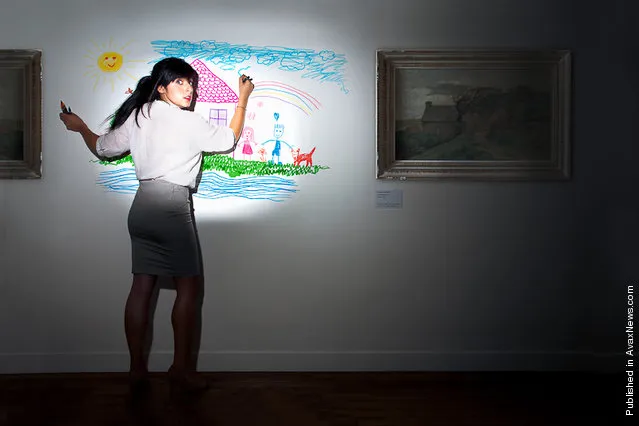
Photographers: Julien Mauve. Back To Childhood

“Julien Mauve is a Paris based professional web designer, front-end developer and content manager who loves innovation, experimentation and creation. Julien has taken up photography as a hobby. His collection Back to Childhood is all about bringing the long lost memories of early days into the adult life. How he came about that idea? Julien stumbled upon some of his old toys in his grandpa’s attic and felt a connection to every single one of them. Each toy brought back a fond memory”.
Details
06 Apr 2012 20:05:00
Pencil Sculptures - by Jennifer Maestre

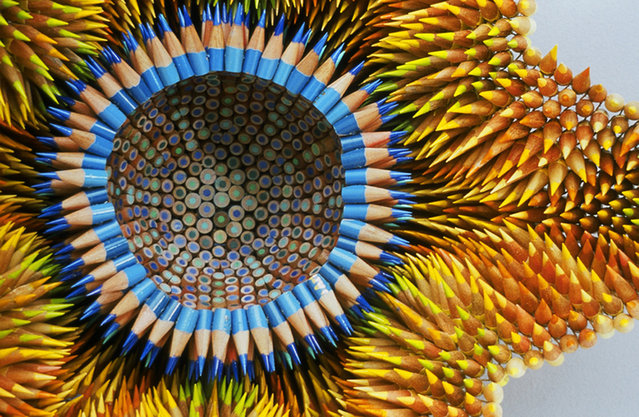
Jennifer Maestre (born 1959 in Johannesburg, South Africa) is a Massachusetts-based artist, internationally known for her unique pencil sculptures.
She derives most of her inspiration from the form and texture of the sea urchin. To make the pencil sculptures, Jennifer makes use of a variety pencils, nails and stitching. She takes hundreds of pencils, cuts them into small 1-inch sections, drills a hole in each section, sharpens them all and sews them together.
Details
22 Aug 2012 13:16:00
Three Burmese women members of a circus play cards as they wear the brass neck and leg rings traditionally worn by Padaung women since childhood and which cannot be removed, London, January 4, 1935. (Photo by Keystone)

Three Burmese women members of a circus play cards as they wear the brass neck and leg rings traditionally worn by Padaung women since childhood and which cannot be removed, London, January 4, 1935. (Photo by Keystone). P.S. All pictures are presented in high resolution.
Details
29 Aug 2012 11:18:00
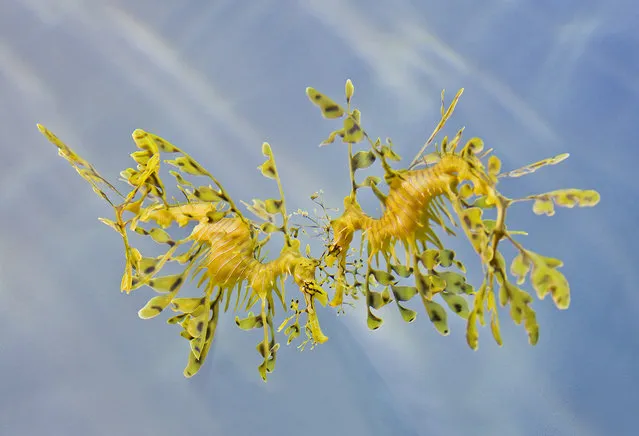
Leafy sea dragon

The leafy seadragon or Glauert's seadragon, Phycodurus eques, is a marine fish in the family Syngnathidae, which also includes the seahorses. It is the only member of the genus Phycodurus. It is found along the southern and western coasts of Australia. The name is derived from the appearance, with long leaf-like protrusions coming from all over the body. These protrusions are not used for propulsion; they serve only as camouflage. The leafy seadragon propels itself by means of a pectoral fin on the ridge of its neck and a dorsal fin on its back closer to the tail end. These small fins are almost completely transparent and difficult to see as they undulate minutely to move the creature sedately through the water, completing the illusion of floating seaweed.
Details
05 Sep 2012 08:51:00
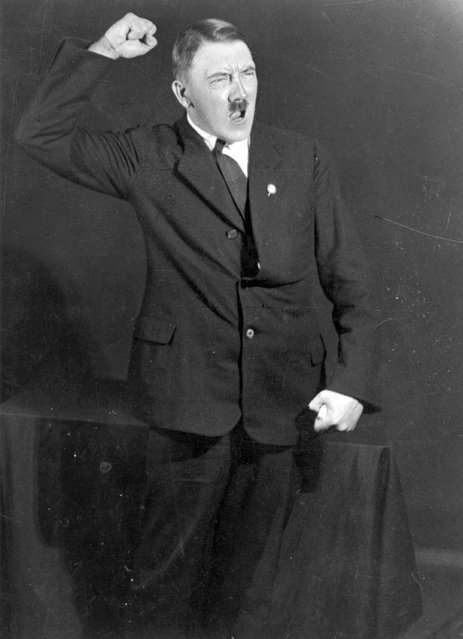
1925: Hitler posing to a recording of one of his speeches after his release from Landsberg Prison. (Photo by Heinrich Hoffmann/Keystone Features)

Adolf Hitler (1889–1945), leader of the National Socialist German Workers' Party (NSDAP), strikes a pose for photographer Heinrich Hoffmann whilst listening to a recording of his own speeches, 1925. After seeing the photographs, Hitler ordered Hoffmann to destroy the negatives, but he disobeyed. (Photo by Heinrich Hoffmann). P.S. All pictures are presented in high resolution.
Details
15 Sep 2012 09:08:00
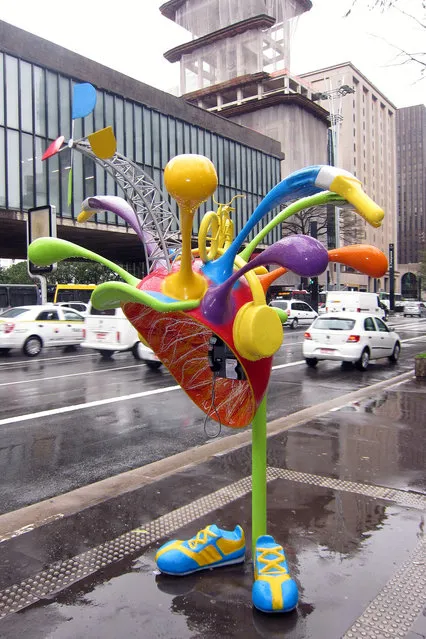
Work: Live Connected
Artist: Juarez Fagundes
Address: Avenida Paulista, Parque Trianon – opposite the park

One hundred artists were given an opportunity to uniquely redesign 100 phone booths in São Paulo. The result is beyond all expectations. One hundred completely useless or just vandalized booths were transformed into incredible works of art.

Work: Live Connected
Artist: Juarez Fagundes
Address: Avenida Paulista, Parque Trianon – opposite the park
Details
11 Nov 2012 09:31:00
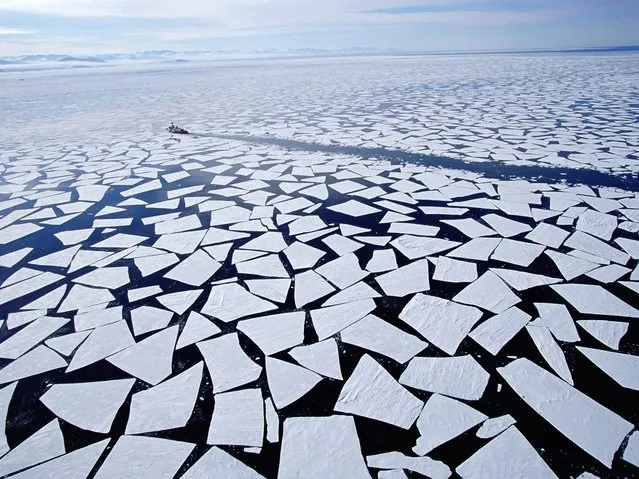
McMurdo Station Antarctic

McMurdo Station is a U.S. Antarctic research centre located on the southern tip of Ross Island, which is in the New Zealand-claimed Ross Dependency on the shore of McMurdo Sound in Antarctica. It is operated by the United States through the United States Antarctic Program, a branch of the National Science Foundation. The station is the largest community in Antarctica, capable of supporting up to 1,258 residents, and serves as the United States Antarctic science facility. All personnel and cargo going to or coming from Amundsen–Scott South Pole Station first pass through McMurdo.
Details
05 Sep 2013 10:18:00
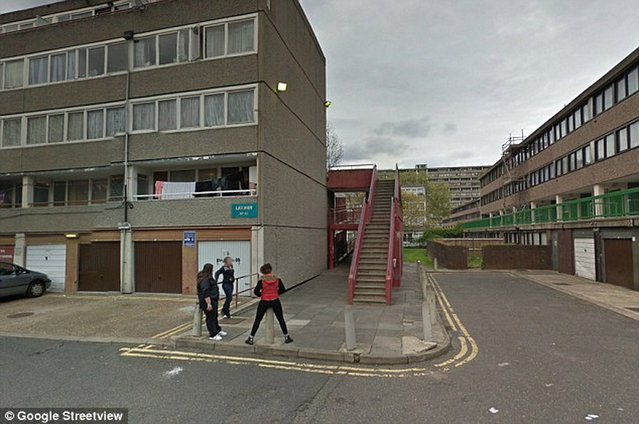
Bad Part of Town By Google Street View

Take a walk on the wild side around some of the most down right dangerous places in the world - and all without leaving your desk, courtesy of Google Street View. Since 2007, Google's amazing technology has given people the chance to visit the Eiffel Tower, peer out over San Francisco's Golden Gate Bridge or walk along a beach in the Bahamas. But as well as mapping the tourist-friendly hotspots, Google also ventured into places you really wouldn't want to find yourself. Here is a collection of some the most notorious areas captured by the infamous roaming camera cars from around the UK and the world.
Details
03 Oct 2013 11:05:00