Loading...
Done
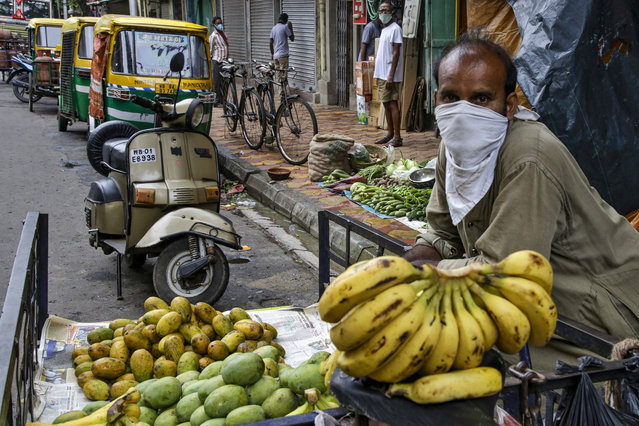
A street side fruit vendor has his face covered as a precaution against the coronavirus in Kolkata, India, Tuesday, July 21, 2020. With a surge in coronavirus cases in the past few weeks, state governments in India have been ordering focused lockdowns in high-risk areas to slow down the spread of infections. (Photo by Bikas Das/AP Photo)

A street side fruit vendor has his face covered as a precaution against the coronavirus in Kolkata, India, Tuesday, July 21, 2020. With a surge in coronavirus cases in the past few weeks, state governments in India have been ordering focused lockdowns in high-risk areas to slow down the spread of infections. (Photo by Bikas Das/AP Photo)
Details
14 Aug 2020 00:05:00
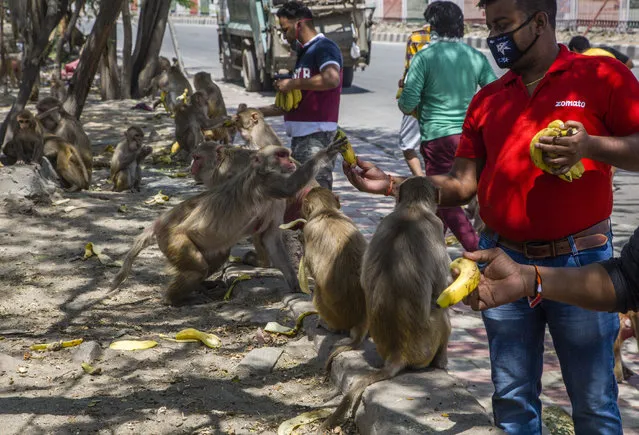
Men give bananas to monkeys gathered on the side of the road as India remains under an unprecedented lockdown over the highly contagious coronavirus (COVID-19) on April 08, 2020 in New Delhi, India. Wild animals, including monkeys, are roaming human settlements in India as people are staying indoors due to the 21-day lockdown. With India's 1.3 billion population and tens of millions of cars off the roads, wildlife is moving towards areas inhabited by humans. Wild animals in many countries have been seen roaming streets. A study says some 60 percent of the new diseases found around the globe every year are zoonotic, meaning they originate in animals and are passed on to humans. COVID-19 is a zoonotic disease that is suspected to have come from the wet markets of Wuhan, China. (Photo by Yawar Nazir/Getty Images)

Men give bananas to monkeys gathered on the side of the road as India remains under an unprecedented lockdown over the highly contagious coronavirus (COVID-19) on April 08, 2020 in New Delhi, India. Wild animals, including monkeys, are roaming human settlements in India as people are staying indoors due to the 21-day lockdown. (Photo by Yawar Nazir/Getty Images)
Details
12 Apr 2020 00:05:00
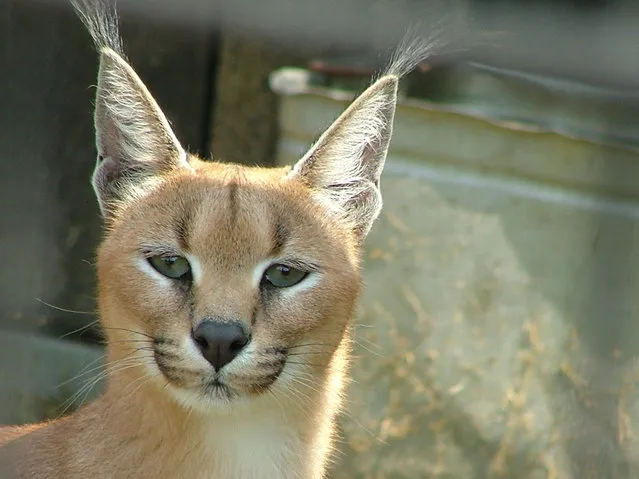
Сaracal - Desert Lynx

The caracal also known as the desert lynx, is a wild cat that is widely distributed across Africa, central Asia and southwest Asia into India. In 2002 the IUCN listed the caracal as Least Concern as it is widespread and relatively common. The felid is considered threatened in north Africa, and rare in the central Asian republics and India.
Details
20 Aug 2013 11:28:00
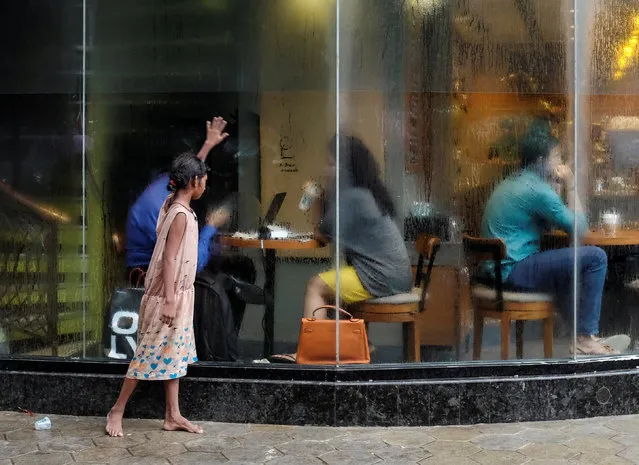
A homeless girl asks for alms outside a coffee shop in Mumbai, India, June 24, 2016. (Photo by Danish Siddiqui/Reuters)

A homeless girl asks for alms outside a coffee shop in Mumbai, India, June 24, 2016. (Photo by Danish Siddiqui/Reuters)
Details
30 Jun 2016 11:46:00
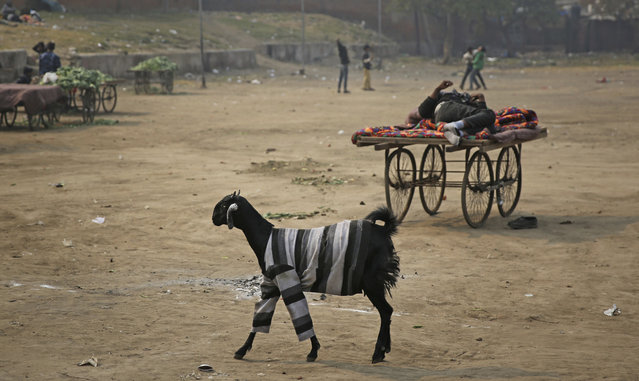
A goat wearing a sweater walks in a field in New Delhi, India, Thursday, January 17, 2019. (Photo by Altaf Qadri/AP Photo)

A goat wearing a sweater walks in a field in New Delhi, India, Thursday, January 17, 2019. (Photo by Altaf Qadri/AP Photo)
Details
20 Jan 2019 00:03:00
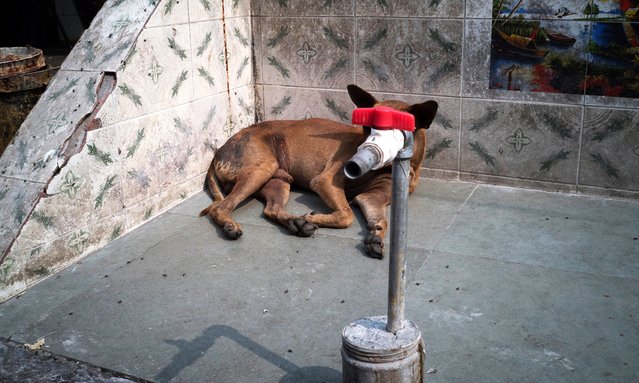
“Unexpected humour”. The Dog and the Faucet, in Kolkata, India on January 2017. (Photo by Pau Buscató/The Guardian)

“Unexpected humour”. The Dog and the Faucet, in Kolkata, India on January 2017. (Photo by Pau Buscató/The Guardian)
Details
13 Oct 2024 03:11:00
Football players help an injured player off the field during training at the Evergrande International Football School near Qingyuan in Guangdong Province. (Photo by Kevin Frayer/Getty Images)

Young Chinese football players help an injured player off the field during training at the Evergrande International Football School on June 12, 2014 near Qingyuan in Guangdong Province, China. The sprawling 167-acre campus is the brainchild of property tycoon Xu Jiayin, whose ambition is to train a generation of young athletes to establish China as a football powerhouse. The school is considered the largest football academy in the world with 2400 students, more than 50 pitches and a squad of Spanish coaches through a partnership with Real Madrid. (Photo by Kevin Frayer/Getty Images)
Details
18 Jun 2014 12:56:00
Larissa Neto, a muse of the Unidos da Tijuca Samba School, poses as she wears a carnival dress in Sao Goncalo near Rio de Janeiro, Brazil, February 3, 2016. (Photo by Ricardo Moraes/Reuters)

Larissa Neto, a muse of the Unidos da Tijuca Samba School, poses as she wears a carnival dress in Sao Goncalo near Rio de Janeiro, Brazil, February 3, 2016. Rio de Janeiro's carnival parades are known the world over for the glitz and glamour, high-tech allegorical floats and shimmering bodies, which battle it out each year for the championship title. Each school is fronted by the Queen of the Drums, who dances alongside the raging percussion, and her court of sparkling, sculpted dancers known as “muses”. (Photo by Ricardo Moraes/Reuters)
Details
05 Feb 2016 10:52:00