Loading...
Done
Tridacna Gigas, or Giant Clams

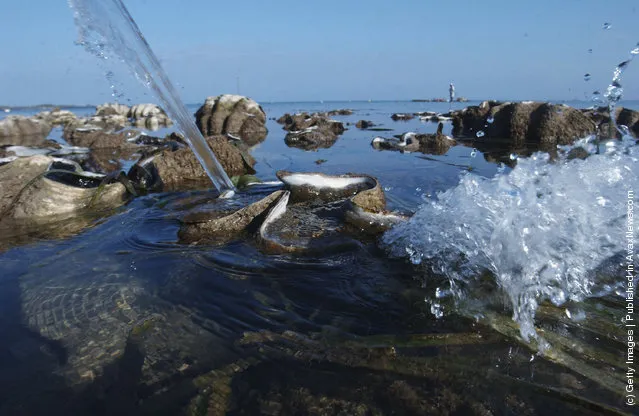
“The giant clam, Tridacna gigas (known as pā’ua in Cook Islands Māori), is the largest living bivalve mollusc. T. gigas is one of the most endangered clam species. It was mentioned as early as 1825 in scientific reports. One of a number of large clam species native to the shallow coral reefs of the South Pacific and Indian oceans, they can weigh more than 200 kilograms (440 lb) measure as much as 120 cm (47 in) across, and have an average lifespan in the wild of 100 years or more”. – Wikipedia

Photo: Tridacna Gigas, or Giant Clams spew water as a traditional fisherman passes by a small sanctuary on January 23, 2004 near Bolinao in the Northern Philippines. The clams, prime builders for coral reefs and providing shelter for spawning fish and other marine life, are exposed by low tides in the sanctuary. Overfishing and pollution throughout the country are not only threatening food security, but are also starting to choke one of the few working clam sanctuaries in the world. (Photo by David Greedy/Getty Images)
Details
01 Oct 2011 13:10:00
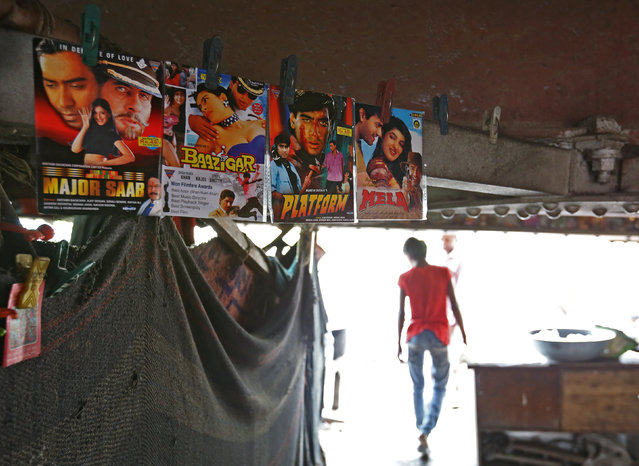
Films that are being screened are advertised in a makeshift cinema located under a bridge in the old quarters of Delhi, India May 25, 2016. (Photo by Cathal McNaughton/Reuters)

Films that are being screened are advertised in a makeshift cinema located under a bridge in the old quarters of Delhi, India May 25, 2016. A makeshift cinema hall under a 140-year-old bridge in the Indian capital is allowing poor rickshaw pullers and migrant labourers to escape daily hardship and sweltering heat into a world of Bollywood song, dance and romance. With the rusty iron floor of the bridge as its ceiling and some old rags acquired on the cheap from a nearby crematorium serving as curtains and floor mats, the cinema shows four films a day. (Photo by Cathal McNaughton/Reuters)
Details
28 May 2016 12:21:00
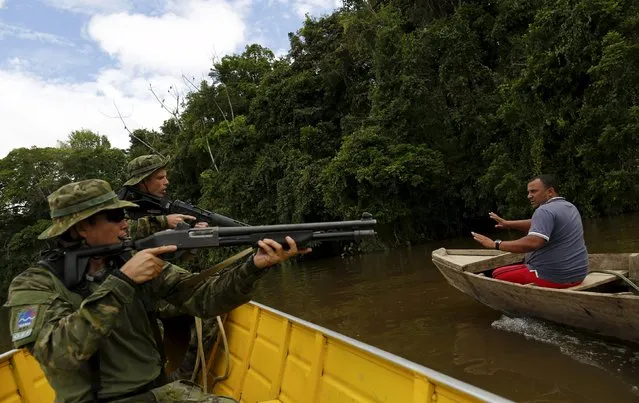
A gold prospector is detained by agents of Brazil’s environmental agency on the Uraricoera River during an operation against illegal gold mining on indigenous land, in the heart of the Amazon rainforest, in Roraima state, Brazil April 15, 2016. (Photo by Bruno Kelly/Reuters)

A gold prospector is detained by agents of Brazil’s environmental agency on the Uraricoera River during an operation against illegal gold mining on indigenous land, in the heart of the Amazon rainforest, in Roraima state, Brazil April 15, 2016. At over 9.5 million hectares, the Yanomami territory is twice the size of Switzerland and home to around 27,000 indians. The land has legally belonged to the Yanomami since 1992, but illegal miners continue to plague the area, sawing down trees and poisoning rivers with mercury in their lust for gold. (Photo by Bruno Kelly/Reuters)
Details
27 Apr 2016 10:01:00
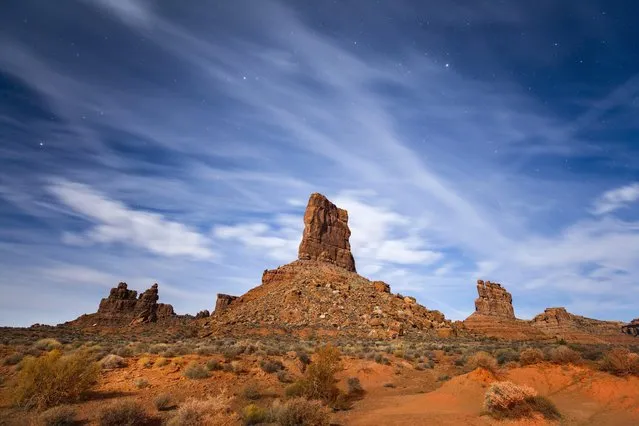
Moonlight illuminates sandstone buttes in the Valley of the Gods in the proposed Bear Ears National Monument near Mexican Hat, Utah, USA, 12 November 2016. (Photo by Jim Lo Scalzo/EPA)

Moonlight illuminates sandstone buttes in the Valley of the Gods in the proposed Bear Ears National Monument near Mexican Hat, Utah, USA, 12 November 2016. In October 2015, a coalition of five Indian nations, including the Hopi, Ute, and Navajo, formally proposed the monument, attempting to preserve the parcel's 100,000 archeological sites from ongoing looting and grave robbing. Less than two months before handing over the White House to President Elect Trump, President Obama must decide if it's worth the political capital to designate Bear Ears a national monument. (Photo by Jim Lo Scalzo/EPA)
Details
07 Dec 2016 11:53:00


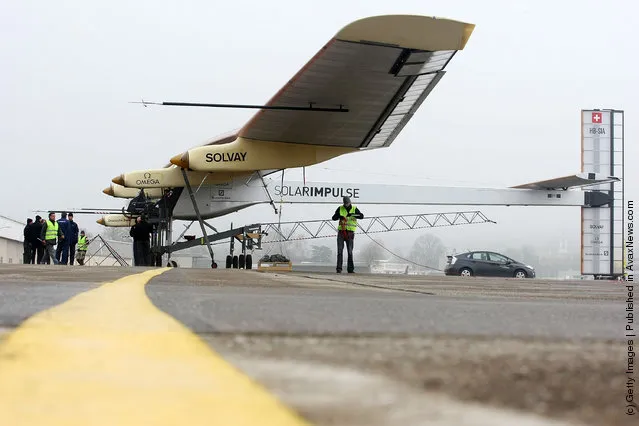
“Solar Impulse is a European long-range solar powered plane project being undertaken by Bertrand Piccard and André Borschberg. The project eventually hopes to succeed in the first circling of the earth with a piloted fixed-wing aircraft using only solar power. The first aircraft, bearing the Swiss aircraft registration code of HB-SIA, is a single-seater, capable of taking off under its own power, and intended to remain airborne up to 36 hours. This aircraft first flew an entire diurnal solar cycle, including nearly 9 hours of night flying, in a 26-hour flight on 7–8 July 2010”. – Wikipedia


Photo: Workers prepare the Solar Impulse airplane HB-SIA for a first runway test on November 19, 2009 in Dubendorf, Switzerland. Solar Impulse chairman Bertrand Piccard, psychatrist and aeronaut, who made the first non-stop round-the-world balloon flight, and CEO and former fighter pilot Andrй Borschberg plan a round-the-world flight, driven only by solar energy, for 2012. (Photo by Johannes Simon/Getty Images)
Details
16 May 2011 08:13:00
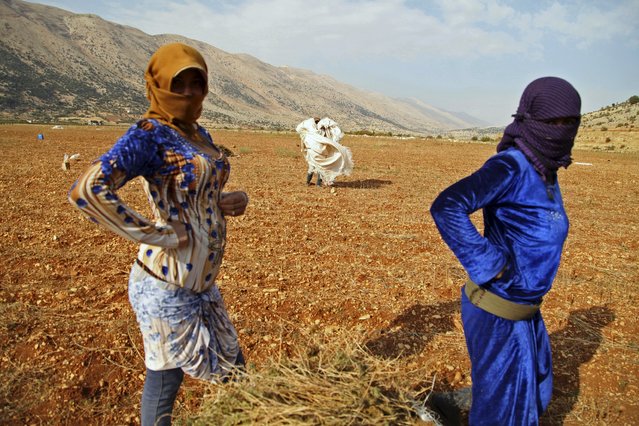
Aisha, 15, (L) (who asked to withhold her last name), a Syrian refugee from Raqqa, waits with a fellow refugee while harvesting cannabis in the Bekaa valley, Lebanon October 19, 2015. Syrian refugees work to harvest and process spiky-leafed cannabis plants in neighbouring Lebanon’s Bekaa Valley. (Photo by Alia Haju/Reuters)

Aisha, 15, (L) (who asked to withhold her last name), a Syrian refugee from Raqqa, waits with a fellow refugee while harvesting cannabis in the Bekaa valley, Lebanon October 19, 2015. Syrian refugees work to harvest and process spiky-leafed cannabis plants in neighbouring Lebanon’s Bekaa Valley. Often farmers of cotton and wheat back home in Raqqa province – now the de facto capital of Islamic State – the conflict in Syria drove them to seek safety in a region where Syrian migrant workers used to spend a few months a year before returning home. (Photo by Alia Haju/Reuters)
Details
24 Dec 2015 08:03:00
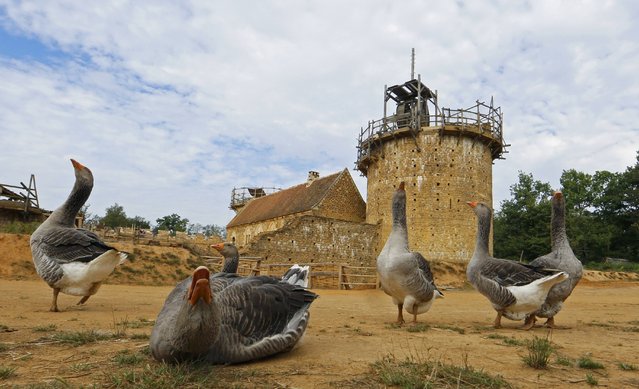
A view of the construction site of the Chateau de Guedelon near Treigny in the Burgundy region of France, September 13, 2016. Blacksmiths, stonemasons and quarry men are hard at work in a Burgundy forest building a 13th-century-style castle using the most basic tools and materials, replicating the methods used hundreds of years ago to better understand them. Forgoing all modern technology, workers use hammers to break stones and forge iron, operate wooden wheels to hoist their materials up to where they are needed, and rely on a quarry for stone, clay and sand as they build up a castle from scratch. Construction on Guedelon Castle in central France began in 1997 after an archaeological survey revealed a medieval fortress hidden inside the walls of nearby Chateau de Saint-Fargeau. Those behind the project hope to answer questions about medieval construction and provide lessons on sustainable building. (Photo by Jacky Naegelen/Reuters)

A view of the construction site of the Chateau de Guedelon near Treigny in the Burgundy region of France, September 13, 2016. Blacksmiths, stonemasons and quarry men are hard at work in a Burgundy forest building a 13th-century-style castle using the most basic tools and materials, replicating the methods used hundreds of years ago to better understand them. (Photo by Jacky Naegelen/Reuters)
Details
15 Sep 2016 09:43:00
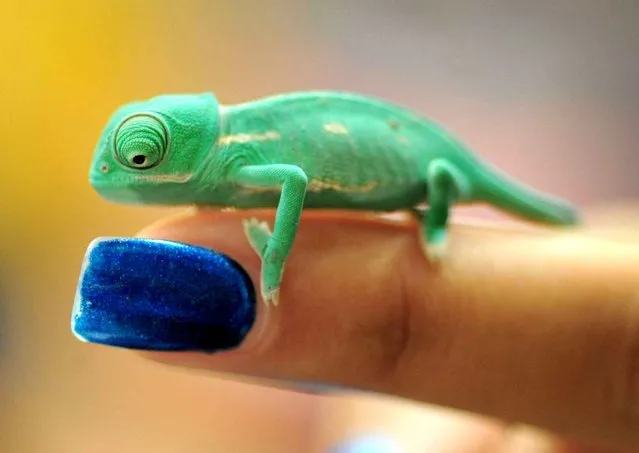
A one month old Turquoise colored Green Veiled Chameleon perches on a finger in the Cardin's Chameleons boothat Repticon 2014 Sunday, August 3, 2014 in Jacksonville, Fla. The vendor specializes in captive bred and born Veiled Chameleons and this particular specimen cost $40.00. (Photo by Bob Self/AP Photo/The Florida Times-Union)

A one month old Turquoise colored Green Veiled Chameleon perches on a finger in the Cardin's Chameleons boothat Repticon 2014 Sunday, August 3, 2014 in Jacksonville, Fla. The vendor specializes in captive bred and born Veiled Chameleons and this particular specimen cost $40.00. The Repticon reptile and Exotic Animal show made its stop in Jacksonville over Saturday and Sunday offering a variety of cold blooded critters and related supplies for sale at the University Center on the University of North Florida campus. The show, which travels nationally stops in Jacksonville several times a year according to event vendor team leader Patty Healey. (Photo by Bob Self/AP Photo/The Florida Times-Union)
Details
09 Aug 2014 11:36:00