Loading...
Done
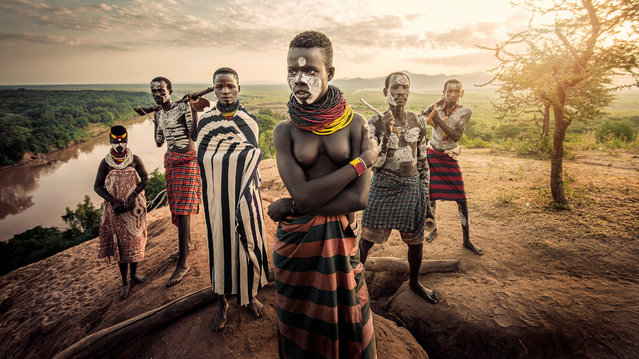
“People of the River”. This is a Karo tribe family; father, mother, two sisters and two brothers. The tribe, who live along the Omo River in east Africa, incorporate rich symbolism into their rituals by using ornate body art, headdresses and body scarification to express beauty and significance. (Photo by Jatenipat Ketpradit/International Portrait Photographer of the Year)

“People of the River”. This is a Karo tribe family; father, mother, two sisters and two brothers. The tribe, who live along the Omo River in east Africa, incorporate rich symbolism into their rituals by using ornate body art, headdresses and body scarification to express beauty and significance. (Photo by Jatenipat Ketpradit/International Portrait Photographer of the Year)
Details
04 Jul 2021 09:39:00
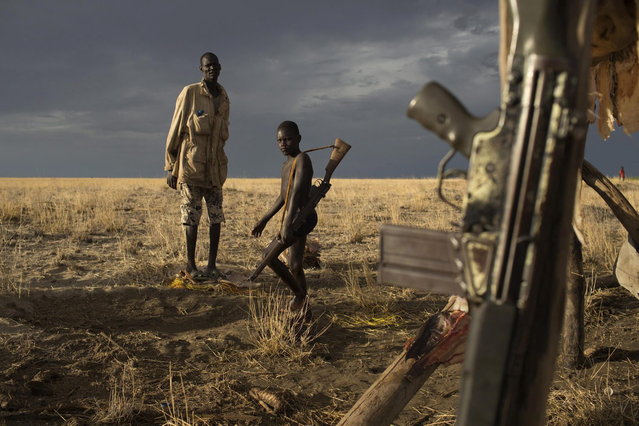
A Turkana man and a boy carrying a gun look on as a G3 battle rifle hangs from a structure used to dry fish at a fishing camp on the shores of Lake Turkana, some kilometres from Todonyang near the Kenya-Ethiopia border in northwestern Kenya October 12, 2013. (Photo by Siegfried Modola/Reuters)

A Turkana man and a boy carrying a gun look on as a G3 battle rifle hangs from a structure used to dry fish at a fishing camp on the shores of Lake Turkana, some kilometres from Todonyang near the Kenya-Ethiopia border in northwestern Kenya October 12, 2013The Turkana are traditionally nomadic pastoralists, but they have seen the pasture that they need to feed their herds suffer from recurring droughts and many have turned to fishing. However, Lake Turkana is overfished, and scarcity of food and pastureland is fuelling long-standing conflict with Ethiopian indigenous Dhaasanac, who have seen grazing grounds squeezed by large-scale government agricultural schemes in southern Ethiopia. The Dhaasanac now venture ever deeper into Kenyan territory in search of fish and grass, clashing with neighbours. Fighting between the communities has a long history, but the conflict has become ever more fatal as automatic weapons from other regional conflicts seep into the area. While the Turkana region is short of basics like grass and ground-water, it contains other resources including oil reserves and massive, newly discovered underground aquifers. (Photo by Siegfried Modola/Reuters)

Details
05 Dec 2013 12:08:00
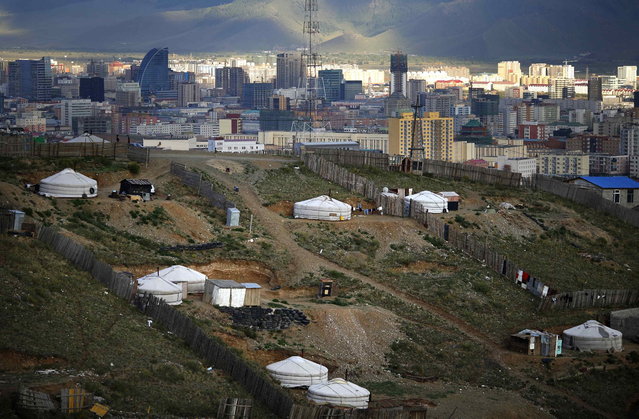
Gers, traditional Mongolian tents, are seen on a hill in an area known as a ger district in Ulan Bator June 26, 2013. (Photo by Carlos Barria/Reuters)

Gers, traditional Mongolian tents, are seen on a hill in an area known as a ger district in Ulan Bator June 26, 2013. Approximately 60 percent of the population of Ulan Bator live in settlements known as ger districts and in many cases residents have limited access to basic services such as water and sanitation. According to a 2010 National Population Center census, every year between thirty and forty thousand people migrate from the countryside to the capital Ulan Bator. Ger districts in the city have been expanding rapidly in recent years. Mongolia is the world's least densely populated country, with 2.8 million people spread across an area around three times the size of France. (Photo by Carlos Barria/Reuters)
Details
11 Aug 2013 11:45:00
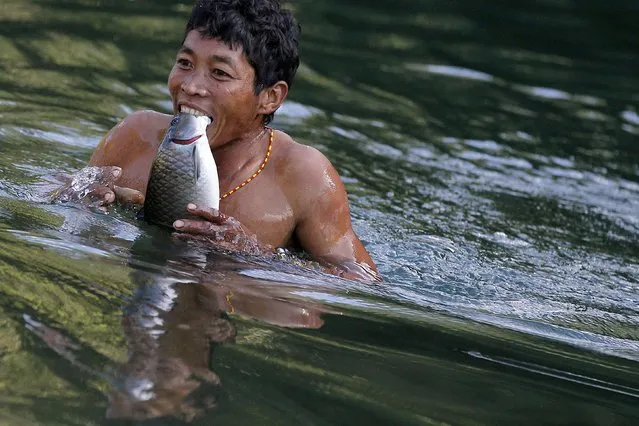
A Naga man carries fish in his teeth after it was stunned by dynamite, which fishermen threw in a creek between Donhe and Lahe township, in the Naga Self-Administered Zone in northwest Myanmar December 27, 2014. (Photo by Soe Zeya Tun/Reuters)

A Naga man carries fish in his teeth after it was stunned by dynamite, which fishermen threw in a creek between Donhe and Lahe township, in the Naga Self-Administered Zone in northwest Myanmar December 27, 2014. (Photo by Soe Zeya Tun/Reuters)
Details
11 Jan 2015 13:18:00
A visitor takes in a view of the downtown district from Twin Peaks on Friday, January 9, 2015, in San Francisco. (Photo by Marcio Jose Sanchez/AP Photo)

A visitor takes in a view of the downtown district from Twin Peaks on Friday, January 9, 2015, in San Francisco. (Photo by Marcio Jose Sanchez/AP Photo)
Details
19 Jan 2015 13:05:00
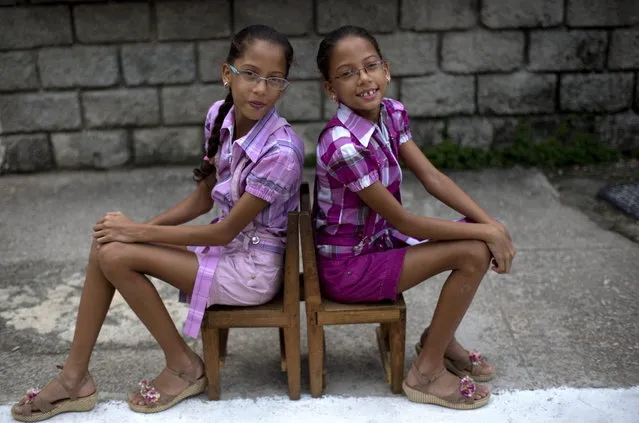
In this Sept. 29, 2013 photo, nine-year-old twin sisters Camila, left, and Carla Rodriguez pose for a portrait along their street in Havana, Cuba. 12 sets of twins live along two consecutive blocks in western Havana, ranging in age from newborns to senior citizens. “We love living on this block because we have twin friends”, said Carla. (Photo by Ramon Espinosa/AP Photo)

A street in the Cuban capital, Havana, is home to 12 sets of twins, ranging from toddlers to senior citizens. Some say it could be something in the water. Others point to a tree with mystical significance for locals. And maybe it's just chance. Photo: In this September 29, 2013 photo, nine-year-old twin sisters Camila, left, and Carla Rodriguez pose for a portrait along their street in Havana, Cuba. 12 sets of twins live along two consecutive blocks in western Havana, ranging in age from newborns to senior citizens. “We love living on this block because we have twin friends”, said Carla. (Photo by Ramon Espinosa/AP Photo)
Details
07 Oct 2013 06:44:00


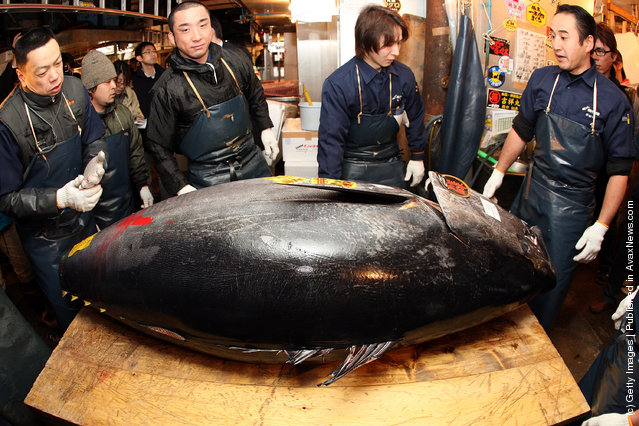
“The Tokyo Metropolitan Central Wholesale Market, commonly known as the Tsukiji Market, is the biggest wholesale fish and seafood market in the world and also one of the largest wholesale food markets of any kind. The market is located in Tsukiji in central Tokyo, and is a major attraction for foreign visitors”. – Wikipedia

Photo: A 232kg blue-fin tuna is displayed during the new year's first auction at the Tsukiji fish market on January 5, 2010 in Tokyo, Japan. (Photo by Koichi Kamoshida/Getty Images)
Details
19 Jul 2011 12:29:00
In this January 6, 2017 photo, transgender inmates get a security check from female officers before entering their cell at Pattaya Remand Prison in Pattaya, Chonburi province, Thailand. (Photo by Sakchai Lalit/AP Photo)

In this January 6, 2017 photo, transgender inmates get a security check from female officers before entering their cell at Pattaya Remand Prison in Pattaya, Chonburi province, Thailand. The prison separates lesbian, gay, bisexual and transgender prisoners from other inmates, a little-known policy despite being in place nationwide since 1993, according to the Department of Corrections. (Photo by Sakchai Lalit/AP Photo)
Details
30 Jan 2017 10:01:00