Loading...
Done
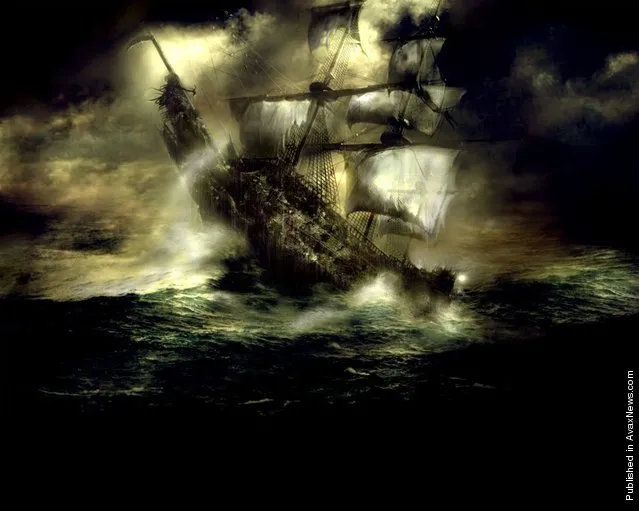
Ocean voyage

Do you think that history is a science? Well, not exactly. First, and foremost, history is the state's “legend of wars”, it’s official regalia. Of course, public historians are not interested in scientific truth – quite the opposite. In this respect, any attempt to present a state’s history as altruistic and benevolent as possible is welcomed and encouraged – as opposed to any revisionism attempts that may be more accurate. In this matter, Chinese have surpassed us all – they revised in highly creative manner (but rather shamelessly) the technology already invented by Europeans, a process that resulted in oldest state on the planet. Here is an interesting paradox: ask any sinologist about the Middle Kingdom during second century B.C., and he will describe it to you in such a vivid manner as if he has been living there all his life – but as soon as you will ask him to describe Chinese history in the 19-20th centuries… let's say, his eagerness will be greatly diminished. However, we will discuss China in a different article, and in the meantime we will try to understand how exactly historic “legend of wars” is formed and functions – based on a specific and well-known example. A great example is Ferdinand Magellan's first voyage around the world.
Details
14 Nov 2011 09:11:00
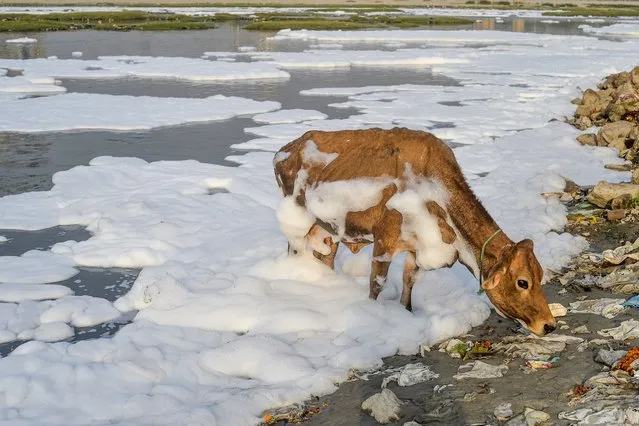
A cow covered with foam scavenges in the waste left on the banks of the polluted Yamuna river in New Delhi on October 10, 2020. (Photo by Sajjad Hussain/AFP Photo)

A cow covered with foam scavenges in the waste left on the banks of the polluted Yamuna river in New Delhi on October 10, 2020. (Photo by Sajjad Hussain/AFP Photo)
Details
21 Oct 2020 00:03:00
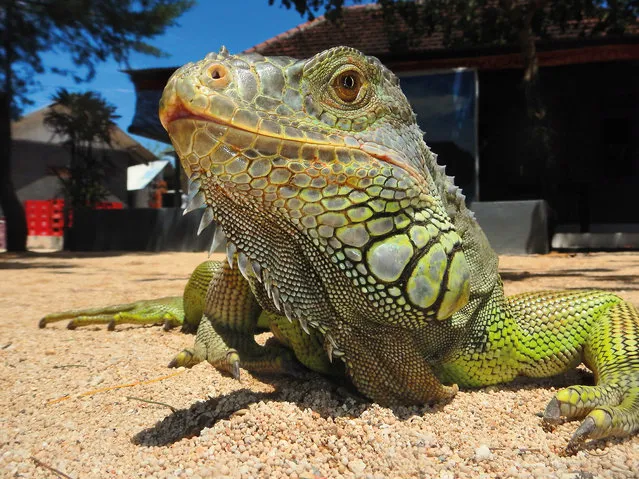
An iguana in Bali helped Julij Kopilović, age eight, from Slovenia, earn second runner-up in Amazing Animals. (Photo by Julij Kopilović/National Geographic)

An iguana in Bali helped Julij Kopilović, age eight, from Slovenia, earn second runner-up in Amazing Animals. (Photo by Julij Kopilović/National Geographic)
Details
04 Feb 2016 11:15:00
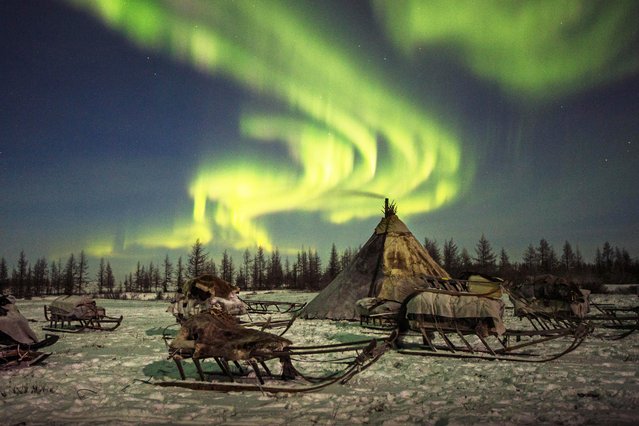
An empty camp is shown beneath a colourful sky in Siberia, December 2016. (Photo by Timothy Allen/Barcroft Productions)

A British photographer has captured life at the “edge of the world”. Timothy Allen, best known for his work on BBC's Human Planet, trekked through the freezing Siberian wilderness for 16 days as he joined part of an 800km migration of reindeer in the Yamal-Nenets region – a name that roughly translates to “edge of the world”. The stunning pictures feature the nomadic Nenets tribe, who drink blood to survive in -45°C temperatures. Timothy's epic journey, which will be revealed in an eight-minute documentary on Animal Planet USA, saw him travel across the bleak terrain of the frozen Ob River with the Nenets people in December last year. Here: An empty camp is shown beneath a colourful sky in Siberia, December 2016. (Photo by Timothy Allen/Barcroft Productions)
Details
19 Sep 2017 07:48:00


Everyone wants to get something for nothing - whether it's a lucky upgrade that means you can turn left when you get on a plane instead or heading off into the economy seats, or even getting a few extra features thrown in for free when you buy a new car.

As some of the sharpest businesses around, no-one understands this quite as well as casinos and that's why they all have a system that they call comps. It's short for "complimentary offers" and these are special treats specially designed to reward you for your loyalty to the casino in question. They're basically bonuses.
Details
30 Jan 2018 23:53:00
Guinness Rishi – The Human Flag

67-year-old Guinness Rishi constantly tries to make his family and the entire Indian people by constantly setting new records. He previously became father of the world’s oldest adoptee, after taking custody of his 61-year-old brother-in-law, and built the tallest sugar-cube tower in the world, which stood at 64 inches.
Details
09 Oct 2014 12:16:00
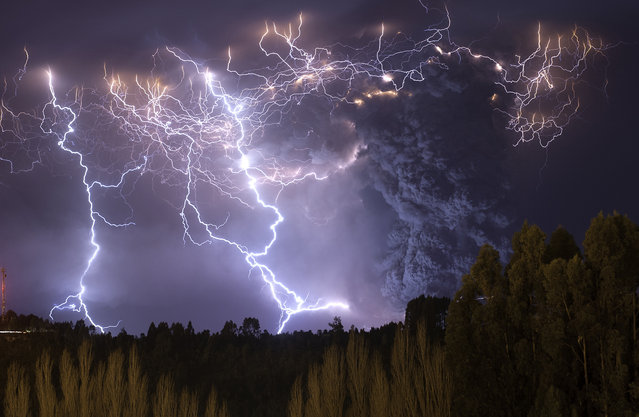
The eruption of Cordon Caulle began on June 4, 2011, located in the Region of Los Rios in Chile. For about 12 months, people and animals became accustomed to living with the daily fall of ash, which also caused problems in the air traffic in South America. The explosions and lightning during first days of the eruption could be seen from hundreds of miles around. This photograph was taken on the second night of eruption from the town of Lago Ranco. (Photo and caption by Francisco Negroni/National Geographic Traveler Photo Contest)

The eruption of Cordon Caulle began on June 4, 2011, located in the Region of Los Rios in Chile. For about 12 months, people and animals became accustomed to living with the daily fall of ash, which also caused problems in the air traffic in South America. The explosions and lightning during first days of the eruption could be seen from hundreds of miles around. This photograph was taken on the second night of eruption from the town of Lago Ranco. (Photo and caption by Francisco Negroni/National Geographic Traveler Photo Contest)

ATTENTION! All pictures are presented in high resolution. To see Hi-Res images – just TWICE click on any picture. In other words, click small picture – opens the BIG picture. Click BIG picture – opens VERY BIG picture.
Details
23 Jun 2013 11:24:00
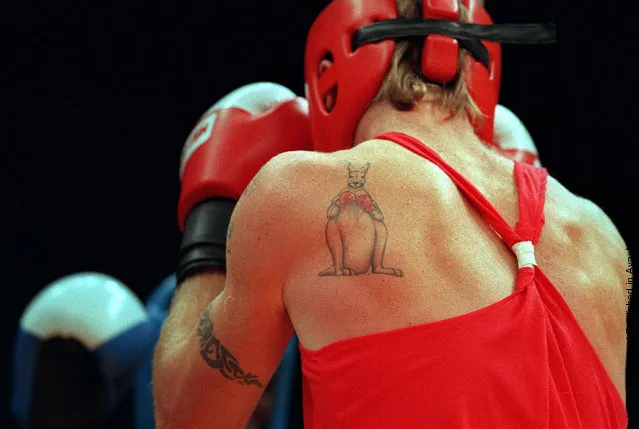
tattoo

Paul Doherty of Australia with tatoo against Timothy Mareke of Solomon Island during the men's 75kg class at the Sydney International Invitation Boxing held at the Sydney Exhibition Centre, Darling Harbour, Sydney, Australia.
Details
13 Apr 2011 21:23:00