Loading...
Done
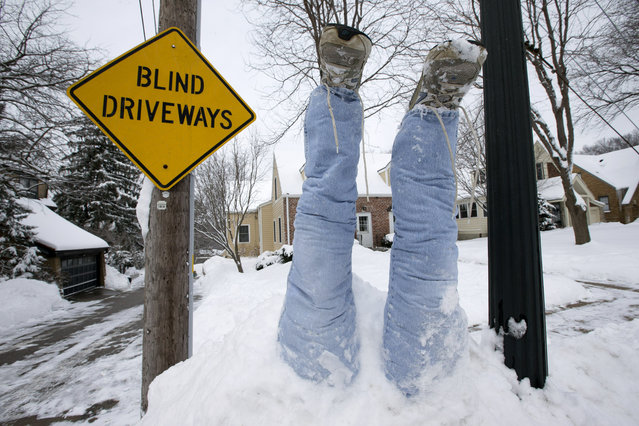
An upside-down pair of pants is seen atop a mound of snow, Wednesday, February 20, 2019, the result of yet another snow storm to hit Omaha, Neb. The latest winter storm dumped more snow on top of the existing snow, creating a problem of what to do with all the cleared snow. (Photo by Nati Harnik/AP Photo)

An upside-down pair of pants is seen atop a mound of snow, Wednesday, February 20, 2019, the result of yet another snow storm to hit Omaha, Neb. The latest winter storm dumped more snow on top of the existing snow, creating a problem of what to do with all the cleared snow. (Photo by Nati Harnik/AP Photo)
Details
07 Mar 2019 00:01:00
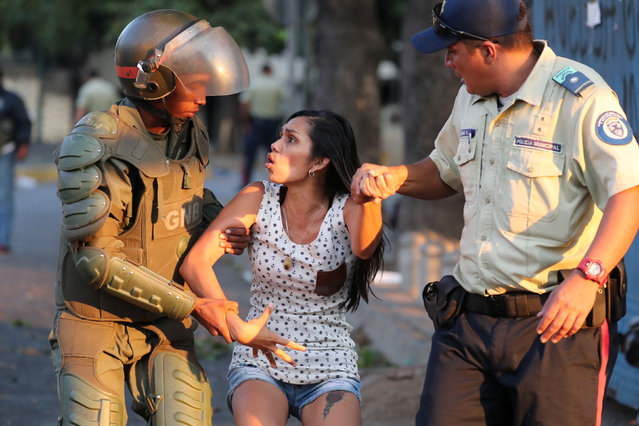
A woman is detained by security forces after looting broke out during an ongoing blackout in Caracas, Venezuela, March 10, 2019. (Photo by Ivan Alvarado/Reuters)

A woman is detained by security forces after looting broke out during an ongoing blackout in Caracas, Venezuela, March 10, 2019. (Photo by Ivan Alvarado/Reuters)
Details
12 Mar 2019 00:05:00
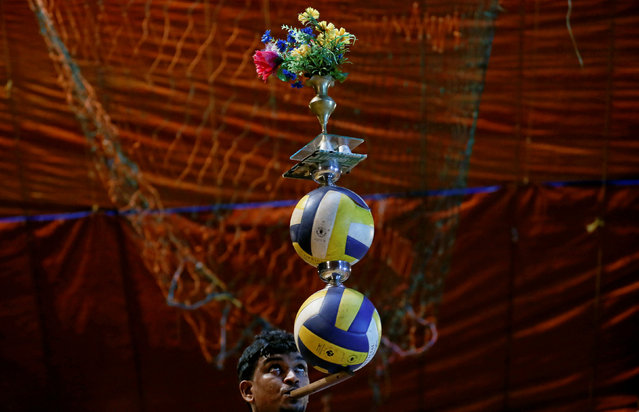
A member of Sakura circus team performs during the second day of a one week show in Padukka, near Colombo, Sri Lanka November 28, 2016. (Photo by Dinuka Liyanawatte/Reuters)

A member of Sakura circus team performs during the second day of a one week show in Padukka, near Colombo, Sri Lanka November 28, 2016. (Photo by Dinuka Liyanawatte/Reuters)
Details
29 Nov 2016 14:12:00
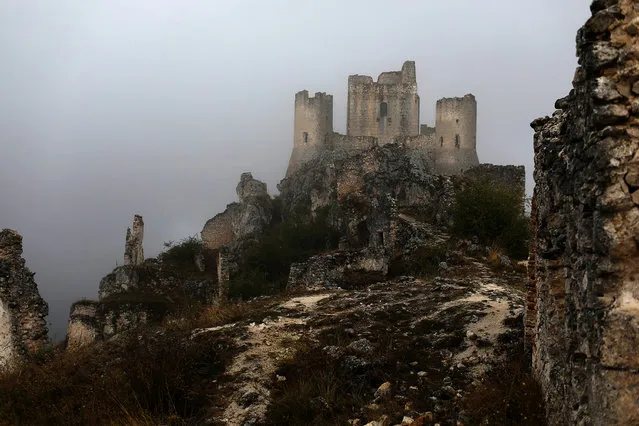
The ruins of a castle stand above the town of Rocca Calascio, close to Santo Stefano di Sessanio in the province of L'Aquila in Abruzzo, inside the national park of the Gran Sasso e Monti della Laga, Italy, September 7, 2016. (Photo by Siegfried Modola/Reuters)

The ruins of a castle stand above the town of Rocca Calascio, close to Santo Stefano di Sessanio in the province of L'Aquila in Abruzzo, inside the national park of the Gran Sasso e Monti della Laga, Italy, September 7, 2016. (Photo by Siegfried Modola/Reuters)
Details
06 Nov 2016 10:56:00
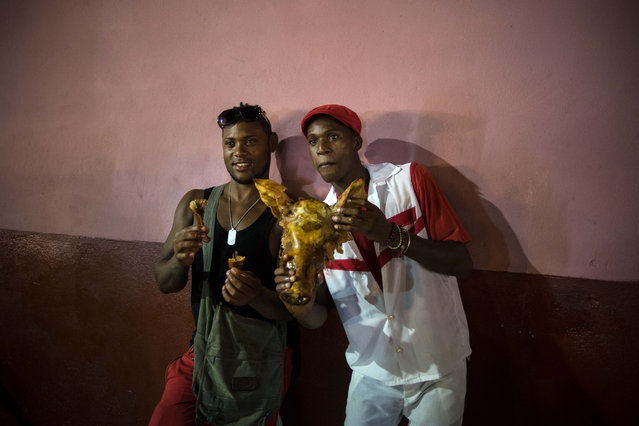
In this July 25, 2015 photo, youth eat a cooked pig's head as they wait for the start of carnival in Santiago, Cuba. (Photo by Ramon Espinosa/AP Photo)

In this July 25, 2015 photo, youth eat a cooked pig's head as they wait for the start of carnival in Santiago, Cuba. (Photo by Ramon Espinosa/AP Photo)
Details
15 Aug 2015 11:00:00
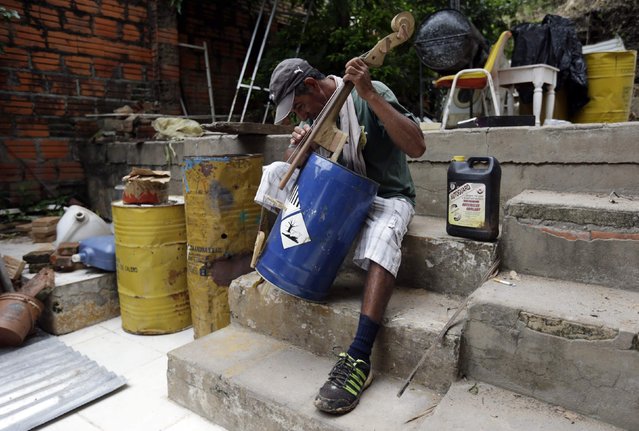
Recycling artist Nicolas Gomez checks the strings of a cello he has made out of an oil barrel for the Orchestra of Recycled Instruments of Cateura, in Cateura, Paraguay February 13, 2015. (Photo by Jorge Adorno/Reuters)

Recycling artist Nicolas Gomez checks the strings of a cello he has made out of an oil barrel for the Orchestra of Recycled Instruments of Cateura, in Cateura, Paraguay February 13, 2015. Saudi Arabia's oil exports have risen in February in response to stronger demand from customers. As OPEC's top producer battles for market share Reuters photographers around the globe have been photographing oil barrels to document how they are utilised once the fuel has been used. (Photo by Jorge Adorno/Reuters)
Details
21 Feb 2015 10:39:00
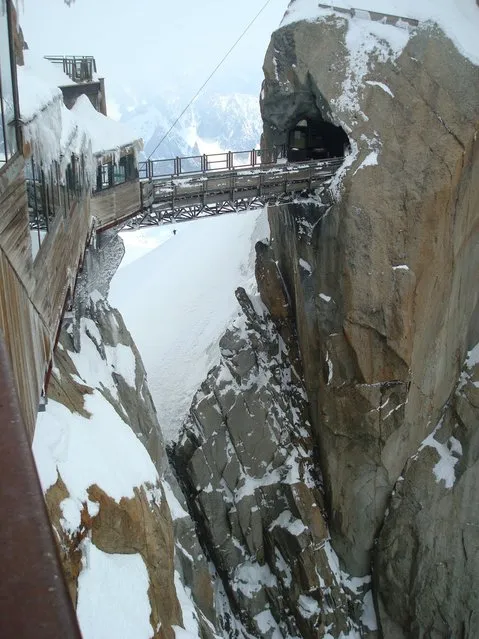
Aiguille du Midi In The French Alps

The name “Aiguille du Midi” translates literally as “Needle of the Noon” or “Needle of the South”. It gets its name from its tapered form and from its position when viewed from Chamonix: it approximately indicates noon when the sun passes over its summit.
Details
27 Dec 2013 10:52:00
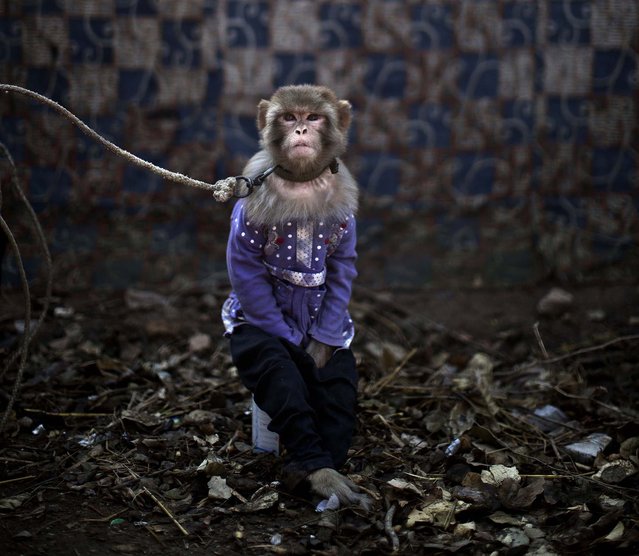
In this Tuesday, February 11, 2014, photo, a trained monkey, that makes a living for her Pakistani owner by performing to a crowd in public and private places, sits held by a leash, in Rawalpindi, Pakistan. For Pakistanis who raise and train the monkeys they are an important source of income in an impoverished country, and they form a strong bond with the animals. The monkeys are usually captured in the wild when they are babies and then trained. A trained monkey can fetch 20,000 to 30,000 rupees ($190 to $285). (Photo by Muhammed Muheisen/Associated Press)

In this Tuesday, February 11, 2014, photo, a trained monkey, that makes a living for her Pakistani owner by performing to a crowd in public and private places, sits held by a leash, in Rawalpindi, Pakistan. For Pakistanis who raise and train the monkeys they are an important source of income in an impoverished country, and they form a strong bond with the animals. The monkeys are usually captured in the wild when they are babies and then trained. A trained monkey can fetch 20,000 to 30,000 rupees ($190 to $285). (Photo by Muhammed Muheisen/Associated Press)
Details
23 Feb 2014 09:50:00