A participant runs towards the waters of the North Sea during the annual New Year's plunge event in Ostend, Belgium, January 2, 2016. (Photo by Francois Lenoir/Reuters)
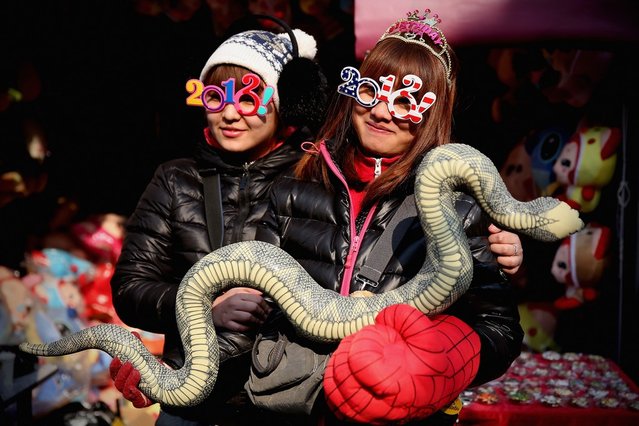
The vendors show the toy of snake at the Spring Festival Temple Fair for celebrating Chinese Lunar New Year of Snake at the Temple of Earth park on February 9, 2013 in Beijing, China. The Chinese Lunar New Year of Snake also known as the Spring Festival, which is based on the Lunisolar Chinese calendar, is celebrated from the first day of the first month of the lunar year and ends with Lantern Festival on the Fifteenth day. (Photo by Feng Li)
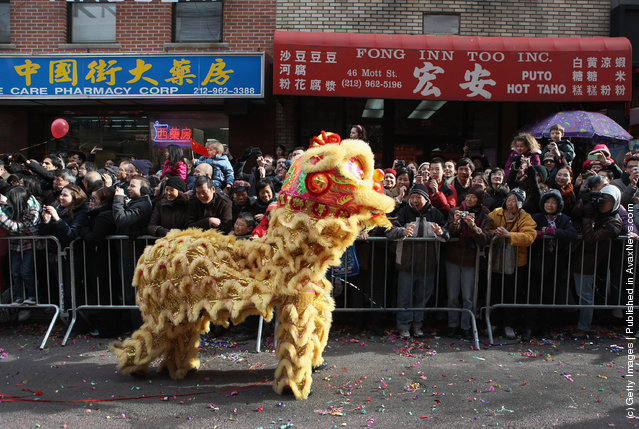
People line the streets as a dragon passes by during the Chinese New Year parade on January 29, 2012 in New York City. Thousands of people turned out to see the event which celebrated the Year of the Dragon. (Photo by John Moore/Getty Images)
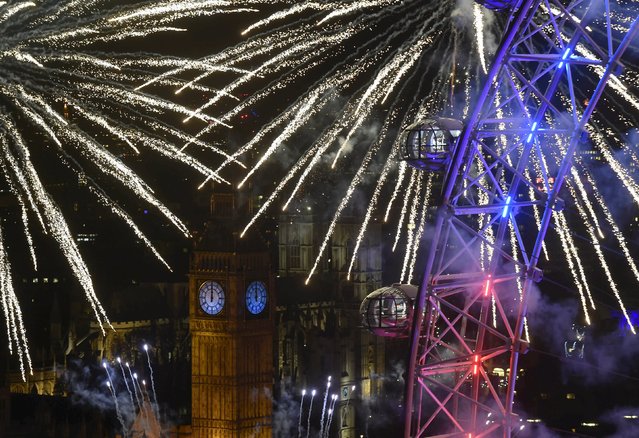
Fireworks explode around the London Eye wheel, the Big Ben clock tower and the Houses of Parliament to mark the beginning of the New Year in London, Britain, January 1, 2016. (Photo by Toby Melville/Reuters)
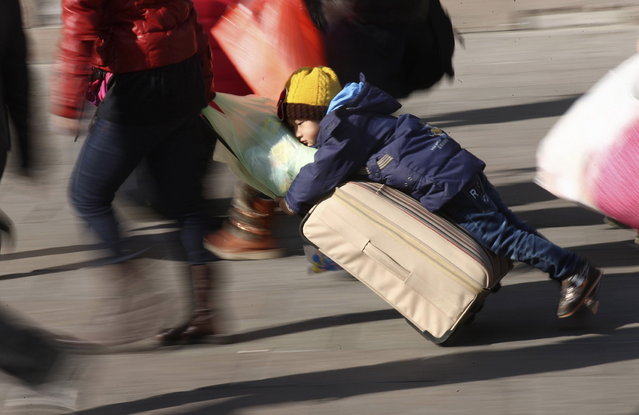
A person drags a suitcase as a boy clings to it on a square in front of a railway station ahead of the Chinese Lunar New Year in Qingdao, Shandong province, January 28, 2014. About 3.62 billion trips will be made during the 40-day Spring Festival travel rush, which started from January 16, reported Xinhua News Agency citing a government official. (Photo by Reuters/China Daily)
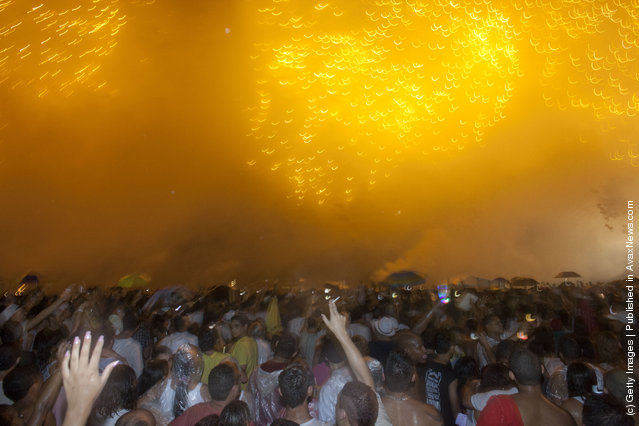
Brazilians celebrate at the annual New Year's Eve beach party on December 31, 2011 for the Copacabana Reveillon in Rio De Janeiro, Brazil. (Photo by Konrad Fiedler/Getty Images)
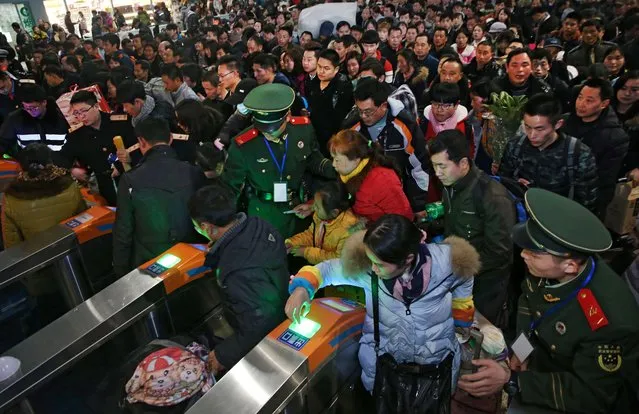
Chinese paramilitary guards monitoring passengers as they head to their train to travel to their hometowns for the “Spring Festival” or Lunar New Year at Nantong Railway Station in Jiangsu province, near Shanghai Travellers taking part in the world' s largest annual human migration must be home by January 27 to usher in the new year on January 28. (Photo by AFP Photo/Stringer)