Loading...
Done
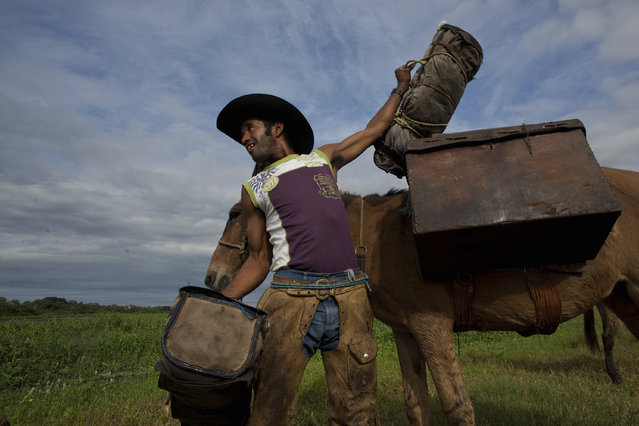
In this May 17, 2017 photo, cowboy cook Odair Batista carries a case with food in Corumba, the Pantanal wetlands of Mato Grosso do Sul state, Brazil. Dressed with leather chaps on top of their jeans, stetson hats and a machete attached to their waists, before setting off, the men finish their breakfast with Terere, an herbal “mate” beverage served ice cold in an ox drinking horn. (Photo by Eraldo Peres/AP Photo)

In this May 17, 2017 photo, cowboy cook Odair Batista carries a case with food in Corumba, the Pantanal wetlands of Mato Grosso do Sul state, Brazil. Dressed with leather chaps on top of their jeans, stetson hats and a machete attached to their waists, before setting off, the men finish their breakfast with Terere, an herbal “mate” beverage served ice cold in an ox drinking horn. (Photo by Eraldo Peres/AP Photo)
Details
12 Jun 2017 09:00:00
Flamingoes in Laguna Colorada, Altiplano, Bolivia, South America in 2018. (Photo by Oksana Belikova/Rex Features/Shutterstock)

Flamingoes in Laguna Colorada, Altiplano, Bolivia, South America in 2018. (Photo by Oksana Belikova/Rex Features/Shutterstock)
Details
06 Aug 2023 04:24:00
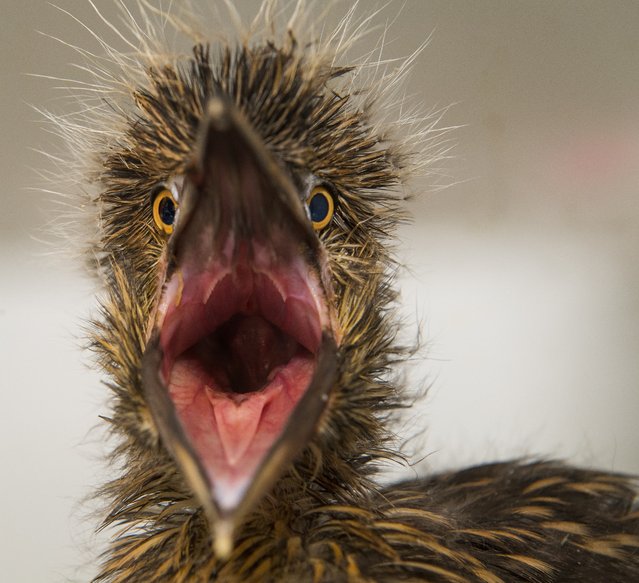
A baby Black-crowned Night Heron squawks in its incubator while being cared for at City Wildlife rescue and rehabilitation center in Washington, DC on May 31, 2017. The heron is one of several that have been brought to CW by the staff at The National Zoo over the past few years. The heron is a native bird and has made an established rookery inside the zoo grounds over a hundred years ago.  Every year at this time, some of the chicks get pushed or fall out of the nest and require human care.  Because the birds are native and not part of the Smithsonian collection, they partnered with CW to rehabilitate the herons for re-release back to the flock inside Zoo. They're reintroduced back to their flock so that they can migrate together in the Fall. The Black-crowned heron usually migrates from the DC area down to southeast North Carolina, some going as far as Jacksonville, FL in winter. The Black-crowned heron is the species of greatest conservation need in the District of Columbia because their numbers are in such rapid decline due to habitat loss. (Photo Linda Davidson/The Washington Post)

A baby Black-crowned Night Heron squawks in its incubator while being cared for at City Wildlife rescue and rehabilitation center in Washington, DC on May 31, 2017. The heron is one of several that have been brought to CW by the staff at The National Zoo over the past few years. (Photo Linda Davidson/The Washington Post)
Details
04 Jun 2017 08:04:00
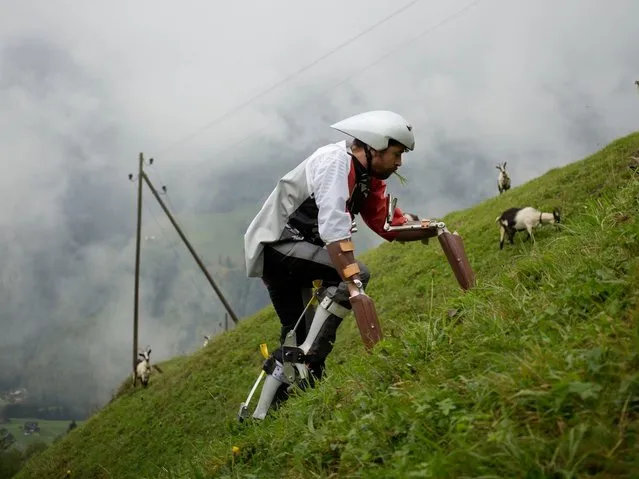
Thomas Thwaites Tried To Live As A Goat

Thomas Thwaites, a 34-year-old researcher from London, has spent the past year creating prosthetics that allow him to roam around on all fours like goat.
Details
19 Aug 2015 14:27:00
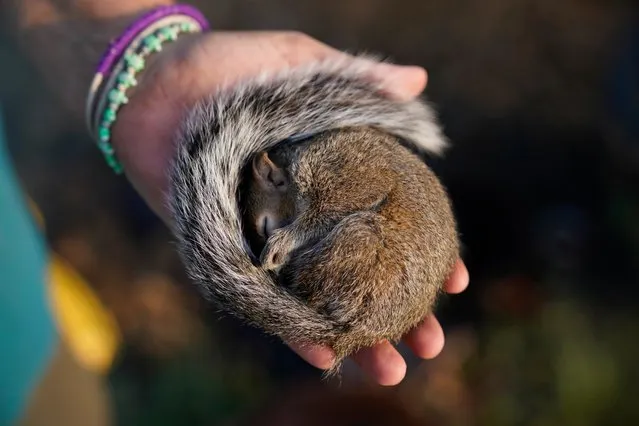
Penny Verdin displays a sleeping squirrel she helped rescue after it was injured during Hurricane Ida, Saturday, September 4, 2021, in Dulac, La. (Photo by John Locher/AP Photo)

Penny Verdin displays a sleeping squirrel she helped rescue after it was injured during Hurricane Ida, Saturday, September 4, 2021, in Dulac, La. (Photo by John Locher/AP Photo)
Details
19 Sep 2021 05:16:00
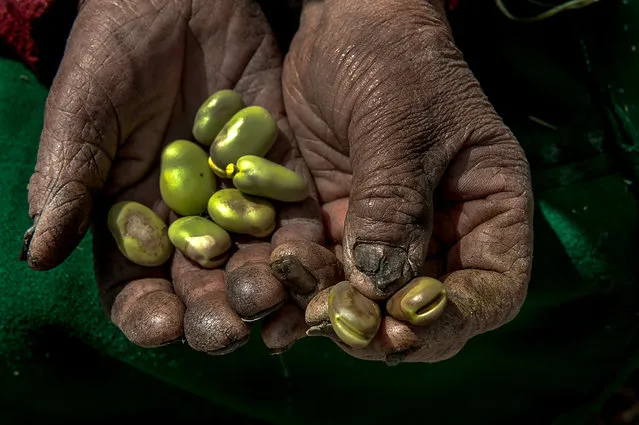
The hard-worked hands of Jacaba Coaquira, 80, holding the green beans she grew on her land. This year the production of her land was affected by lack of rain and early cold weather that froze the crops before they finished growing. Santiago de Okola, Bolivia. (Photo by Renée C. Byer/Living on a Dollar a Day)

The hard-worked hands of Jacaba Coaquira, 80, holding the green beans she grew on her land. This year the production of her land was affected by lack of rain and early cold weather that froze the crops before they finished growing. Santiago de Okola, Bolivia. (Photo by Renée C. Byer/Living on a Dollar a Day)
Details
16 Oct 2014 13:11:00
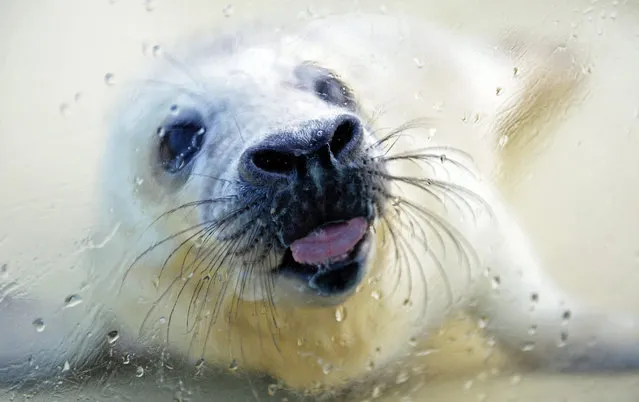
Grey seal pup “Nikolaus” licks a window at the seal enclosure in Friedrichskoog, Germany, 19 December 2014. The pup was abandoned by his mother and would not have a chance at survival without human help. Nikolaus will be fed at the enclosure for two to three months until he has reached the minimum weight of 45 kilograms for being released. (Photo by Daniel Reinhardt/EPA)

Grey seal pup “Nikolaus” licks a window at the seal enclosure in Friedrichskoog, Germany, 19 December 2014. The pup was abandoned by his mother and would not have a chance at survival without human help. Nikolaus will be fed at the enclosure for two to three months until he has reached the minimum weight of 45 kilograms for being released. (Photo by Daniel Reinhardt/EPA)
Details
20 Dec 2014 12:18:00
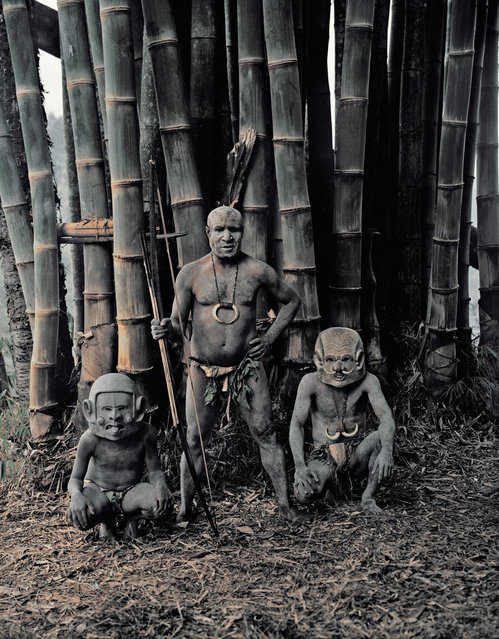
“Asaro from the Eastern Highlands”. The mudmen could not cover their faces with mud because the people of Papua New Guinea thought that the mud from the Asaro river was poisonous. So instead of covering their faces with this alleged poison, they made masks from pebbles that they heated and water from the waterfall, with unusual designs such as long or very short ears either going down to the chin or sticking up at the top, long joined eyebrows attached to the top of the ears, horns and sideways mouths. (Jimmy Nelson)

“Asaro from the Eastern Highlands”. The mudmen could not cover their faces with mud because the people of Papua New Guinea thought that the mud from the Asaro river was poisonous. So instead of covering their faces with this alleged poison, they made masks from pebbles that they heated and water from the waterfall, with unusual designs such as long or very short ears either going down to the chin or sticking up at the top, long joined eyebrows attached to the top of the ears, horns and sideways mouths. (Photo and caption by Jimmy Nelson)
Details
20 Oct 2013 08:54:00