Loading...
Done
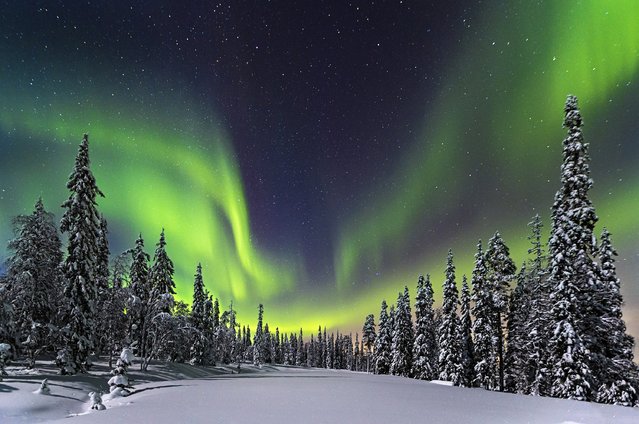
“Forest lights”. Aurora Borealis over the forest of the Pyhae Luosto National Park, Finland. (Photo and caption by Nicholas Roemmelt/National Geographic Traveler Photo Contest)

The 26th annual National Geographic Traveler Photo Contest is now accepting submissions. Official categories include: “Travel Portraits”, “Outdoor Scenes”, “Sense of Place” and “Spontaneous Moments”. The contest is accepting entries until June 30. Photo: “Forest lights”. Aurora Borealis over the forest of the Pyhae Luosto National Park, Finland. (Photo and caption by Nicholas Roemmelt/National Geographic Traveler Photo Contest)
Details
30 Mar 2014 08:02:00
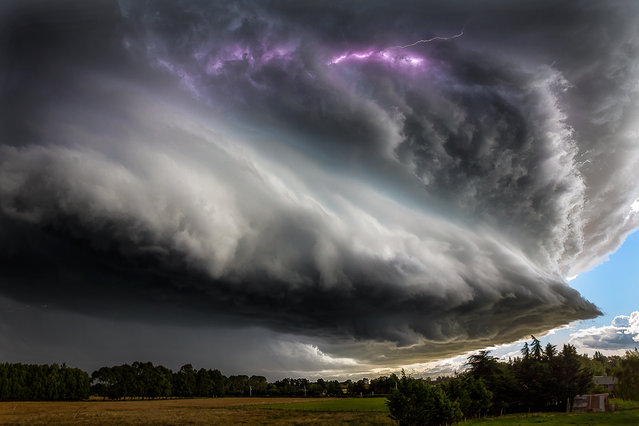
“Thunderstruck”. Summer stom. A super cell formed off the coast of New Zealand, intensified and swept across Christchurch and North Canterbury, February 23, 2014. Photo location: Christchurch, New Zealand. (Photo and caption by David Hardy/National Geographic Photo Contest)

“Thunderstruck”. Summer stom. A super cell formed off the coast of New Zealand, intensified and swept across Christchurch and North Canterbury, February 23, 2014. Photo location: Christchurch, New Zealand. (Photo and caption by David Hardy/National Geographic Photo Contest)
Details
15 Apr 2014 11:46:00
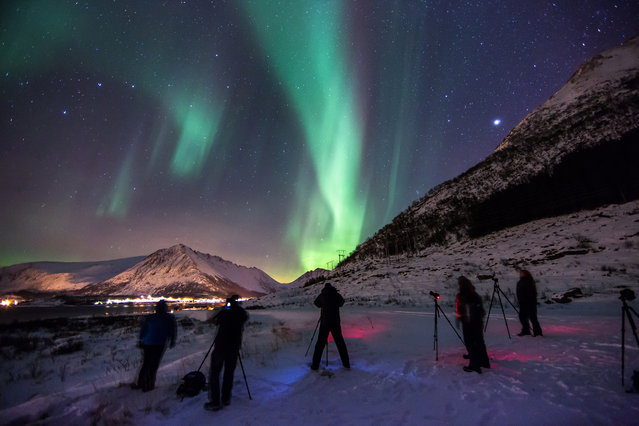
“Aurora Hunters”. Photographers taking part in a photography tour on the Lofoten Islands in Norway, pull over on the side of the road to take a photo of their first ever Aurora Borealis after spotting it from their tour bus. Photo location: Rystad, Lofoten Islands, Norway. (Photo and caption by Mark Gee/National Geographic Photo Contest)

“Aurora Hunters”. Photographers taking part in a photography tour on the Lofoten Islands in Norway, pull over on the side of the road to take a photo of their first ever Aurora Borealis after spotting it from their tour bus. Photo location: Rystad, Lofoten Islands, Norway. (Photo and caption by Mark Gee/National Geographic Photo Contest)
Details
17 Jun 2014 10:08:00
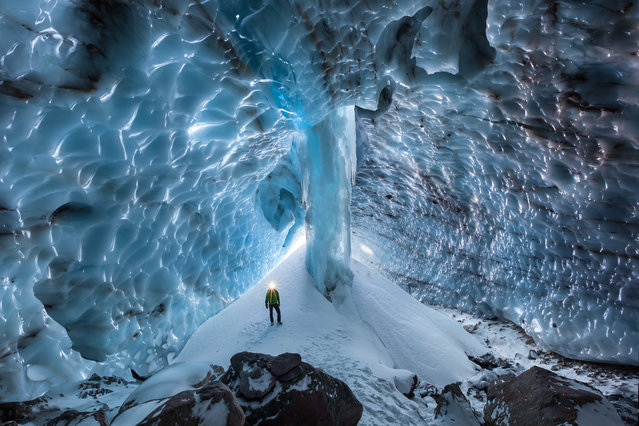
On the western side of Mount Hood lies the longest glacier cave system in the contiguous United States. In 2012, these caves were mapped to a combined length of 7,166.8 feet by cave explorers Brent McGregor and Eddy Cartaya. Currently, the total passage length is hundreds of feet less. Glaciers are frozen rivers; they are always moving and changing. In the past five years, we have seen the caves melt, shrink and collapse in a dramatic way. The caves are formed by water carving away at the ice. (Photo and caption by Josh Hydeman)

On the western side of Mount Hood lies the longest glacier cave system in the contiguous United States. In 2012, these caves were mapped to a combined length of 7,166.8 feet by cave explorers Brent McGregor and Eddy Cartaya. Currently, the total passage length is hundreds of feet less. Glaciers are frozen rivers; they are always moving and changing... (Photo and caption by Josh Hydeman)
Details
22 Mar 2015 11:05:00
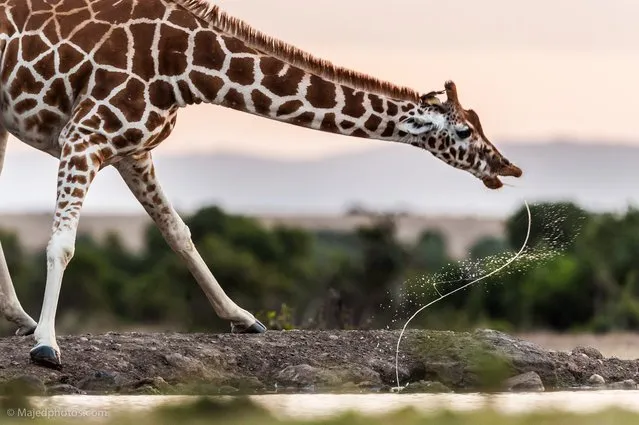
“We just want to move to search to the Leopard at that morning but we found a group of giraffes come toward a small lake and start drinking it was a nice moment when the Giraffe finish from drinking and leave a letters S with motion in the air”. (Photo and caption by Majed Ali)

National Geographic invites photographers from around the world to enter the 2013 National Geographic Photography Contest. The grand-prize winner will receive $10,000 (USD) and a trip to National Geographic headquarters in Washington, D.C., to participate in the annual National Geographic Photography Seminar in January 2014. Photo: “We just want to move to search to the Leopard at that morning but we found a group of giraffes come toward a small lake and start drinking it was a nice moment when the Giraffe finish from drinking and leave a letters “S” with motion in the air”. (Photo and caption by Majed Ali/National Geographic Photography Contest)
Details
15 Nov 2013 14:34:00
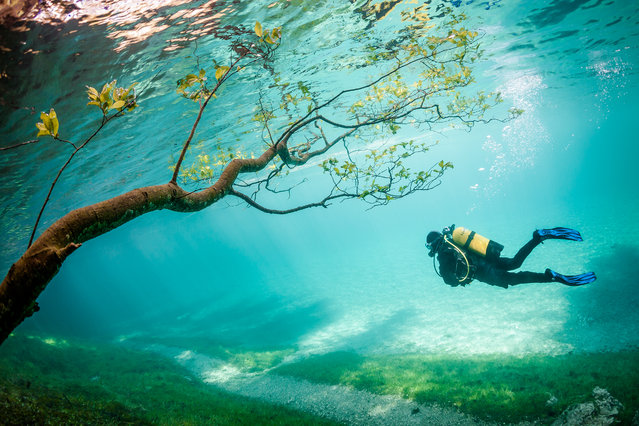
“Diver in Magic Kingdom”. Green Lake (Grüner See) is located Tragöss Austria. In spring snowmelt raises the lake level about 10 meters. This phenomenon, which lasts only a few weeks covering the hiking trails, meadows, trees. The result is magical to watch diving landscapes. Photo location: Grüner See at Tragöss, Austria. (Photo and caption by Marc Henauer/National Geographic Photo Contest)

“Diver in Magic Kingdom”. Green Lake (Grüner See) is located Tragöss Austria. In spring snowmelt raises the lake level about 10 meters. This phenomenon, which lasts only a few weeks covering the hiking trails, meadows, trees. The result is magical to watch diving landscapes. Photo location: Grüner See at Tragöss, Austria. (Photo and caption by Marc Henauer/National Geographic Photo Contest)
Details
22 Apr 2014 09:35:00
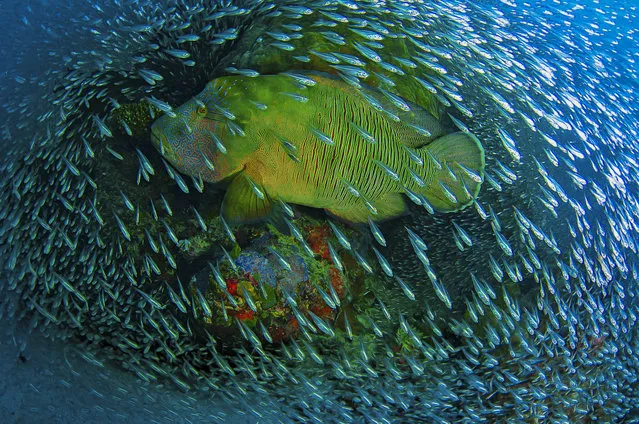
“7584 Fish”. On a windy day right after a Cyclone passed the far northern Great Barrier Reef i took some friends out to the reef. Never before i saw that many glass fish on this particular coral “bommie”. Just when i setup my camera, this Napoleon Wrasse swam right through the school of fish building a living frame. Photo location: Cairns, Great Barrier Reef, Flynn Reef, Australia. (Photo and caption by Christian Miller/National Geographic Photo Contest)

“7584 Fish”. On a windy day right after a Cyclone passed the far northern Great Barrier Reef i took some friends out to the reef. Never before i saw that many glass fish on this particular coral “bommie”. Just when i setup my camera, this Napoleon Wrasse swam right through the school of fish building a living frame. Photo location: Cairns, Great Barrier Reef, Flynn Reef, Australia. (Photo and caption by Christian Miller/National Geographic Photo Contest)
Details
07 Oct 2014 11:48:00
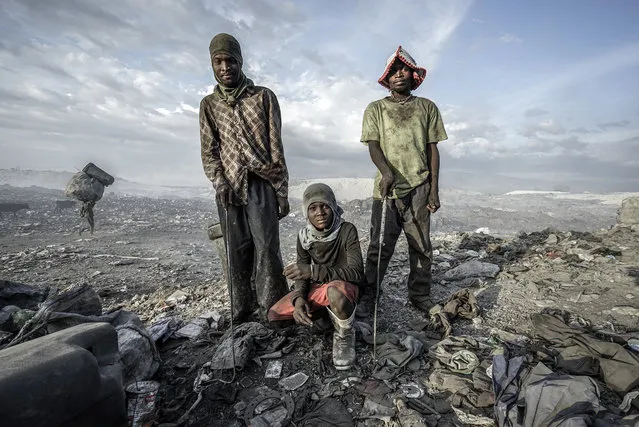
In a 200-acre-plus dump 5 kilometers north of Haiti’s capital, Port-au-Prince, hundreds of men, women and children scavenge day and night through the burning wasteland. They earn $12 to $15 a day – on a good day – for recycling plastics as well as clothing, household items and aluminum (for smelting). Some 5,000 tons of waste is created each day in the Port-au-Prince area. (Photo and caption by Giles Clarke/Getty Images Reportage)

In a 200-acre-plus dump 5 kilometers north of Haiti’s capital, Port-au-Prince, hundreds of men, women and children scavenge day and night through the burning wasteland. They earn $12 to $15 a day – on a good day – for recycling plastics as well as clothing, household items and aluminum (for smelting). Some 5,000 tons of waste is created each day in the Port-au-Prince area. (Photo and caption by Giles Clarke/Getty Images Reportage)
Details
02 Feb 2015 11:21:00