Loading...
Done
Yuanlei Liao, the singer of hardcore band called Thank Ray wears a read scarf after performing on the stage of Mao Live House during the club's last public concert night in central Beijing, China April 23, 2016. Mao Live House, a prominent live rock music venue in Beijing, shut its doors on the weekend, the latest closure to hit China's rock music scene. Owner Li Chi said the club, popular among fans of punk, metal and alternative rock since it opened nine years ago, was forced to close due to tighter rules on live performances. (Photo by Damir Sagolj/Reuters)

Yuanlei Liao, the singer of hardcore band called Thank Ray wears a read scarf after performing on the stage of Mao Live House during the club's last public concert night in central Beijing, China April 23, 2016. Mao Live House, a prominent live rock music venue in Beijing, shut its doors on the weekend, the latest closure to hit China's rock music scene. Owner Li Chi said the club, popular among fans of punk, metal and alternative rock since it opened nine years ago, was forced to close due to tighter rules on live performances. (Photo by Damir Sagolj/Reuters)
Details
04 May 2016 12:13:00
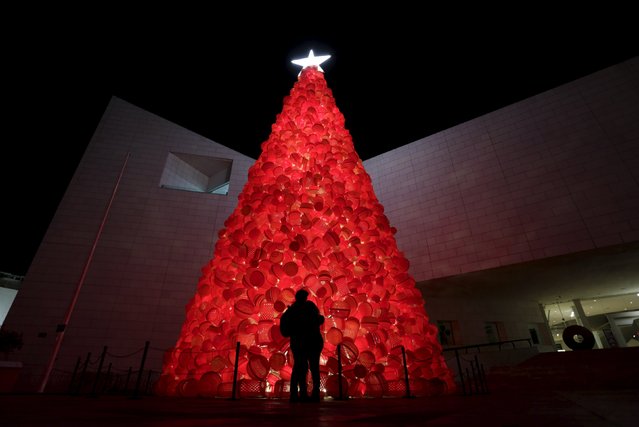
A couple hugs while standing near a Christmas tree made out of plastic bins and plastic hampers outside the Museum of History in Monterrey, Mexico, December 4, 2015. (Photo by Daniel Becerril/Reuters)

A couple hugs while standing near a Christmas tree made out of plastic bins and plastic hampers outside the Museum of History in Monterrey, Mexico, December 4, 2015. The humble Christmas tree has a rich history, from evergreen trees used to symbolise eternal life in Ancient Egypt to tree worship among pagan Europeans. The modern version has its origins in Germany, where the song “O Tannenbaum” is still a festive favourite. Today the traditional tree with lights and decorations appears in cities including Washington, Moscow and Beirut. Alternative constructions range from recycled rubbish in Mexico City to old window frames in Rakvere, Estonia. Whatever the shape or size, the message is the same: Merry Christmas. (Photo by Neil Hall/Reuters)
Details
23 Dec 2015 08:01:00


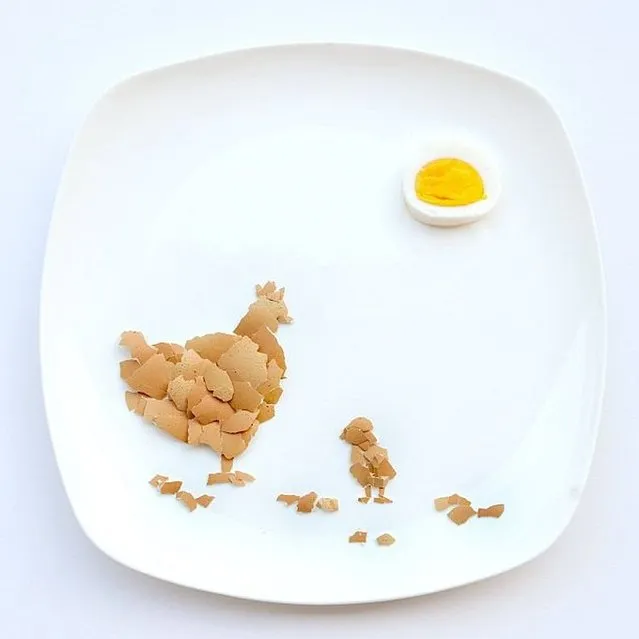
Hong Yi is a Malaysian architect and artist whose impressive portfolio includes work for Chicago’s Union Station, the Melbourne Hall of Music, and alternative medium portraits using coffee stains or tea bags. Her unorthodox approach to creation has led her to her most recent blog project. Over the course of 31 days, Hong Yi (who also goes by Red) will post art pieces made from food. So far, the pieces range from simpler ones of a watermelon sailboat to a complex recreation of Hokusai’s “The Great Wave.”
Details
29 Mar 2013 10:31:00
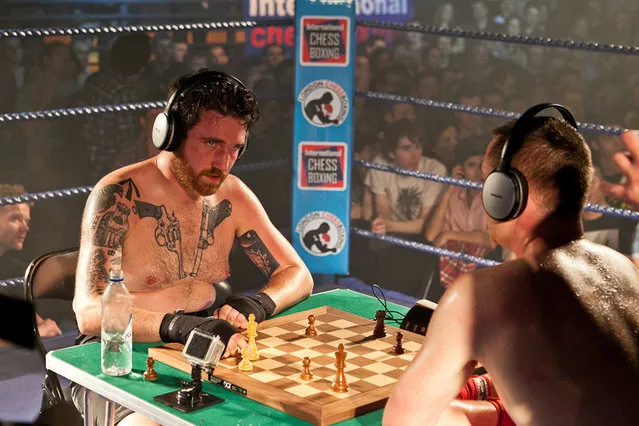
Chess boxing

Chess boxing is a hybrid sport that combines chess with boxing in alternating rounds. The sport was invented by Dutch artist Iepe Rubingh, who was inspired by a French comic book Le Froid Equateur by artist and filmmaker Enki Bilal. Chess boxing is a fast growing sport, with large followings in Berlin and London, where most events take place. Several other chessboxing events have taken place around the world, including in Los Angeles, Tokyo, Nantes (France), Reykjavík (Iceland), Amsterdam, Calcutta (India) and Krasnoyarsk (Russia). Participants must be skilled as both boxers and chess players, as a match may be won either way.
Details
17 Oct 2012 11:17:00
Eco-Friendly Coffins

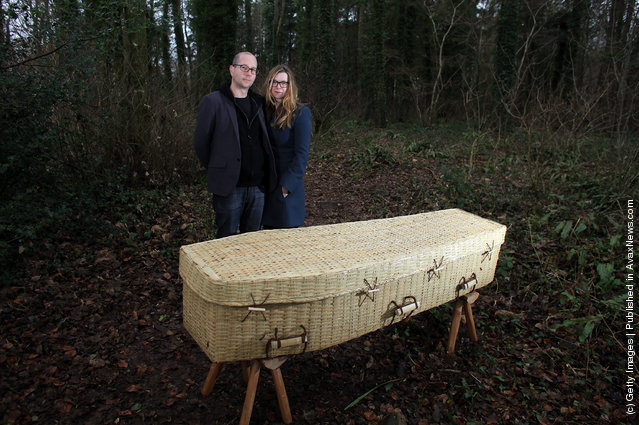
Claire and Rupert Callender of the Green Funeral Company pose for a photograph with a environmentally friendly coffin in woodland close to their office at Dartington Hall Estate on February 4, 2011 near Torquay, England. The Devon-based company operates as funeral directors and undertakers throughout the South West, offers an ecological alternative to traditional funerals, with coffins made from ecologically friendly materials such as wicker and bamboo, and can arrange funerals that encompass diverse religious and spiritual beliefs everything from a Catholic Requiem Mass, to a Pagan ritual at a stone circle on Bodmin Moor. (Photo by Matt Cardy/Getty Images)
Details
16 Aug 2011 11:04:00
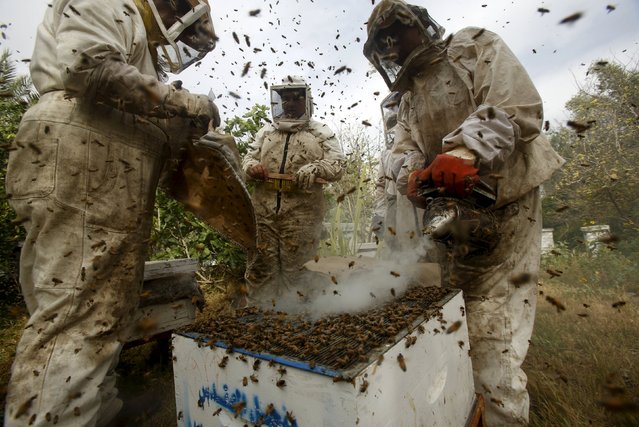
A Palestinian beekeeper uses smoke to calm bees in the process of collecting honey at a farm in Rafah, in the southern Gaza Strip April 11, 2016. (Photo by Suhaib Salem/Reuters)

A Palestinian beekeeper uses smoke to calm bees in the process of collecting honey at a farm in Rafah, in the southern Gaza Strip April 11, 2016. Rateb Samour sees 250 patients a day, whose complaints range from hair loss to cerebral palsy and cancer. He is not a doctor and has never worked in a hospital. Samour inherited the skill of bee-sting therapy from his father. From 2003 the agricultural engineer dedicated all his time to study and develop the alternative-medicine treatment of apitherapy, which uses bee-related products from honey, propolis – or bee glue used to build hives – to venom. (Photo by Suhaib Salem/Reuters)
Details
13 Apr 2016 09:14:00
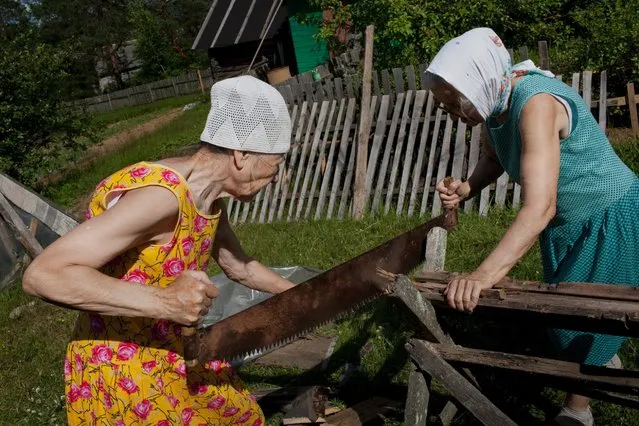
“Two-Handed Saw, 2014”. “Most of the neighbors have switched to power tools to run their households, the buzz of chain saws and weed-whackers overpowering the quieter sounds of country life, but my aunts hold on to the two-handed saw that's decades old, the sickle and scythe that need to be sharpened and polished after each use, the old axe that's becoming heavier each year. Each of these objects is familiar, holding memories of their brother, who succumbed to cancer a few years ago, of days before my grandfather lost his vision in the 50's, of busier days and longer futures”, Sablin told. (Photo by Nadia Sablin)

In northwest Russia, in a small village called Alekhovshchina, Nadia Sablin's aunts spend the warmer months together in the family home and live as the family has always lived, chopping wood to heat the house and making their own clothes. Sablin's book of photographs, “Aunties: The Seven Summers of Alevtina and Ludmila”, is published by Duke University Press. Here: “Two-Handed Saw, 2014”. (Photo by Nadia Sablin)
Details
25 Feb 2016 12:12:00
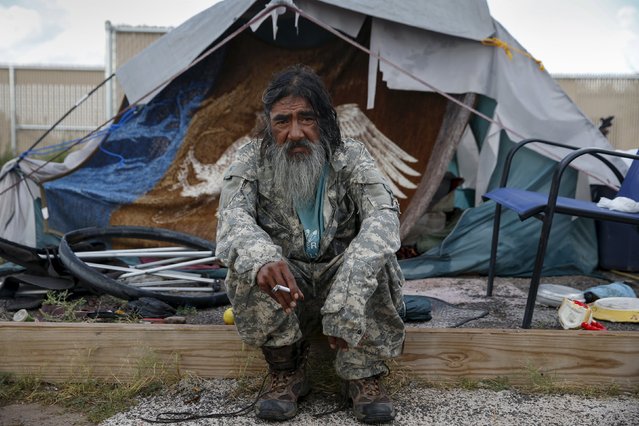
Daniel J. Wabsey, a 58-year-old war veteran, sits outside his tent at Camp Hope in Las Cruces, New Mexico October 6, 2015. “I've been traveling for 35 or 38 years. Getting inside would take a while to get used to. I just want to be able to eat, sleep and be safe. We all get along and understand in Camp Hope. We've all been there. With common sense you can survive out here”, Wabsey said. Camp Hope describe themselves as an “alternative transitional living project for the homeless”. Around 50 people live at the camp. (Photo by Shannon Stapleton/Reuters)

Daniel J. Wabsey, a 58-year-old war veteran, sits outside his tent at Camp Hope in Las Cruces, New Mexico October 6, 2015. “I've been traveling for 35 or 38 years. Getting inside would take a while to get used to. I just want to be able to eat, sleep and be safe. We all get along and understand in Camp Hope. We've all been there. With common sense you can survive out here”, Wabsey said. Camp Hope describe themselves as an “alternative transitional living project for the homeless”. Around 50 people live at the camp. (Photo by Shannon Stapleton/Reuters)
Details
19 Dec 2015 08:05:00