Loading...
Done
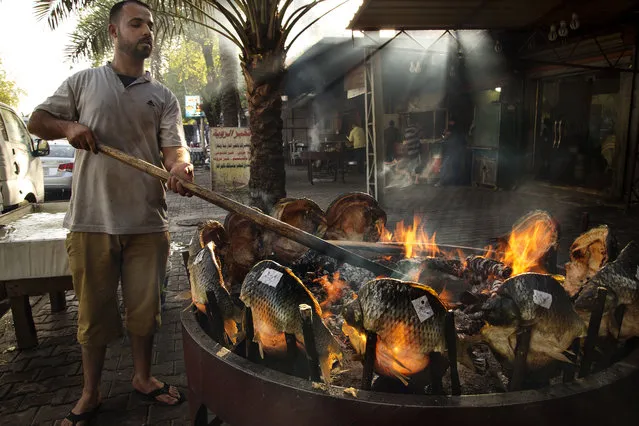
An Iraqi man cooks traditional Masgouf fish on a barbecue for sale in the Karada market July 02, 2014.  Masgouf, one of the national dishes of Iraq is a grilled carp seasoned with olive oil, rock salt, tamarind and ground turmeric. (Photo by Scott Nelson for the Washington Post)

An Iraqi man cooks traditional Masgouf fish on a barbecue for sale in the Karada market July 02, 2014. Masgouf, one of the national dishes of Iraq is a grilled carp seasoned with olive oil, rock salt, tamarind and ground turmeric. (Photo by Scott Nelson for the Washington Post)
Details
04 Aug 2014 13:43:00
Sam Warren climbs in to a prototype combat vehicle during the PrepperCon expo Friday, April 24, 2015, in Sandy, Utah. Hundreds of survivalists and “preppers” are gathering in the Salt Lake City suburb of Sandy for the first annual PrepperCon, featuring demonstrations of underground bunkers, food storage, and armored vehicles. (Photo by Rick Bowmer/AP Photo)

Sam Warren climbs in to a prototype combat vehicle during the PrepperCon expo Friday, April 24, 2015, in Sandy, Utah. Hundreds of survivalists and “preppers” are gathering in the Salt Lake City suburb of Sandy for the first annual PrepperCon, featuring demonstrations of underground bunkers, food storage, and armored vehicles. (Photo by Rick Bowmer/AP Photo)
Details
26 Apr 2015 09:39:00
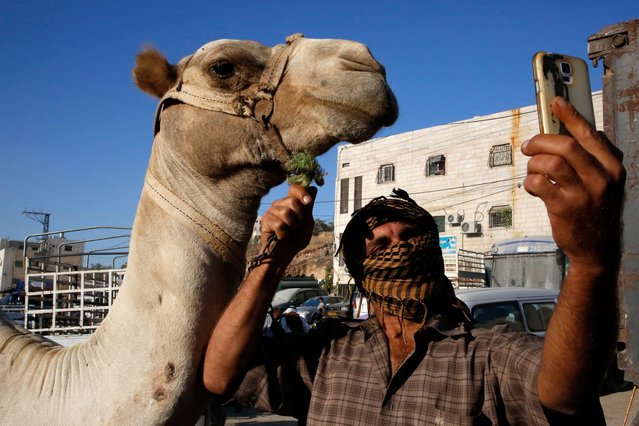
A Palestinian man takes a selfie picture next to a camel at a livestock market in the West Bank city of Hebron on August 9, 2019, as muslims prepare for the Eid al-Adha celebrations. Known as the “big” festival, Eid Al-Adha is celebrated each year by Muslims sacrificing various animals according to religious traditions, including cows, camels, goats and sheep. (Photo by Hazem Bader/AFP Photo)

A Palestinian man takes a selfie picture next to a camel at a livestock market in the West Bank city of Hebron on August 9, 2019, as muslims prepare for the Eid al-Adha celebrations. Known as the “big” festival, Eid Al-Adha is celebrated each year by Muslims sacrificing various animals according to religious traditions, including cows, camels, goats and sheep. (Photo by Hazem Bader/AFP Photo)
Details
11 Aug 2019 00:07:00
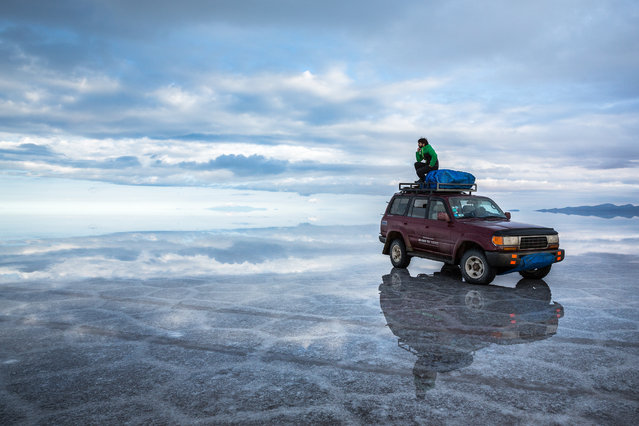
At 10,582 square kilometres, the Bolivian salt flats – otherwise known as Salar de Uyuni – are the largest on the planet and contain between 50 and 70% of the world’s lithium reserves. After exploring Chile and Argentina, photographer Joel Santos decided to travel to Bolivia in January 2017 to check the salt flats off his bucket list. With an electrical storm rolling in, Joel and his two travelling companions were the only souls left on the vast flats and captured the eerie flats without a person in sight. (Photo by Joel Santos/Barcroft Images)

At 10,582 square kilometres, the Bolivian salt flats – otherwise known as Salar de Uyuni – are the largest on the planet and contain between 50 and 70% of the world’s lithium reserves. After exploring Chile and Argentina, photographer Joel Santos decided to travel to Bolivia in January 2017 to check the salt flats off his bucket list. With an electrical storm rolling in, Joel and his two travelling companions were the only souls left on the vast flats and captured the eerie flats without a person in sight. (Photo by Joel Santos/Barcroft Images)
Details
12 Aug 2019 00:03:00
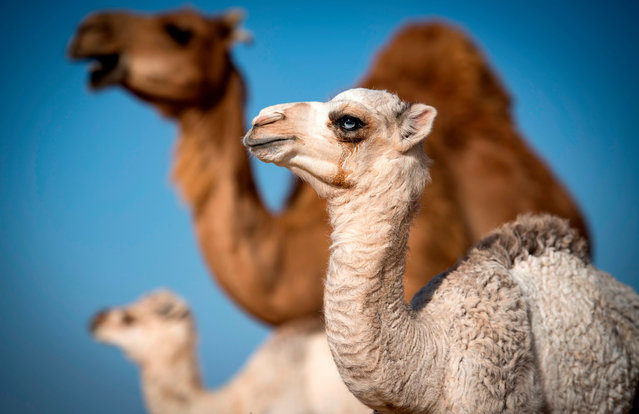
A camel calf is seen among a herd in the desert near Dakhla in Morocco-administered Western Sahara, on October 13, 2019. In the Oued Eddahab desert in Western Sahara, Habiboullah Dlimi raises dairy and racing camels just like his ancestors used to, but with a little help from modern technology. While his animals roam free and are milked traditionally, by hand, at dawn and dusk, they are watched over by hired herders and Dlimi follows GPS coordinates across the desert in a 4X4 vehicle to reach them. (Photo by Fadel Senna/AFP Photo)

A camel calf is seen among a herd in the desert near Dakhla in Morocco-administered Western Sahara, on October 13, 2019. In the Oued Eddahab desert in Western Sahara, Habiboullah Dlimi raises dairy and racing camels just like his ancestors used to, but with a little help from modern technology. While his animals roam free and are milked traditionally, by hand, at dawn and dusk, they are watched over by hired herders and Dlimi follows GPS coordinates across the desert in a 4X4 vehicle to reach them. (Photo by Fadel Senna/AFP Photo)
Details
24 Nov 2019 00:03:00
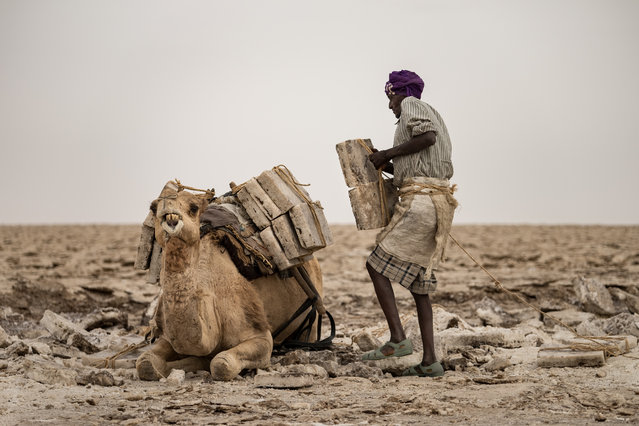
Dromedaries and donkeys are used to transport the salt. (Photo by Joel Santos/Barcroft Images)

Unforgiving temperatures of up to 60℃ (140℉) beat down on these saltminers on a daily basis. The mines, situated in the Afar Triangle in Ethiopia, stretch across 38,000 sq miles and at their lowest point are more than 300ft below sea level. Joel Santos travelled to capture the area’s dry, brutal beauty. Here: Dromedaries and donkeys are used to transport the salt. (Photo by Joel Santos/Barcroft Images)
Details
24 Aug 2016 11:31:00
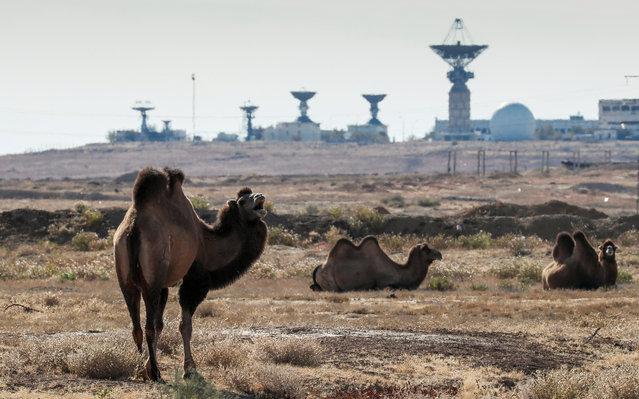
Camels graze in front of a spacecraft tracking station ahead of the Soyuz MS-10 upcoming launch at the Baikonur Cosmodrome, Kazakhstan, October 9, 2018. (Photo by Shamil Zhumatov/Reuters)

Camels graze in front of a spacecraft tracking station ahead of the Soyuz MS-10 upcoming launch at the Baikonur Cosmodrome, Kazakhstan, October 9, 2018. (Photo by Shamil Zhumatov/Reuters)
Details
23 May 2021 07:56:00

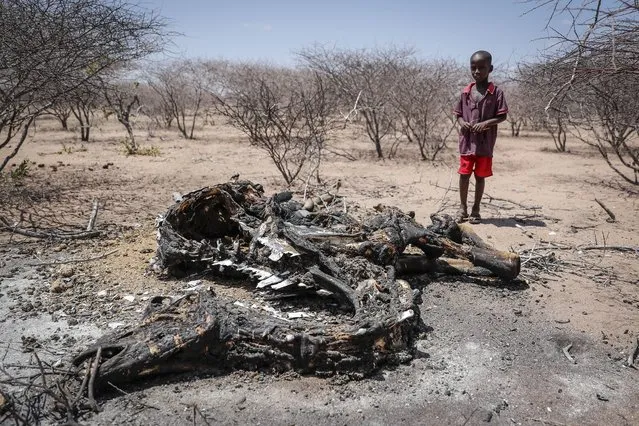
A boy stands near the rotting carcass of a camel that that died of hunger which people had burned to stop the bad smell, in Belif, Garissa county, Kenya Sunday, October 24, 2021. (Photo by Brian Inganga/AP Photo)

A boy stands near the rotting carcass of a camel that that died of hunger which people had burned to stop the bad smell, in Belif, Garissa county, Kenya on Sunday, October 24, 2021. (Photo by Brian Inganga/AP Photo)
Details
18 Nov 2021 08:25:00